



























Delivery Partner Portal Development
Webority builds delivery partner portals for last-mile operators, courier networks, quick-commerce platforms, and 3PL providers. Partner onboarding and verification, dispatch and allocation, route sequencing, proof of delivery, and earnings and payouts are engineered around your service levels and rider economics, then connected to the order, warehouse, and payment systems already running your operation.
Get a Free Consultation
Fill in your details, and we will respond within 24 hoursTrusted by Leading Brands & Growing Startups









The Last-Mile Problems We Solve
Orders arrive faster than dispatch can allocate them. Partners are onboarded on paper, verified in a spreadsheet, and paid from a third file that disagrees with both. Riders call to ask what is next, customers call to ask where their parcel is, and the real cost per delivery is only knowable a fortnight later.
A purpose-built delivery partner portal makes the trip the single record: allocation, acceptance, pickup, route, exception, proof of delivery, and earning all attach to it. Your order management, warehouse, mapping, and payment systems stay in place, connected through a purpose-built integration layer, so deliveries keep running while capability is added city by city.
Benefits Of A Custom Delivery Partner Portal
Six operational shifts last-mile networks ask us for, and what each one looks like on the road.






More Deliveries Per Partner Shift
Trips are allocated on proximity, capacity, service level, and the partner's current load rather than whoever answers the coordinator first. Stops are sequenced against live road conditions and delivery windows, so a shift spends more of its hours delivering and fewer of them backtracking or idling between assignments.
One Delivery Status Everyone Reads
Every consignment carries a live stage from allocation through pickup, in transit, attempted, and delivered, fed by partner app events rather than phone calls. Dispatch, the merchant, and the end customer read the same timeline, which removes most of the day's status chasing and shortens the dispute cycle when a delivery does go wrong.
Faster Partner Onboarding And Activation
Applications, document upload, verification checks, training acknowledgement, and asset issue run as one tracked workflow instead of a folder of scans. A partner who applies on Monday is not still waiting on Friday because nobody knows which stage their file is sitting in, which matters most when you are scaling capacity into a peak.
Earnings Partners Can Trust
Trip fees, distance and weight components, incentives, penalties, and deductions calculate from the completed trip record and are visible to the partner as they earn. Payout disputes drop because the partner can see how a figure was reached, and retention improves for the simple reason that people stay where the money is predictable.
Lower Cost Per Delivery
Failed first attempts, idle partner hours, overlapping routes, and unnecessary returns to hub become visible per zone and per shift while the week is still open. Cost control shifts from explaining the variance at month end to removing the cause of it during the period it is being created.
Decisions Taken From Live Data
On-time delivery rate, first-attempt success, partner utilisation, attrition, and cost per drop are read from the transactional record instead of assembled by hand each month. Capacity planning, zone pricing, and incentive design get made against numbers current enough to still be true when the decision lands.
Our Journey Of Making Great Things
Numbers that reflect over a decade of consistent delivery, trusted partnerships, and engineering excellence.
Years of experience
Projects delivered
Clients served
Countries reached
Trusted by India's Leading Government Institutions
Nine central government ministries have trusted Webority to build their digital platforms from parliamentary operations and defence logistics to national health infrastructure and citizen data collection at scale. Every engagement runs on NIC cloud, meets GIGW accessibility standards, and operates under data handling requirements that commercial projects rarely demand.

Sansad Cafeteria
Ministry of Parliamentary Affairs

Bureau of Energy
Ministry of Power

Safdarjung Hospital
Ministry of Health & Family Welfare

Quality Council of India
Ministry of Commerce & Industry

Munitions India Limited
Ministry of Defence

Sashastra Seema Bal
Ministry of Home Affairs

Vasudha Foundation
Government of Karnataka

National Book Trust
Ministry of Education

Textiles Committee
Ministry of Textiles
Core Delivery Partner Portal Modules We Build
Deploy the modules your network needs first, then extend. Each one is engineered to work standalone or as part of a single connected delivery platform.
- 01 Partner Onboarding & Verification
- 02 Order Intake & Allocation
- 03 Automated Dispatch
- 04 Route Sequencing & Navigation
- 05 Delivery Partner Mobile App
- 06 Proof Of Delivery & Exceptions
- 07 Earnings, Incentives & Payouts
- 08 Customer Tracking & Notifications
- 09 Cash Handling & Reconciliation
- 10 Analytics & Reporting










Our Success Stories
Every case study below is a product in production, built across healthcare, fintech, government, and e-commerce, and measured by the outcomes it delivers.
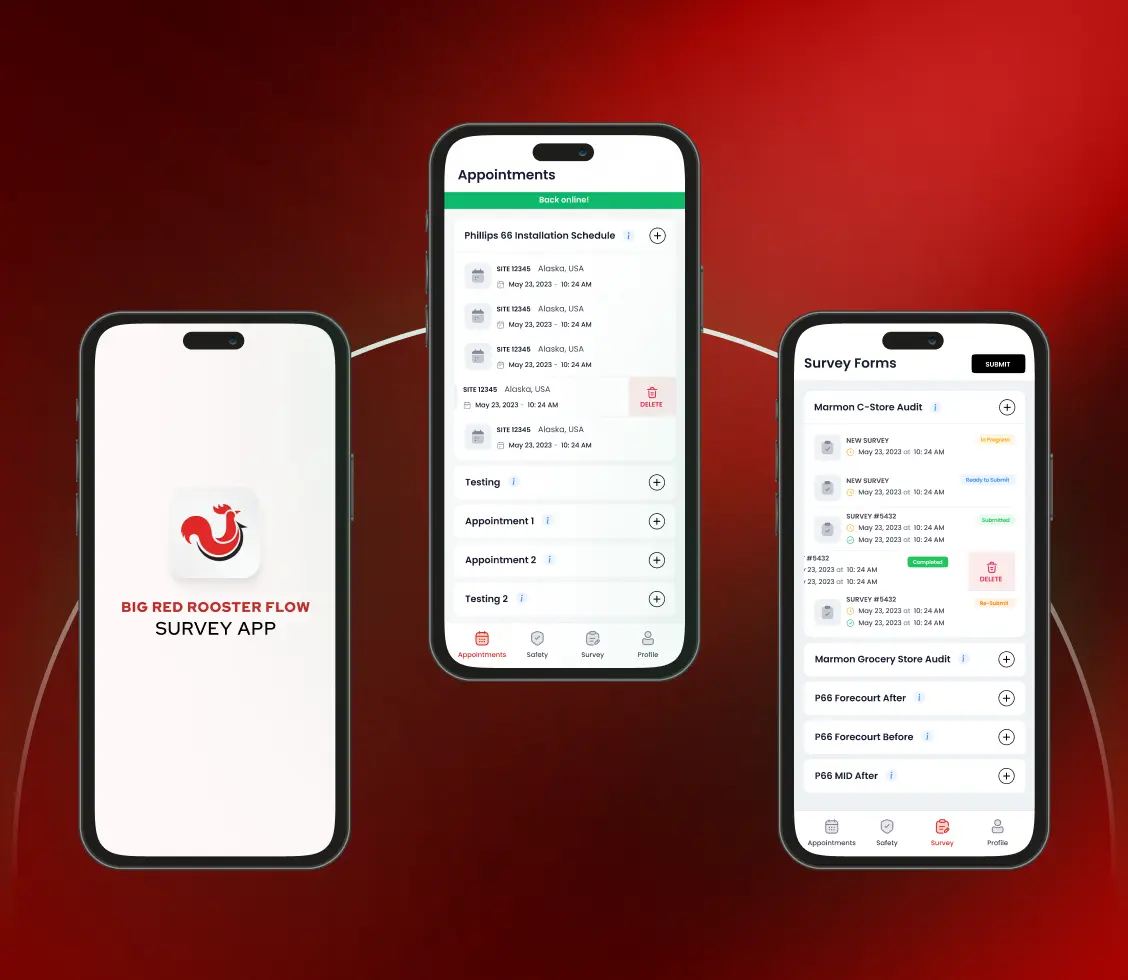
Field Inspection App - BRRF
Challenge
Big Red Rooster Flow's paper-based inspections across 500+ gas stations for Exxon, Marathon, 7-Eleven, Gulf, and BP suffered from 42% data error rates, 60-minute inspection times, and zero location verification, causing $4.2M in annual losses and threatening $18M in contracts.
Solution
We built a mobile-first survey platform with a no-code visual form builder, intelligent brand-specific survey logic, 99.3% accurate geofencing, full offline capability for 30+ days, a real-time operations dashboard with automated reporting, and role-based access for admins and field teams, deployed across 850+ field inspectors nationwide.
Impact
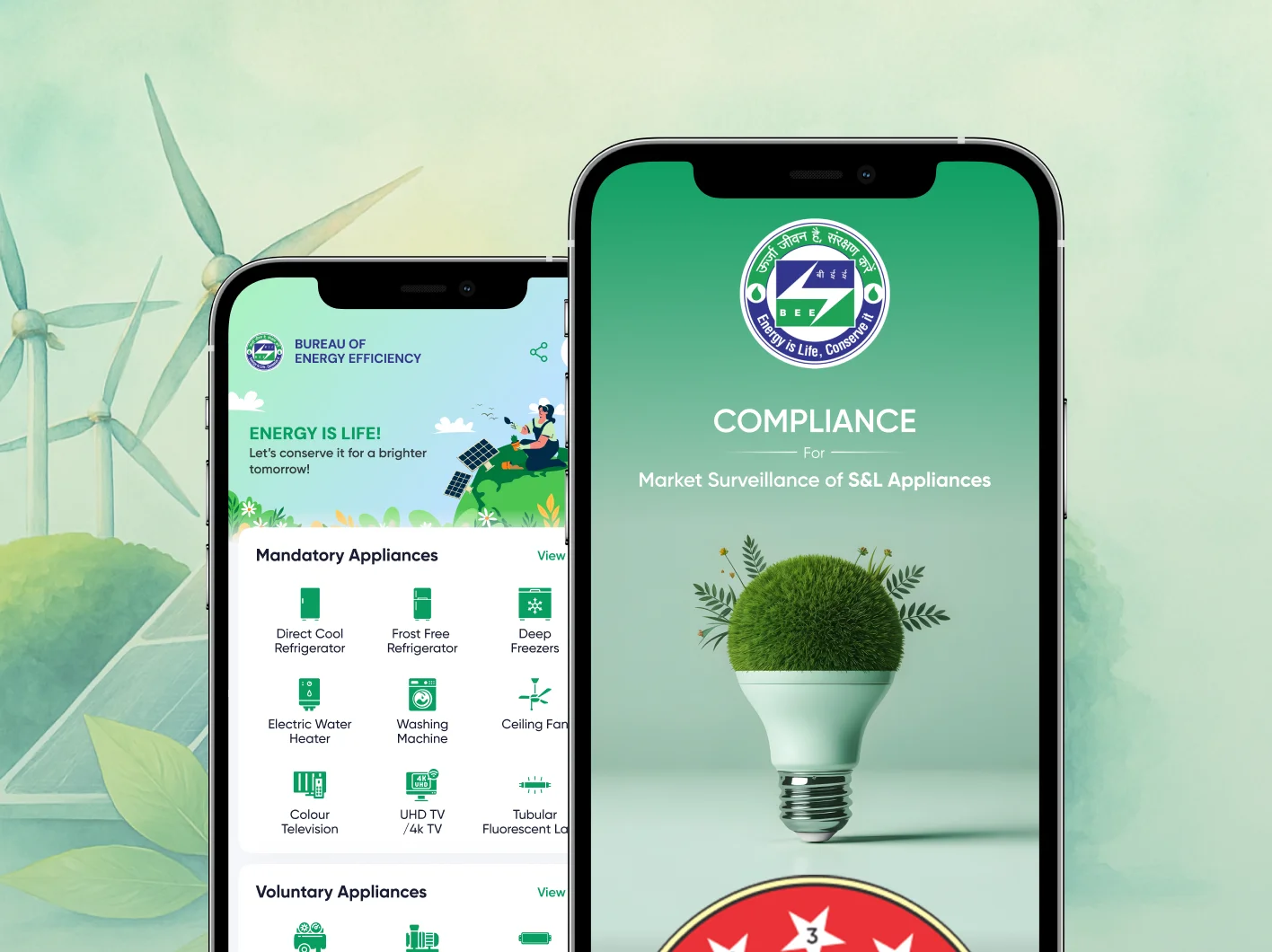
Energy Star Label Compliance App - BEE
Challenge
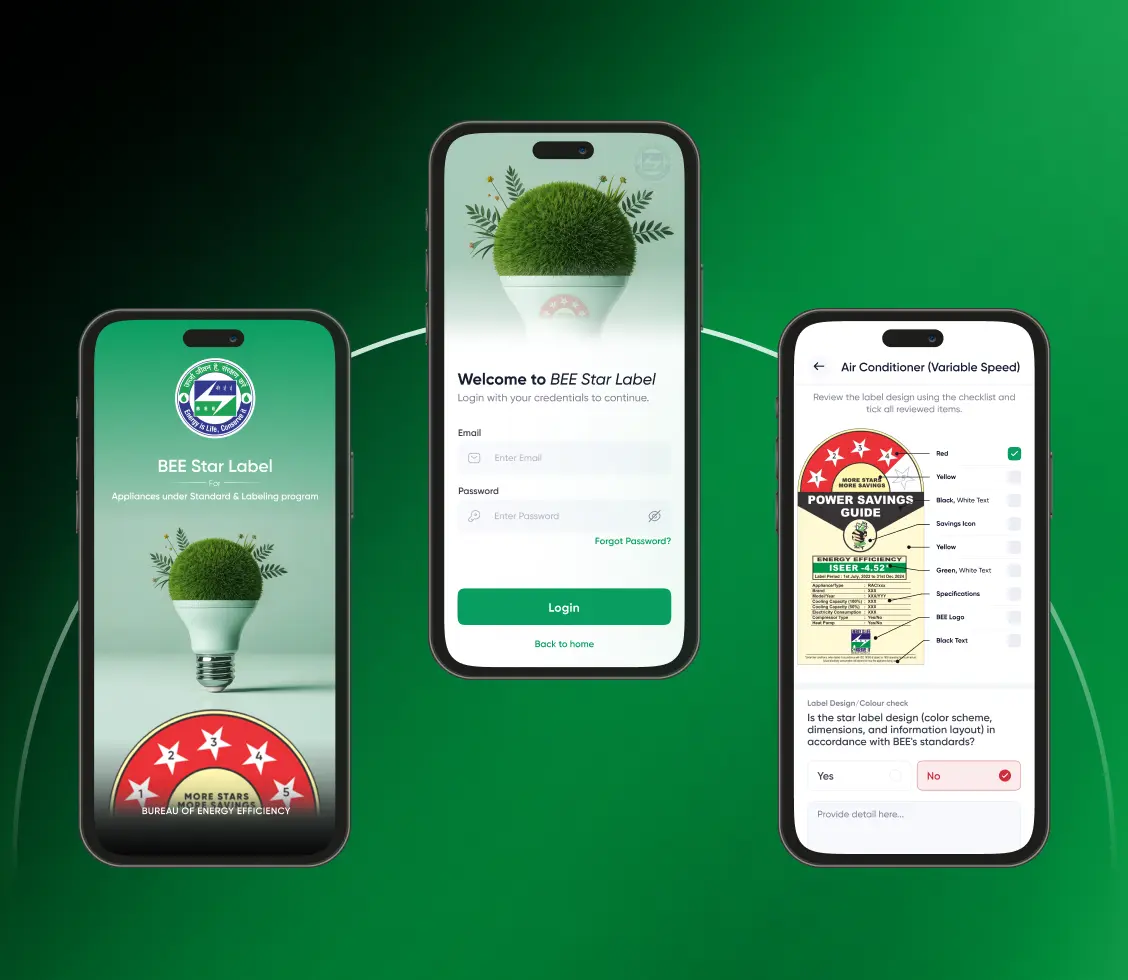
Manual inspection of Energy Star labels across India's vast appliance market was slow, error-prone, and lacked centralised visibility, making it difficult for BEE to enforce compliance or for consumers to verify appliance ratings.
Solution
We built a mobile and web platform that enables surveyors to validate star ratings, capture geo-tagged data with photo evidence, work offline, and generate instant reports, while giving consumers a simple interface to browse certified appliances, verify authenticity through star-label lookup, and raise complaints directly to BEE.
Impact
Cafeteria & Food Ordering App - Parliament of India
Challenge
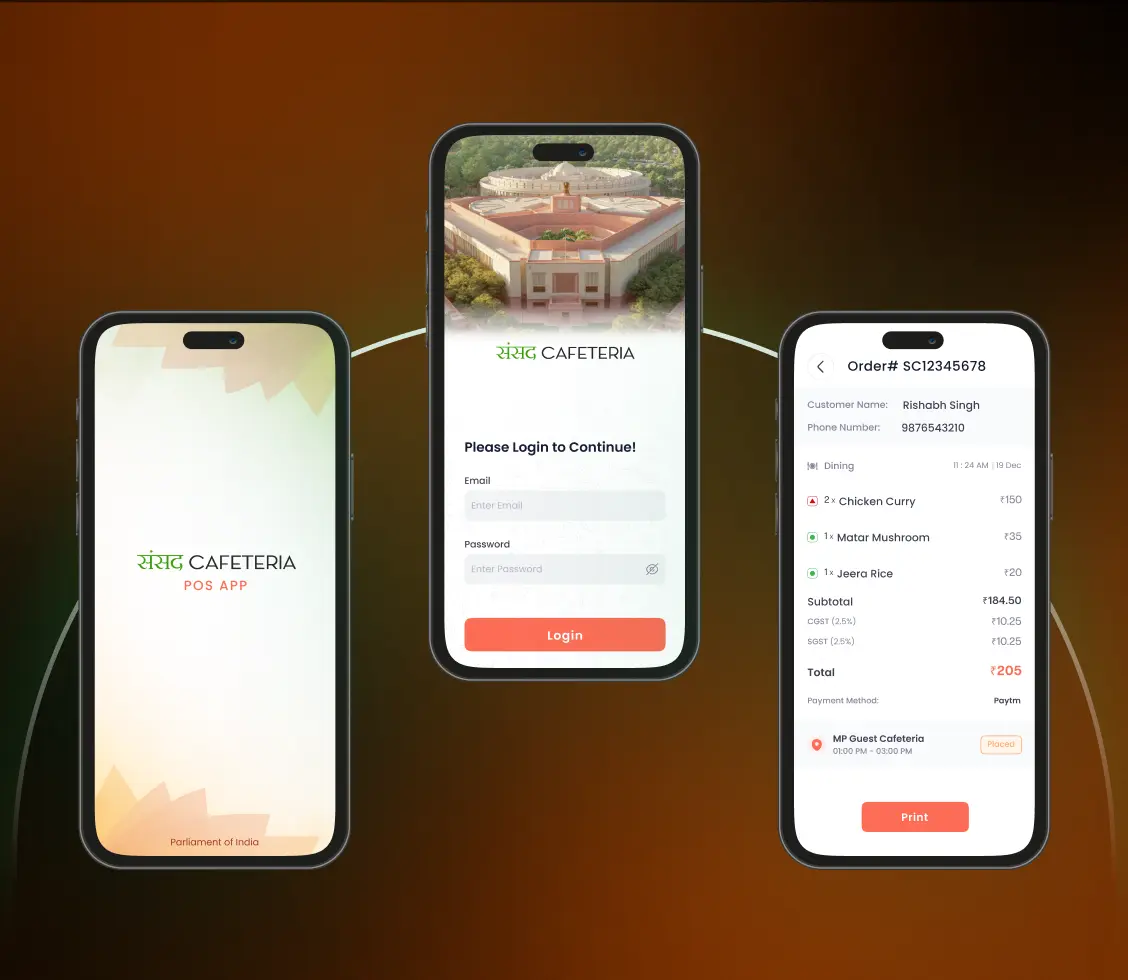
Food ordering within the Indian Parliament relied on traditional, manual processes, leading to long wait times, operational inefficiency, and logistical challenges in managing catering across a high-security environment.
Solution
We developed a mobile app for MPs and staff with real-time menu access, QR-based pickup, in-room delivery, integrated digital payments, and full order history, along with an admin portal for ITDC to manage live orders, menus, pricing, user roles, inventory, and reporting across Parliament canteen operations.
Impact
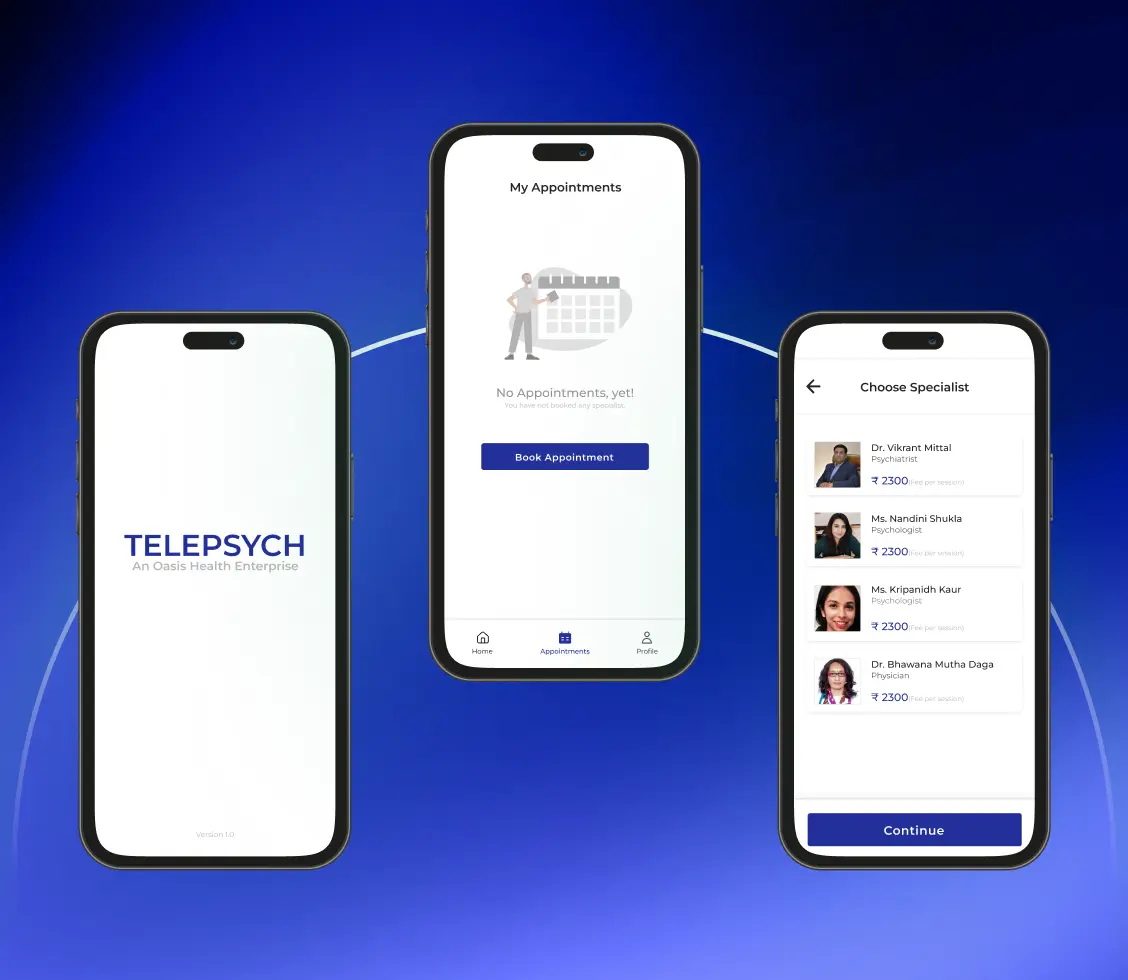
Mental Health Consultation & Booking App - Telepsych
Challenge
Fragmented booking systems and limited online options made accessing mental health consultations difficult for patients, while doctors and admins struggled with manual scheduling.
Solution
We built Telepsych, a web and mobile platform for booking online (Zoom) and in-person consultations, with secure payments, automated reminders, and session history, plus dedicated portals for doctors to manage availability and patient records, and for admins to oversee bookings, refunds, earnings reports, and daily clinic operations.
Impact
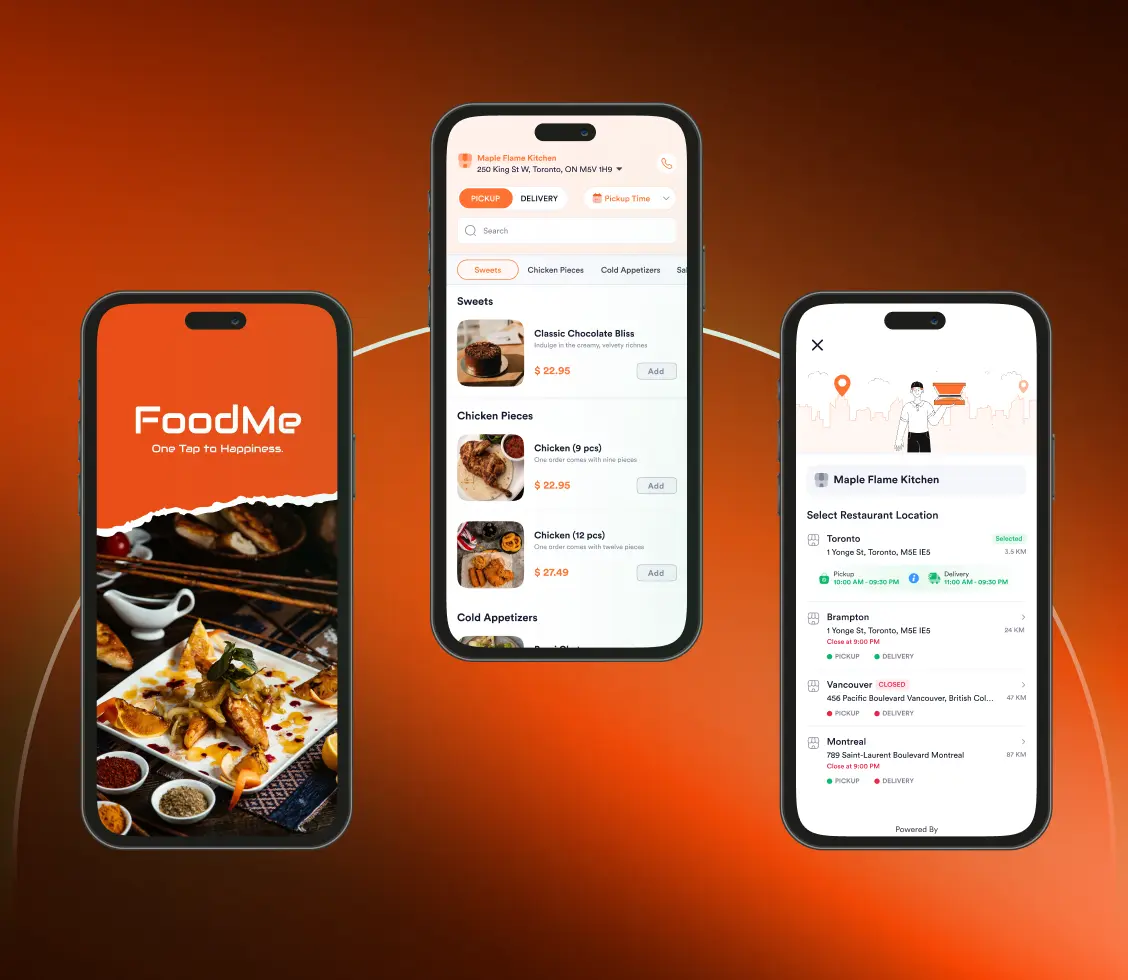
Online Ordering & Loyalty App - Foodme
Challenge
Restaurants lacked tailored digital tools for online ordering, payment processing, and customer engagement, limiting operational efficiency and scalable growth in an increasingly digital market.
Solution
We built custom mobile apps and websites with a central admin portal for menu and order management, Stripe-based secure payments, real-time order tracking, and built-in loyalty features including reward points, tiered memberships, personalised promotions, and push-notification campaigns to drive repeat customer engagement and retention.
Impact
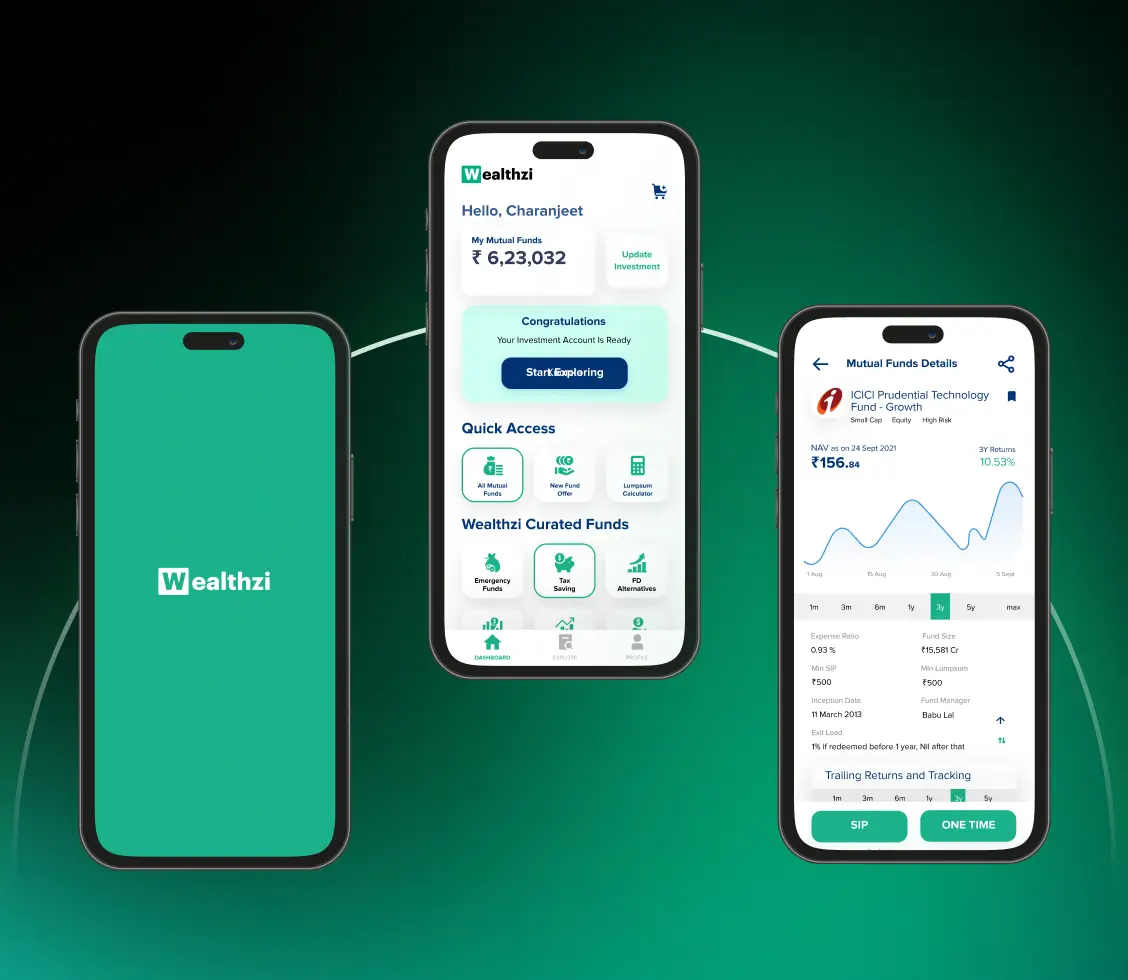
Wealth Management & Direct Investing APP — Wealthzi
Challenge
Indian investors lacked a unified, intelligent platform to manage diverse investments, relying on fragmented tools, manual advisory, and limited personalisation across mutual funds, PMS, and AIFs.
Solution
We built Wealthzi, a SEBI-compliant mobile and web platform offering zero-commission direct mutual fund investing, automated portfolio management, goal-based financial planning, AI-driven nudges for smarter decisions, seamless paperless KYC onboarding, and advisor tools for distributors to manage clients and grow their practice at scale.
Impact
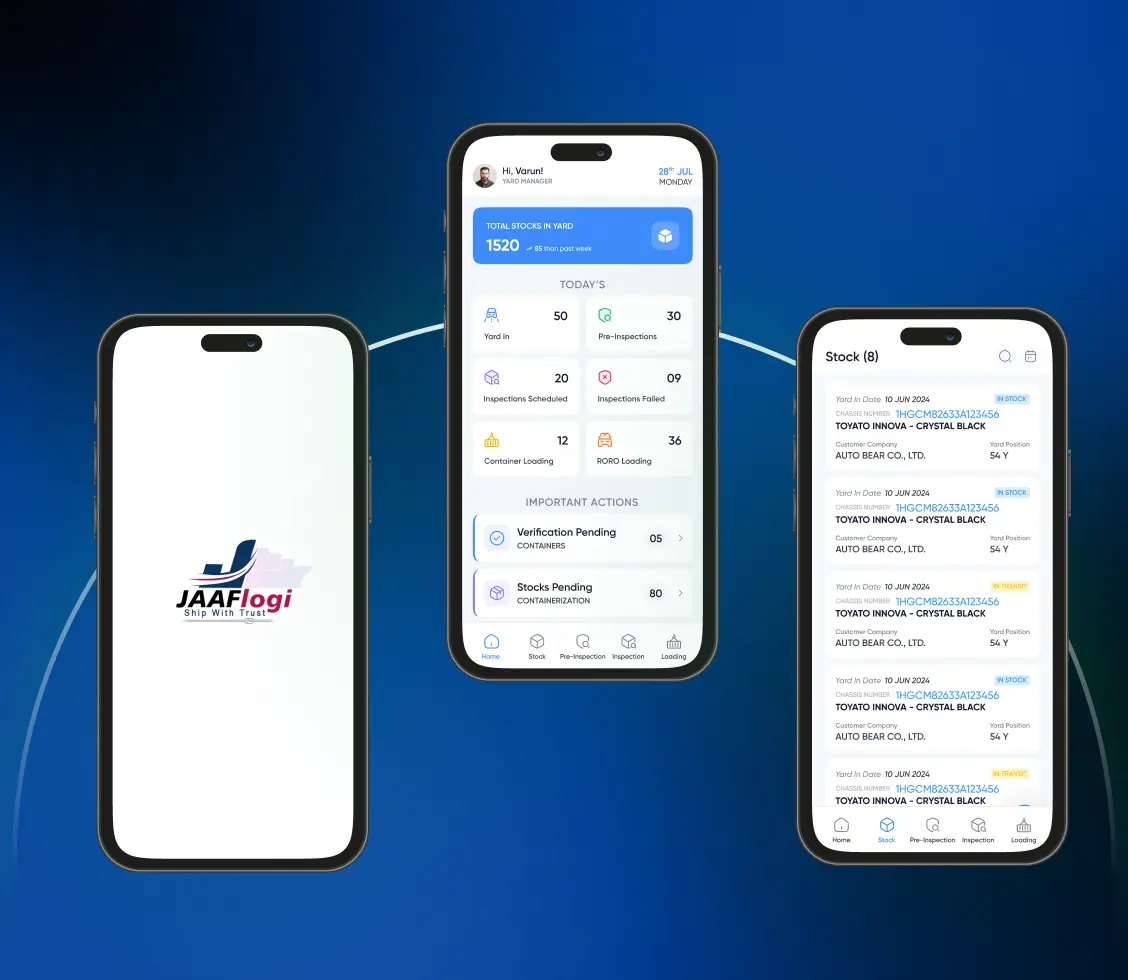
Vehicle Export Logistics APP — JAAFlogi
Challenge
Exporting used vehicles from Japan needs coordination across trucking, inspection, customs, and shipping, with manual processes causing delays and zero visibility for global buyers.
Solution
We built JAAFlogi, a web and mobile platform managing the vehicle export lifecycle end to end: stock, trucking, inspections, RORO shipping, customs, billing, real-time tracking, dedicated yard and driver apps, and a bilingual English/Japanese customer portal.
Impact
Certificates and Compliances
At Webority Technologies, we take pride in our professional recognition and reputation as a trusted name for all your business solution needs. Rely on us for expert guidance and exceptional results.









Delivery Networks We Build For
A ten-minute grocery run and a scheduled pharmaceutical delivery need the same trip discipline and very different rules around it. We build for both.

E-Commerce Last-Mile
High-volume doorstep delivery where first-attempt success and reattempt cost decide the margin. Address quality, delivery windows, cash collection, and returns to origin all handled as part of the same trip record.
Courier & Parcel Networks
Hub-and-spoke operations moving consignments through pickup, sortation, line haul, and final delivery, with partner performance and service-level commitments tracked per leg rather than only at the end.
Food & Quick Commerce
Minute-scale delivery where allocation latency is the product. Batching rules, prep-time-aware dispatch, live rider positioning, and surge incentives that keep supply on the road through the peak hour.
3PL & Aggregator Platforms
Multi-merchant operations where each client has its own rate card, service level, and reporting expectation, served from one partner pool with per-merchant billing and settlement kept clean.
Pharmaceutical & Cold Chain
Temperature-sensitive and regulated deliveries needing batch and expiry capture, chain-of-custody evidence, recipient verification, and an audit trail that stands up to inspection rather than a delivery photo alone.
Freight & Contract Carriers
Owner-driver and contracted fleet operations where trip rates, detention, fuel components, and vehicle documents drive settlement, and partner compliance has to be current before a load is assigned.
Retail & Distribution Fleets
Store replenishment and direct-to-customer runs from distribution centres, where scheduled routes, dock windows, crate and asset returns, and store acknowledgement all belong to the same delivery record.
Field Service & Installation Delivery
Heavy or assembled goods where the delivery includes installation, demonstration, or removal, so appointment slots, two-person crews, and task completion evidence matter as much as the drop itself.
Why Delivery Networks Choose Webority For Delivery Partner Portal Development
We bring a level of process maturity and certified delivery assurance that most software development companies in India cannot match, backed by certifications that require continuous evidence, not one-time audits.
CMMI Level 5
Fewer than 5% of global software firms hold CMMI Level 5. Webority holds it. Most competitors in India do not.
ISO 27001 Certified Information Security
Partner identity documents, customer addresses, and payout data are handled under ISO 27001 security controls, audited every sprint.
Built To Your Delivery Model
Your allocation rules, rate cards, and service levels define the software. You do not reshape your operation to suit a packaged platform.
You See Progress At Every Stage
Every 2 weeks you review working software, not slide decks. You stay in control of scope, direction, and delivery.
Scales With Volume And Geography
The same platform runs one city and a national network. Adding a hub is an onboarding task, not another system to run alongside.
Support That Continues After Go-Live
Monitoring, patching, issue resolution, and enhancements run under a formal SLA as your zones, merchants, and volumes change.
What Our Clients Say
Real words from the founders, product owners, and CTOs who chose Webority




Integrations We Build Into Delivery Partner Portals
Your existing systems stay in place and are connected through documented interfaces. These are the categories we integrate; the specific vendors are chosen from what your network already runs.

Order, Commerce & Warehouse Systems
Order and e-commerce platforms, marketplace feeds, warehouse and order management systems, and merchant APIs, so consignments flow in and status flows back without manual upload.

Payments & Partner Payouts
Payment gateways, UPI and card collection at the door, bank payout and disbursement rails, and wallet providers, reconciled against the trips that generated each earning.

Mapping, Telematics & Devices
Mapping, geocoding and routing services, GPS and telematics feeds, barcode scanners, and rugged handheld devices, so position and scan events land on the trip rather than in a separate tool.

Accounting, ERP & Communications
Accounting and ERP postings, merchant billing and settlement, identity and background verification services, plus SMS, WhatsApp, push, and voice channels driven by delivery status.
Strategic Partnerships
Technology partnerships that give our clients enterprise-grade tools, support SLAs, and preferential access.



Business Outcomes Delivery Networks Work Towards
What changes in the operation once the trip becomes the single record every function reads from.
More Drops From The Same Roster
Allocation on proximity and load, plus sequencing that respects real windows, removes the idle hours and backtracking that cost a shift deliveries nobody bills for.
Partners Who Stay
Fast activation, fair allocation, and earnings a partner can verify in the app reduce the churn that forces you to re-recruit the same capacity every quarter.
Fewer Failed First Attempts
Honest windows, proactive notice when an estimate drifts, and reschedule options cut the reattempts and returns that quietly double the cost of a delivery.
A Network You Can Actually Compare
Hubs and zones reporting on one definition of on-time delivery, first-attempt success, and cost per drop make performance differences visible instead of arguable.

How We Roll Out A Delivery Partner Portal
A structured, transparent CMMI Level 5 delivery lifecycle that gets one hub live and proven before the rest of the network follows.
Delivery Operation Discovery
We follow a consignment end to end: intake, allocation rules, hub flow, partner shift patterns, rate cards, exception handling, and the reports the business actually runs on.
Solution Architecture & Design
Data model for partners, trips, consignments and earnings, allocation and rate-card engine design, integration specifications, offline behaviour, and security controls documented before build.

Agile Development Sprints
2-week sprints with working software reviewed at every sprint end, so your dispatch lead corrects the allocation and earning rules while they are still cheap to change.

Integration, Data Migration & Testing
Partner, merchant, and open-consignment data migrated and reconciled, integrations tested end to end, and field testing of the partner app on real devices and patchy coverage before any hub depends on it.

Pilot Hub & Network Rollout
One hub goes live with dispatcher and partner training and on-site support, and the lessons from that site shape the rollout plan for the rest of the network.

Support & Continuous Optimisation
Monitoring, security patching, issue resolution, and enhancements under a formal SLA, with festive and seasonal peaks reviewed before they arrive rather than after they hurt.

Platform Capabilities Built In From The Start
The engineering foundations that keep a delivery platform reliable through a peak-hour surge and maintainable three years after launch.

Security & Data Protection
Encryption in transit and at rest, contact masking between partner and customer, audit trails on allocation and payout changes, and defined retention for identity and address data.

Roles & Access Control
Dispatcher, hub manager, partner, merchant, support, and finance each see and change only what their role allows, with approvals recorded against a named user.

Offline-Tolerant Partner App
Scans, proof of delivery, and exception capture continue where coverage drops, then synchronise without duplicating a trip or losing evidence collected at the door.
Multi-Hub & Multi-Merchant Architecture
Shared partner pools and reporting with per-hub zones, rosters, and rate cards, and per-merchant service levels, so adding a city does not fork the platform.
Documented Integration Layer
REST APIs and webhooks connecting order systems, mapping, payments, and accounting, so a vendor change is a mapping exercise rather than a rebuild.

Performance Under Peak Load
Event-driven allocation, caching, and asynchronous processing so dispatch stays responsive when order volume spikes and thousands of partner devices report at once.
Explore Related Logistics & Mobility Solutions
Last-mile delivery rarely sits on its own. These are the platforms it most often connects to.

Fleet Management System
Vehicle registers, utilisation, and preventive maintenance across an operating fleet. Explore fleet management software.
Vehicle Service Management
Job cards, service scheduling, and parts inventory that keep delivery vehicles on the road. Explore vehicle service management.

Logistics Software Solutions
Fleet, warehouse, shipment tracking, and route optimisation across the wider network. Explore logistics software solutions.
Custom Software Development
The wider engineering practice behind every platform we deliver. Explore custom software development.
Frequently Asked Questions
A delivery partner portal is the platform that runs the relationship between a delivery network and the riders, drivers, and contractors who move its consignments. It covers onboarding and verification, trip allocation and dispatch, route sequencing, a partner mobile app, proof of delivery, earnings and payouts, and performance reporting. The trip is the single record every function reads from, so the job allocated, the delivery evidenced, and the earning paid all describe the same piece of work.
We build partner onboarding and verification, order intake and allocation, automated dispatch, route sequencing and navigation, the delivery partner mobile app, proof of delivery and exception handling, earnings and payouts, customer tracking and notifications, cash handling and reconciliation, and analytics. Modules can be deployed individually or as one connected platform, and each is engineered around your allocation rules, rate cards, and service levels rather than adapted from a template.
Applicants complete a digital application, upload identity, licence, vehicle, and insurance documents, and move through verification, training acknowledgement, and asset issue as one tracked workflow with a visible stage per applicant. Checks can be routed to third-party verification services, and expiry dates on licences and insurance are monitored so a partner cannot be allocated work on lapsed documents.
Earning models are configurable and calculate from the completed trip record: per-trip fees, distance and weight slabs, peak and surge rates, streak and milestone incentives, penalties, and deductions. Partners see how each figure was reached in the app, statements are generated per cycle, and payout files reconcile against the same record finance reports from, which is what removes most payout disputes.
Yes. We build documented integration layers across order and e-commerce platforms, warehouse and order management systems, mapping and routing services, GPS and telematics feeds, scanning hardware, payment gateways and payout rails, accounting and ERP systems, and messaging channels. Your existing systems stay in place and are connected through purpose-built interfaces, so consignments, status, and financial postings stay synchronised without manual re-keying.
Yes. The partner app is built to keep working through poor or absent coverage. Scans, proof of delivery, photographs, and exception reports are captured locally and queued, then synchronise when the device reconnects, with conflict handling that will not duplicate a trip or lose evidence collected at the door. We field-test this on real devices and real routes before a hub goes live.
Timelines depend on scope, integrations, and how many hubs go live. A focused portal covering onboarding, dispatch, the partner app, and proof of delivery typically takes 4 to 6 months to a pilot hub; a multi-city network with rate-card engines, cash reconciliation, and merchant settlement generally takes longer. We give a detailed timeline after discovery and update it at every sprint milestone.