

























SOC Compliance Consulting Services
Close enterprise deals faster with an independent SOC attestation that speaks directly to the Trust Services Criteria your buyers demand. From first readiness assessment through CPA fieldwork and report issuance, we design the controls, collect the evidence, and manage the audit relationship so your team stays focused on building product. SOC 1, SOC 2, and SOC 3 engagements for technology companies and SaaS providers worldwide.
Get a Free Consultation
Fill in your details, and we will respond within 24 hoursTrusted by Leading Brands & Growing Startups







What Is SOC Compliance?
SOC compliance is a formal attestation in which a licensed CPA firm independently evaluates your internal controls against the AICPA Trust Services Criteria. SOC 1 covers financial reporting, SOC 2 the five trust categories, with Type I and Type II reports.
Every Webority engagement opens with a readiness assessment mapping your controls against each applicable criterion and producing a prioritised remediation plan. We then work alongside your engineering, security, and operations teams before CPA fieldwork begins.
Enterprise buyers, cloud marketplaces, and cyber insurers increasingly treat SOC 2 Type II as a baseline requirement. Our team brings a disciplined methodology to technology and SaaS clients across India and worldwide on a CMMI Level 5 certified process.
Our SOC Compliance Capabilities
Cover the full SOC journey from scope definition to attestation renewal with controls built to satisfy the Trust Services Criteria, survive CPA scrutiny, and meet the demands of your most security-conscious enterprise buyers.





System Scoping and Description
We establish the precise audit boundary that determines which infrastructure, services, data flows, and subprocessors fall inside your SOC report. A well-drawn scope is the foundation every subsequent control decision rests on and the opening section the CPA firm reads before anything else.
Control Environment Design
We architect the layered control environment that satisfies the AICPA Trust Services Criteria for your chosen categories, balancing technical safeguards, operational procedures, and governance structures so every criterion has demonstrable, testable coverage before the observation period opens.
Trust Services Mapping
Every control we design or implement is explicitly traced to the Trust Services Criterion it satisfies. The mapping is maintained live throughout the engagement so there are no orphaned controls, no criteria with missing coverage, and no surprises when the CPA firm opens the workpapers.
Evidence Automation
We instrument automated evidence capture from day one of the observation window so every control produces a timestamped, version-controlled artifact without manual effort. By the time the CPA firm begins testing, the complete evidence library is structured to match their workpaper format exactly.
Auditor Coordination
We act as the primary point of contact with the CPA firm through every phase of fieldwork, handling evidence requests, facilitating walkthrough sessions, and drafting management responses to exceptions so your engineering and security teams are not pulled away from product work during the audit.
Continuous Control Monitoring
After report issuance we sustain a monitoring program that tests controls against the Trust Services Criteria year-round, flags deviations before they accumulate into audit findings, and positions each annual renewal as a routine confirmation rather than a fresh project. Environment changes are assessed for attestation boundary impact as they happen.
Our Journey Of Making Great Things
Numbers that reflect over a decade of consistent delivery, trusted partnerships, and engineering excellence.
Years of experience
Projects delivered
Clients served
Countries reached
Trusted by India's Leading Government Institutions
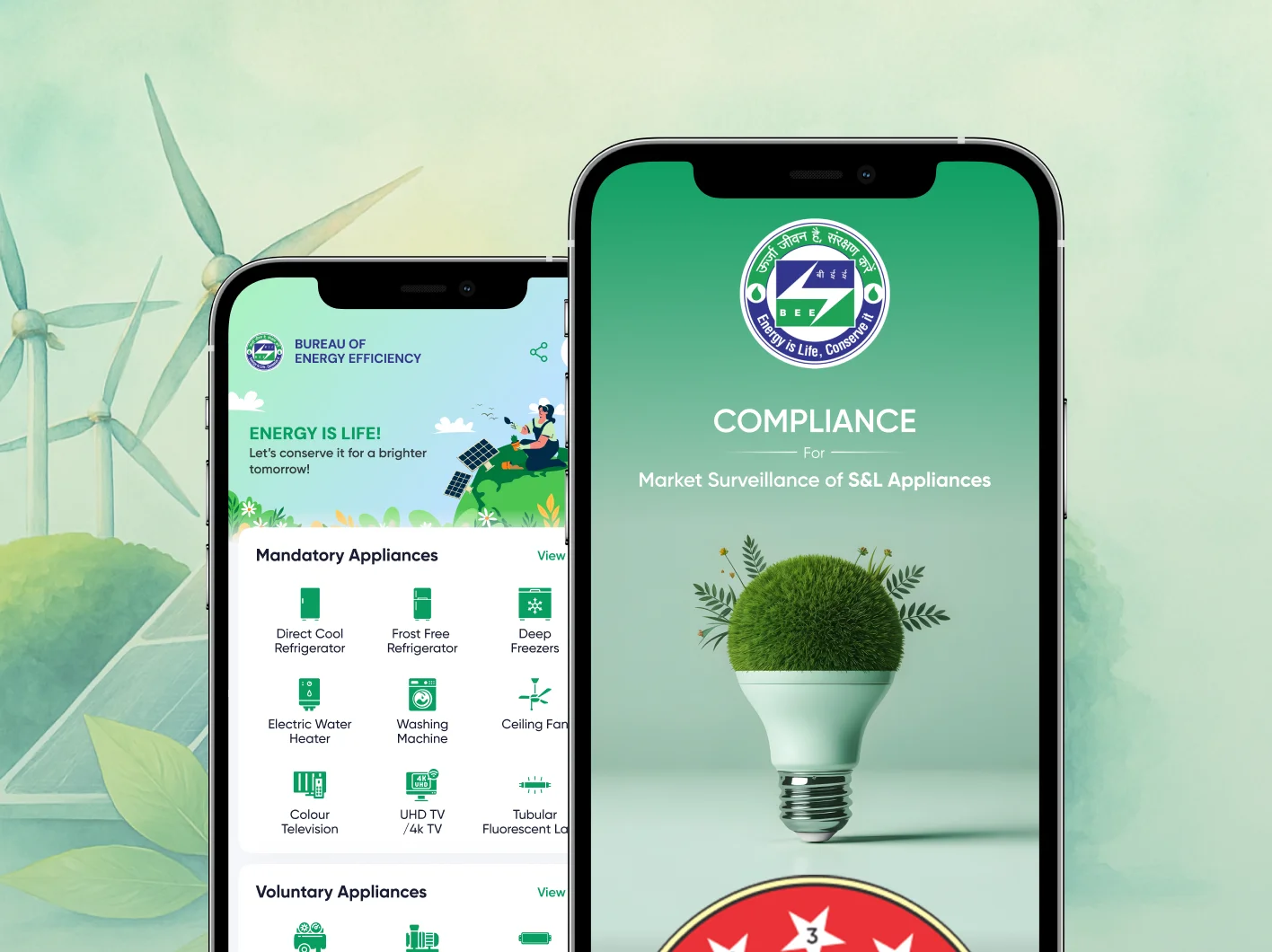
Nine central government ministries have trusted Webority to build their digital platforms from parliamentary operations and defence logistics to national health infrastructure and citizen data collection at scale. Every engagement runs on NIC cloud, meets GIGW accessibility standards, and operates under data handling requirements that commercial projects rarely demand.

Sansad Cafeteria
Ministry of Parliamentary Affairs

Bureau of Energy
Ministry of Power

Safdarjung Hospital
Ministry of Health & Family Welfare

Quality Council of India
Ministry of Commerce & Industry

Munitions India Limited
Ministry of Defence

Sashastra Seema Bal
Ministry of Home Affairs

Vasudha Foundation
Government of Karnataka

National Book Trust
Ministry of Education

Textiles Committee
Ministry of Textiles
Our Comprehensive SOC Services
End-to-end SOC services that take you from gap assessment to clean attestation report, with controls built for the full observation window and ongoing renewal support so your posture never lapses.
- 01 SOC Readiness Assessment
- 02 Control Design and Documentation
- 03 Trust Services Criteria Implementation
- 04 SOC Audit Support
- 05 Evidence Collection and Monitoring
- 06 Continuous Compliance and Vendor Risk






Certificates and Compliances
At Webority Technologies, we take pride in our professional recognition and reputation as a trusted name for all your business solution needs. Rely on us for expert guidance and exceptional results.




Key SOC Compliance Benefits
A clean SOC attestation creates measurable commercial value across enterprise sales velocity, insurance premiums, security questionnaire volume, and your long-term ability to scale trust with new clients and partners.

Faster Enterprise Deals
A SOC 2 Type II report replaces the lengthy back-and-forth of manual security questionnaires in enterprise procurement. Your sales team shares the report under NDA and the deal moves forward without weeks of custom evidence requests slowing the close.
Independent Attestation Proof
An opinion issued by a licensed CPA firm carries independent weight that no self-assessment or vendor questionnaire can match. Clients rely on the attestation without needing to audit your environment themselves, reducing friction across every new relationship.
Stronger Internal Controls
The discipline of mapping and testing controls against the Trust Services Criteria surfaces access management gaps, change control weaknesses, and monitoring blind spots that the SOC process closes permanently, leaving your security posture measurably stronger than before the engagement began.
Fewer Vendor Questionnaires
Enterprise buyers who receive your SOC 2 Type II report typically waive or substantially reduce the standard information security questionnaire they send every new vendor. The time your security and engineering team saves on repetitive questionnaire cycles is immediately redirected to product work.
Lower Cyber Insurance Cost
Underwriters use SOC 2 Type II reports to quantify control maturity when pricing cyber coverage. Organizations with a clean attestation on file routinely qualify for better policy terms and lower premiums, often recovering a meaningful portion of the total compliance investment within the first renewal cycle.
Scalable Trust Foundation
The control framework and evidence library built for your SOC 2 engagement provides the foundation from which ISO 27001, HIPAA, and other framework requirements can be met at a fraction of the cost of starting fresh. Each additional framework you pursue gets materially easier because the hard work of building a documented control environment is already done.
Why Enterprises Choose Webority for SOC Compliance
Earning a clean SOC attestation requires practitioners who understand both the AICPA criteria and the practical realities of running engineering teams under audit observation. Our approach pairs deep SOC expertise with an ISO 27001 certified practice and a track record of successful CPA engagements.
Audit Firm Ready
We prepare every control, policy, and evidence package to the exact standard your chosen CPA firm expects, so the readiness assessment we deliver is the same bar the auditor will test against.
Type I to Type II Journey
We plan the full path from a first Type I attestation through a sustained Type II program, so each stage builds deliberately on the last rather than treating annual renewals as separate projects.
Advise and Remediate Together
The same team that identifies your control gaps designs and implements the fixes, keeping advisory and delivery in one place and eliminating the hand-off delays that arise when consultants and implementers are separate firms.
Continuous Evidence Capture
We instrument evidence capture from day one of the observation period so that every control has a complete, timestamped audit trail by the time the CPA firm begins its own testing. No scramble to reconstruct records at the end of the window.
Controls Mapped to Criteria
Every control we implement is explicitly traced to the Trust Services Criterion it satisfies. The mapping is live and maintained throughout the engagement so there are no orphaned controls and no criteria with missing coverage when the auditor opens the workpapers.
Support Through Fieldwork
We stay active through every stage of CPA fieldwork, handling evidence requests, facilitating walkthrough sessions, and drafting management responses to exceptions so the audit reaches the opinion stage without drawing on your engineering team's time.
What Our Clients Say
Real words from the founders, product owners, and CTOs who chose Webority




Strategic Partnerships
Technology partnerships that give our clients enterprise-grade tools, support SLAs, and preferential access.




Our SOC Compliance Process
A six-stage methodology that takes you from an undefined system scope to an issued attestation report, with a concrete output and a quality gate at every step before moving forward.
Define System Scope
We work with your engineering, operations, and legal teams to draw the precise audit boundary: which services, infrastructure components, data flows, and subprocessors fall inside the SOC scope. The system description drafted here becomes the opening section of the final attestation report and anchors every subsequent control decision.

Readiness Assessment
We test your existing controls against each Trust Services Criterion in scope, gather sample evidence, and score every gap by the likelihood it would generate an audit exception. The output is a prioritised remediation plan with realistic effort estimates so your team knows exactly what to fix and in what order before the observation period begins.

Control Remediation
We close each gap identified in the readiness phase by designing and implementing the required controls, writing the supporting policies and procedures, configuring technical safeguards, and assigning clear owners and operating frequencies. Every control is documented with the criterion it satisfies before the observation window opens.

Evidence Collection
We capture and organise evidence of control operation throughout the observation period, run periodic internal tests to verify operating effectiveness, and address any exceptions immediately rather than letting them accumulate into audit findings. The complete evidence library is structured to match the CPA firm's workpaper format so handover during fieldwork is fast and unambiguous.

Auditor Fieldwork
We act as the primary liaison with the CPA firm throughout testing: responding to evidence requests, scheduling and facilitating control walkthroughs, drafting management responses to any exceptions identified, and coordinating with your legal and finance teams on management representations. Fieldwork is treated as a managed delivery stage, not a reactive scramble.

Attestation and Renewal
Once the CPA firm issues the report we help you prepare distribution agreements and share the attestation with clients under appropriate NDA terms. We then transition into the continuous monitoring program that keeps controls operating effectively between annual audit cycles and positions the next renewal as a routine confirmation rather than a fresh project.

Frequently Asked Questions
SOC 1 covers internal controls over financial reporting and is the right report for service organizations whose operations directly affect the financial statements their clients produce, such as payroll processors and loan servicers. SOC 2 is the report most technology and SaaS companies need: it evaluates security, availability, processing integrity, confidentiality, and privacy controls against the AICPA Trust Services Criteria. SOC 3 is a publicly shareable condensed version of the SOC 2 opinion that can be posted on your website or included in marketing collateral without requiring a confidentiality agreement.
A Type I report is a point-in-time opinion: the CPA firm evaluates whether your controls were suitably designed at a specific date but does not test whether they operated in practice. A Type II report covers an observation window, typically six to twelve months, during which the auditor tests whether each control operated effectively throughout the period. Most enterprise procurement teams and cloud marketplace programs require a Type II because it demonstrates sustained control operation rather than a design snapshot.
The Trust Services Criteria are the AICPA's control framework for SOC 2 engagements, organized into five categories. Security is the only mandatory category and covers logical and physical access controls, change management, risk assessment, monitoring, and incident response. The remaining four categories are optional: availability addresses uptime and performance commitments, processing integrity covers accuracy and completeness of processing, confidentiality addresses how non-public information is protected, and privacy covers how personal data is collected, used, retained, and disposed of. Most organizations include Security at minimum and add the categories that match their service commitments to clients.
A first SOC 2 Type II engagement typically takes nine to fourteen months from readiness assessment to final report issuance. The readiness and remediation phase usually runs two to three months depending on how many gaps are identified. The Type II observation window is a minimum of six months, during which controls must operate continuously. CPA fieldwork and report drafting then add another six to ten weeks. Organizations that already have ISO 27001 or a mature security program can often compress the remediation phase and reach the final report closer to the nine-month mark. After our readiness assessment we give you a milestone schedule specific to your environment rather than a generic estimate.
SOC reports must be issued by a licensed CPA firm. Webority's role is to prepare your organization for the audit, not to perform it. We carry out the readiness assessment, design and implement the controls, collect the evidence across the observation period, and manage the day-to-day relationship with the CPA firm during fieldwork. Keeping the advisory and audit functions separate is an AICPA requirement: it ensures the attestation carries full independence and is accepted without question by your clients and their own auditors.
ISO 27001 and SOC 2 serve overlapping but distinct audiences. ISO 27001 certification is the dominant security credential in Europe, the Middle East, and Asia-Pacific and satisfies procurement requirements across those markets. SOC 2 Type II is the standard demanded by US-headquartered enterprise buyers and cloud marketplace programs. If you are selling into North American markets alongside other regions you will very likely need both. The practical benefit of having ISO 27001 first is that the control framework you built maps closely to the Trust Services Criteria, so the SOC 2 readiness phase is materially shorter and less costly than it would be without the prior certification.