

























Event Software Development for Organisers, Venues & Agencies
Webority builds the five systems an event business actually runs on: attendee apps, ticket booking portals, event CRM, live streaming platforms and travel portals. Separate systems that connect, because the buyer, the attendee and the client who commissions the event are three different people. Your data stays on your infrastructure and the code is handed over. Engineered under CMMI Level 5 and ISO 27001, from our Delhi NCR centre for organisers across India, the US, the UK and the Gulf.
Get a Free Consultation
Fill in your details, and we will respond within 24 hoursTrusted by Leading Brands & Growing Startups






What Event Software Development Actually Means
An event is sold months before it exists, costed against suppliers you do not control, and delivered in a single unrepeatable window where nothing can be retried tomorrow. The software that supports it is not one product. It is an app for those who attend, a portal for those who buy, a back office for the client who commissions, a stream for those who cannot travel, and a booking engine.
Most organisers should not build any of it. Cvent, Whova, Eventbrite, Zoom and HoneyBook are good products, and at ordinary scale far cheaper than anything we would make. This page is about the narrower case where the economics invert, the data has to be yours, or the platform simply cannot model how you trade.
Where Event Platforms Stop Fitting
Six constraints that show up across every kind of event business, whatever it sells. None is a missing feature. Each is a structural mismatch between how an event actually works and what a multi-tenant platform is able to offer.


You Sell It Before It Exists
An event is quoted, contracted and paid for long before anything is delivered, against a guest count that stays provisional until the final week and supplier rates that were agreed a season ago. Software built around a deal that closes once, or a project with a fixed scope, has nowhere to put a quantity that keeps moving after the contract is signed. The real number ends up in a spreadsheet beside the system.
The Per-Head Fee Never Stops
Platforms price per attendee, per ticket or per seat, which is fair when you are small and becomes the largest line in the budget when you are not. The fee scales with your success rather than with the cost of serving you, and it recurs for as long as you keep running events. There is a crossover point for every organiser, and past it a build stops being an expense and starts being the cheaper option.
Your Audience Sits On Someone Else's Platform
The buyer list, the attendee history and the client relationship are the durable value of an event business, and on a marketplace they belong to the marketplace. You may be limited in what you can export, charged to reach the audience you built, or told the relationship is theirs. For anyone planning a second and third edition, that is a structural problem rather than a pricing one.
Peak Load Is the Entire Business
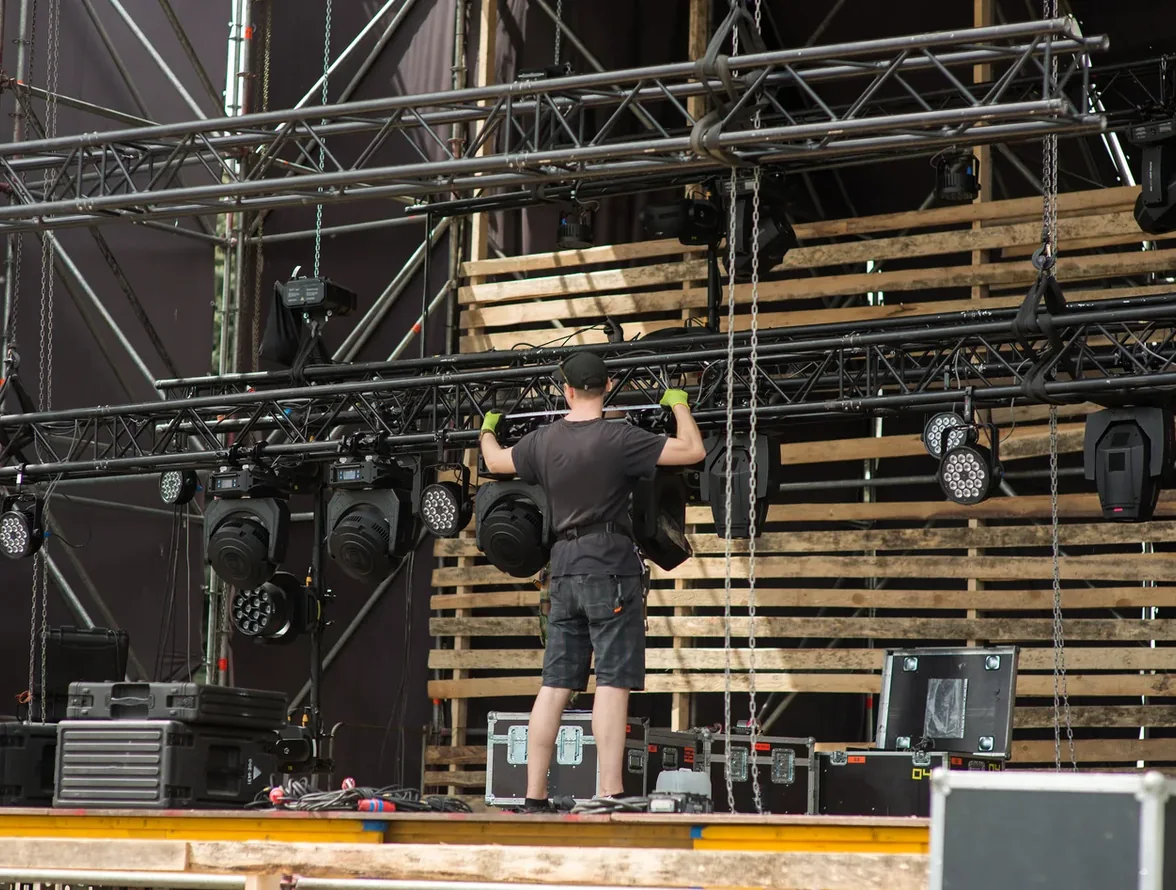
An event's traffic is not a curve, it is a spike: an on-sale, a doors-open, a keynote everyone joins at once. The system is idle for weeks and then carries its whole year in ten minutes, and it must not oversell, double-admit or fall over while doing it. Capacity that is adequate on average is irrelevant, because the only minutes that count are the ones where everyone arrives together.
The Venue Network Will Fail
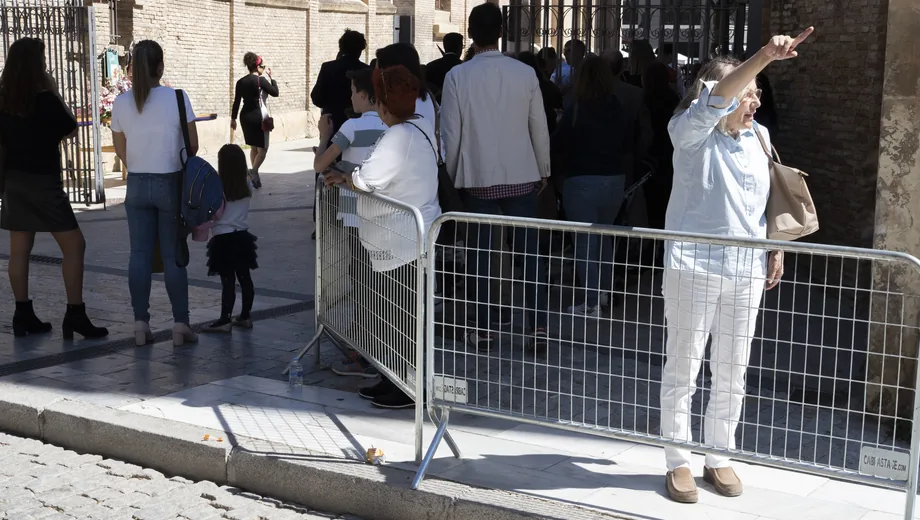
Venue Wi-Fi fails at the precise moment it matters, which is a queue of people at a door. Anything that assumes a live connection to validate a ticket or check in a delegate stops being software and becomes a bottleneck with a laptop attached. Doors have to keep moving offline and reconcile afterwards, across several scanners at once, and most platforms treat that as an edge case rather than the normal condition.
Indian Tax Follows the Venue
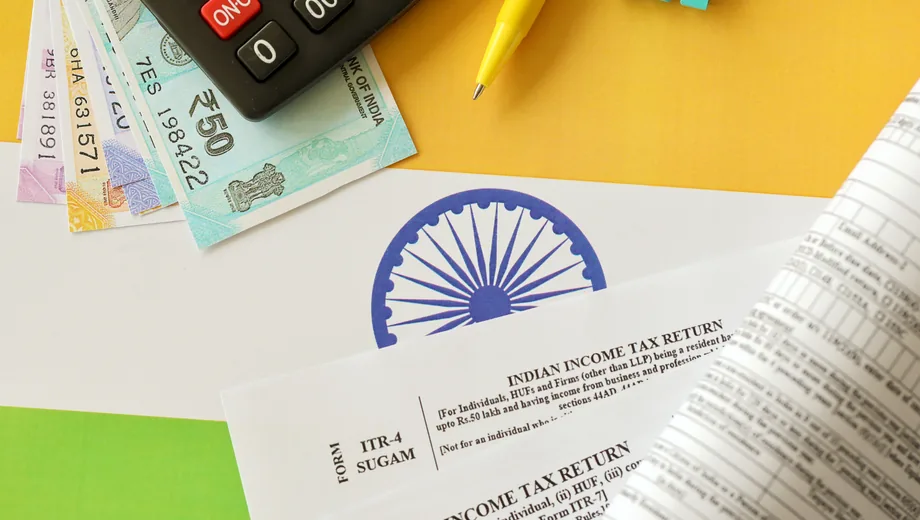
Place of supply for an event depends on where it is held, which is routinely a different state from where the client or the organiser is registered. Add reverse charge on unregistered vendors, TDS on vendor payments and e-invoicing thresholds, and a platform built for another market models none of it. For a multi-state organiser this is the hardest lock-out of the six, and often the decisive one.
Our Event Software Development Services
Five systems, built separately and designed to connect, because each one serves a different person at your event.
- 01 Event App Development
- 02 Ticket Booking Portals
- 03 Event CRM & Back Office
- 04 Streaming & Virtual Events
- 05 Travel & Delegate Movement




What We Build Into Every Event System
Whichever of the five you commission, these are the parts that decide whether it holds up on the day. Where a deeper review is warranted, our cybersecurity consulting team works alongside the build.

Offline-First Doors
Check-in and gate validation that keep working when the venue network drops, holding data locally and reconciling across every scanner once it returns.

Inventory That Cannot Oversell
Seats, passes and capacity held under concurrency so a spike cannot sell the same place twice, with holds that expire and release predictably.

Built for the Spike
Load-tested against your actual on-sale or doors-open profile, with a virtual queue where demand exceeds supply, because average capacity is not the thing being tested.

Payments & GST on Events
UPI, cards and netbanking settling to your own account, with place of supply, reverse charge and TDS handled as configurable rules rather than hard-coded assumptions.

DPDP-Aligned Attendee Data
Consent capture, purpose limitation, retention and erasure built in from the start, because an attendee list is personal data and an event collects a great deal of it.

You Own the Data & the Code
The database runs on your infrastructure and the source is handed over, so nobody else decides what you may export or charges you to reach your own audience.
Our Journey Of Making Great Things
Numbers that reflect over a decade of consistent delivery, trusted partnerships, and engineering excellence.
Years of experience
Projects delivered
Clients served
Countries reached
Trusted by India's Leading Government Institutions
Nine central government ministries have trusted Webority to build their digital platforms from parliamentary operations and defence logistics to national health infrastructure and citizen data collection at scale. Every engagement runs on NIC cloud, meets GIGW accessibility standards, and operates under data handling requirements that commercial projects rarely demand.
Sansad Cafeteria
Ministry of Parliamentary Affairs

Bureau of Energy
Ministry of Power

Safdarjung Hospital
Ministry of Health & Family Welfare

Quality Council of India
Ministry of Commerce & Industry

Munitions India Limited
Ministry of Defence

Sashastra Seema Bal
Ministry of Home Affairs

Vasudha Foundation
Government of Karnataka

National Book Trust
Ministry of Education

Textiles Committee
Ministry of Textiles
Event Businesses We Build For
Each of these sells a promise months before it delivers anything, then has one unrepeatable window to make good on it. That shared shape is why they belong on one architecture, and why each still needs different rules on top of it.

Conference & Exhibition Organisers
Selling stands, sponsorships and delegate passes as three different kinds of inventory over a long lead time, then registering everyone through one door on the morning. Usually an attendee app and a registration desk first, with ticketing where passes are sold publicly.
Concert & Festival Promoters
The whole year decided in the ten minutes of an on-sale, then thousands through the gates in an hour. Virtual queue, inventory that cannot oversell, anti-scalping, and offline scanning at every entrance. This is where platform commission hurts most and the crossover comes earliest.
Event & Experiential Agencies
Pitching against other agencies on a deadline, then delivering across cities with a different vendor set in each. The back office is the priority here: rate contracts, margin per event, and a pipeline where the same client briefs you four times a year.
Venues, Stadiums & Auditoriums
Selling space and dates as well as seats, with a seat map that reflects a real building rather than a grid, availability holds that must never double-sell, and box office alongside online sales for the walk-up who still pays at the counter.
Corporate & Internal Event Teams
Town halls, sales kick-offs and customer summits run against a departmental budget, needing SSO against the corporate directory, cost-centre reporting finance already recognises, and a hybrid stream for everyone who could not fly in.
Government & Public Sector Events
Summits and public programmes where accreditation, access tiers and audit trails are conditions rather than features, and where data residency requirements frequently rule out a cloud platform before the conversation about features has even started.
Buy a Platform, or Build Your Own?
For most organisers the honest answer is buy, and we would rather say so than sell you a project you did not need. Here is the test we apply, and it disqualifies a good share of the enquiries we get.
When Buying Is the Right Answer
A handful of events a year, a familiar format, ordinary attendee numbers, and no requirement that the data live anywhere in particular. Cvent, Whova, Eventbrite, Zoom and HoneyBook do this well for a fraction of what a build costs. If that is you, subscribe. We will say so in discovery rather than quote you a project.
When It Stops Working
Five conditions, and one is usually enough: per-attendee or per-ticket fees past their crossover point; an audience list you cannot afford to hold on someone else's platform; integrations the product will not expose; data residency rules that forbid cloud SaaS; or Indian tax treatment the platform does not model. The tell is simple, as ever: your spreadsheets are doing the work the software cannot.
What Building Actually Costs
More than a subscription up front, and it does not stop at launch: tax rules move, hardware is replaced, each season wants something new. It earns its cost when the per-head fees have outgrown it, or when ownership and compliance are conditions rather than conveniences. That is a commercial judgement, and it is yours to make with real numbers rather than ours to assert.
How We De-Risk the Decision
Discovery first, as a paid, self-contained piece of work that ends in a recommendation you own, including a recommendation to subscribe to something instead. If a build follows, it starts with the one system that is actually costing you money, and proves itself on a single event before it grows.

How We Build Your Event Platform
A sequence built around your calendar. We start with the system that is costing you the most, rehearse it against a real event before it carries one, and go live between editions rather than during one.
Discovery & Event Model Mapping
We walk one real event end to end and work out which of the five systems you actually need. This is also where we tell you if a subscription would serve you better, which is a conclusion we reach more often than not.
Architecture & Experience Design
The decisions that are expensive to reverse: how inventory is held under concurrency, what happens offline at a door, where the data lives, and which hardware you already own that we have to work with rather than replace.
Platform & Back-Office Build
Built in reviewable increments against a real past event rather than demo data that always balances, so the awkward cases surface while there is still time to design for them properly.

Payments, Tax & Integrations
Gateways and settlement to your own account, GST and TDS configured with your chartered accountant in the room, and wiring into the CRM, accounting and directory systems you already run.

Load Test, Dry Run & Go-Live
We rehearse the spike before it happens: load testing against your real on-sale or doors-open profile, a security pass, and a full dry run with your team and your hardware on the actual venue network.

Event-Day Support & Next Editions
We are on hand for the hours that matter, and afterwards we add what the first edition proved you actually needed, which is never quite the list anybody wrote beforehand.

Why Event Businesses Choose Webority
What an organiser weighs before replacing a platform that, for all its fees, has never yet failed on the morning of a show.
Built Under CMMI Level 5 & ISO 27001
Your system is engineered under CMMI Level 5 process quality and ISO 27001 security controls. Against a field of small studios, that is an audited standard of delivery and data handling rather than a promise.
We Model the Event, Not a Generic App
Spiky load, offline doors, inventory that cannot oversell, and a headcount that moves until the last week. We design for the conditions an event actually runs under rather than the average case.
We Tell You When a Subscription Is Enough
On most of these problems the honest answer is buy, and we say so and lose the project. A partner who only ever recommends the expensive option is not advising you, they are quoting.
Your Audience Stays Yours
Buyer records, attendee history and client relationships are the durable asset. The database sits on your infrastructure, the code is handed over, and nobody charges you to reach your own audience.
Delhi NCR Delivery, Global Clients
Our engineering centre is in Delhi NCR and we build for organisers across India, the US, the UK and the Gulf, with overlap hours and a cost base that makes a custom build viable.
We Stay Past the First Event
The first edition teaches you what the brief got wrong. We are there for event day, and for the changes the next one needs once you have seen the system carry a real crowd.
Certificates and Compliances
At Webority Technologies, we take pride in our professional recognition and reputation as a trusted name for all your business solution needs. Rely on us for expert guidance and exceptional results.








Explore Our Event Solutions
Purpose-built software for every part of an event business
 Event App Development
 Ticket Booking Portal Development
 Event CRM Development
 Video Streaming & Virtual Events
 Travel Portal Development
Related Services & Capabilities
Where an event business needs more than the five systems above, these are separate builds designed to connect to them rather than overlap.




What Our Clients Say
Real words from the founders, product owners, and CTOs who chose Webority




Frequently Asked Questions
Event software development is building the systems an event business runs on, rather than renting them from a platform. In practice that is five distinct products: an attendee app for the people who show up, a ticket booking portal for the people who buy, an event CRM for the client who commissions the event, a streaming platform for the audience who watch remotely, and a travel portal where guests have to be moved. They are separate systems because they serve separate people, and most organisers need one or two of them rather than all five.
Five, and they are built as separate systems that connect rather than one product that claims everything. Event apps cover multi-track agenda, RSVP, offline check-in, badge printing and networking. Ticket booking portals cover seat maps, virtual queues, UPI and card payments, and gate validation. Event CRM covers the enquiry pipeline, per-head costing, vendor rate contracts, run of show and GST invoicing. Video streaming platforms cover RTMP ingest, adaptive bitrate delivery, WebRTC interaction and an owned recording library. Travel portals cover multi-supplier booking, GDS and NDC integration and dynamic packaging.
For most organisers, buy. Cvent, Whova, Eventbrite, Zoom and HoneyBook are good products, and if you run a familiar format at ordinary scale they will serve you better and far cheaper than anything we would build. Building earns its cost at a specific threshold: per-attendee or per-ticket pricing that has passed its crossover point, attendee and buyer data you cannot afford to hold on someone else's platform, integrations a product will not expose, data residency rules that forbid cloud SaaS, or Indian tax treatment a platform built for another market does not model. If none of those describe you, subscribe, and we will say so in discovery rather than quote you a build.
It depends on which of the five systems you need and how much of each, so we quote after discovery rather than from a price list. The drivers that actually move the number are the count of integrations, whether payments and settlement are in scope, whether anything has to work offline or on-premise, the peak concurrency you must survive, and how much existing data has to be migrated. A single focused module is a fraction of a multi-system build. The honest comparison is not our fee against a subscription, but our fee against what the subscription plus its per-attendee or per-ticket commission will total over the years you intend to keep running.
Yes, and on most platforms you do not, which is usually the reason a build is being considered. The database runs on your infrastructure, in your cloud account or on-premise, and the source code is handed over at the end. Your attendee list, buyer records, client history and vendor rate cards are the durable asset of an event business, and nothing in the arrangement lets a vendor decide what you may export, charge you to reach your own audience, or take a percentage of every ticket you sell.
It has to, because it will. Venue networks fail at exactly the moment they matter, which is a queue of people at a door. We build check-in and gate validation offline-first: the device holds the data it needs locally, keeps admitting and validating without a connection, and reconciles when the network returns, including across several doors scanning at once. Anything that assumes a live connection at the door is not fit for an event, whatever it does the rest of the time.
Yes. The systems are built to compute, capture and report GST on ticket sales and on event invoicing, including place of supply where an event is held in a different state from the client's registration, reverse charge on unregistered vendors, TDS on qualifying vendor payments, and e-invoicing where thresholds apply. Rates, thresholds and treatment change and are your chartered accountant's call, so the rules are configurable rather than hard-coded, and invoices push into Tally or Zoho Books rather than exporting a file for someone to re-key.
It depends on who you are serving. If people buy admission from you, you need a ticket booking portal. If people attend and you need them checked in, scheduled and networking, you need an event app. If a client commissions the event and you carry the cost of delivering it, you need an event CRM. If part of the audience watches remotely, you need a streaming platform. If guests or delegates have to be flown, housed and moved, you need a travel portal. Most organisers need one or two of these, not all five, and discovery is where we work out which.