



























Event CRM Development for Planners, Agencies & Venues
Webority builds the back office an event business actually runs on: the client and enquiry pipeline, quotes priced per head against a moving guest count, vendor rate contracts, run of show, crew rostering, cost sheets and margin per event, and GST-compliant invoicing that lands in Tally or Zoho Books. Your client list and the code are yours. Engineered under CMMI Level 5 and ISO 27001, from our Delhi NCR centre for event businesses across India, the US, the UK and the Gulf.
Get a Free Consultation
Fill in your details, and we will respond within 24 hoursTrusted by Leading Brands & Growing Startups






What Event CRM Development Actually Means
A client commissions an event. Between that first enquiry and the final invoice sits a site visit, a quote priced per head, a set of vendors on contracted rates, a minute-level run of show, a half-freelance crew, an advance schedule, and a margin you only know afterwards. Event CRM development is building the system that holds all of that, shaped to how your business trades.
Most event businesses should not build this. HoneyBook, Dubsado and Planning Pod are good products, and for a solo planner or a small team running a familiar kind of event they are better and cheaper than anything we would make. This page is about the narrower case where a general CRM stops fitting, and where the gap is structural rather than a missing feature.
Why Event Businesses Outgrow a General CRM
Six mismatches between how an event is actually sold and delivered, and how general-purpose software models it. None is a missing feature; each is a different shape. If what you need is a general CRM rather than an event one, our CRM development team builds those too.




An Event Is Priced Per Head, Not Per Project
A general CRM prices a project: one number, agreed once. An event is a rate per plate multiplied by a guest count that stays provisional until the week of, against a guaranteed minimum the client committed to, reconciled afterwards against what was actually consumed. No horizontal product has a data model for a quantity that keeps moving after the contract is signed, so the real number ends up in a spreadsheet beside it.
Your Vendor Rates Are Contracted, Not Typed
You do not have a vendor list, you have a negotiated rate card per vendor, per season, per city, and those rates are the margin. A product gives you contacts. When a quote cannot price itself from contracted rates, somebody re-types last year's numbers under time pressure, and the error is invisible until the event is delivered.
A Run of Show Is Not a Gantt Chart
Software offers you tasks with due dates. A run of show is minute-level, multi-track, cue-driven, tells eleven different crews what happens at 18:42, and changes on site while it is running. Mapping one onto a project plan is the single most common reason an event team quietly abandons a CRM and goes back to the shared sheet.
Margin Lives Per Event, Not Per Client
A general CRM reports revenue per client. You need contribution margin per event, after vendor cost, crew cost, transport, write-offs and the things that went wrong on the day, and only then rolled up per client across events. Without that, you find out which events made money at year end, which is far too late to stop repeating the ones that did not.
Per-Seat Pricing Punishes a Seasonal Crew
Six permanent staff and forty freelancers in season is a normal shape for this industry, and every per-seat product bills you as though all forty-six work all year. So the freelancers get left out of the system, which means the roster, the call sheets and the day-rate costs live outside it too, which is most of the reason the system does not reflect reality.
Indian Tax Follows the Venue, Not the Client
Place of supply for an event depends on where the event is held, which is routinely a different state from where the client is registered. Add reverse charge on unregistered vendors, TDS on vendor payments, and e-invoicing thresholds, and a platform built for another market models none of it. This is the hardest structural lock-out, and for a multi-state agency it is decisive.
Core Modules of a Custom Event CRM
Six connected modules that carry an event from first enquiry to final invoice, with the margin visible the whole way.
- 01 Client & Enquiry Pipeline
- 02 Quotes, Costing & Proposals
- 03 Vendors & Rate Contracts
- 04 Run of Show & Crew
- 05 Budgets, Cost Sheets & Margin
- 06 Contracts, Advances & GST






The Modules a General CRM Misses
These are the six that send event teams back to spreadsheets. Not because the product is bad, but because none of them fit a model built for deals, projects and seats.

Per-Head & Per-Slab Costing
Pricing built from a rate per guest, per day or per slab, against a headcount that stays provisional until the week of, with a guaranteed minimum and reconciliation afterwards.

Vendor Rate Contracts
Negotiated rate cards per vendor, per season and per city with validity windows, so quotes price from agreed rates rather than someone's memory of last year.

Run of Show
A minute-level, multi-track, cue-driven schedule with owners and dependencies, published as call sheets and editable on site while the event is running.

Crew Rostering
Permanent staff and freelancers on one roster with day rates, availability and double-booking checks, so who is working and what they cost are the same record.

Venue Availability
A live view of which spaces and dates are held, provisional or confirmed across your calendar, so a hold is never sold twice and a release is never missed.

Margin Per Event
Contribution margin for one event after vendor, crew and write-offs, then rolled up per client and per entity, rather than revenue per client at year end.
Our Journey Of Making Great Things
Numbers that reflect over a decade of consistent delivery, trusted partnerships, and engineering excellence.
Years of experience
Projects delivered
Clients served
Countries reached
Our Success Stories
Every case study below is a product in production, built across healthcare, fintech, government, and e-commerce, and measured by the outcomes it delivers.
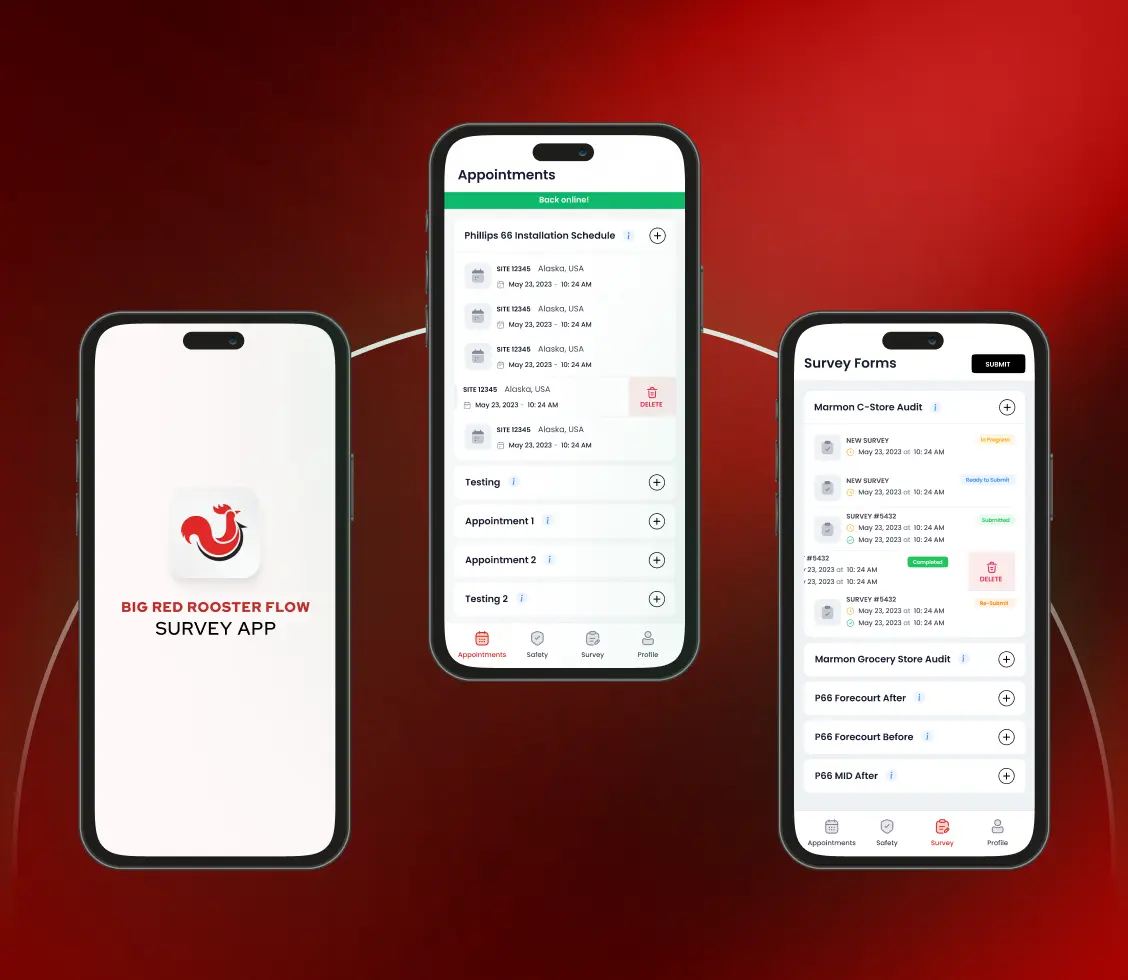
Field Inspection App - BRRF
Challenge
Big Red Rooster Flow's paper-based inspections across 500+ gas stations for Exxon, Marathon, 7-Eleven, Gulf, and BP suffered from 42% data error rates, 60-minute inspection times, and zero location verification, causing $4.2M in annual losses and threatening $18M in contracts.
Solution
We built a mobile-first survey platform with a no-code visual form builder, intelligent brand-specific survey logic, 99.3% accurate geofencing, full offline capability for 30+ days, a real-time operations dashboard with automated reporting, and role-based access for admins and field teams, deployed across 850+ field inspectors nationwide.
Impact
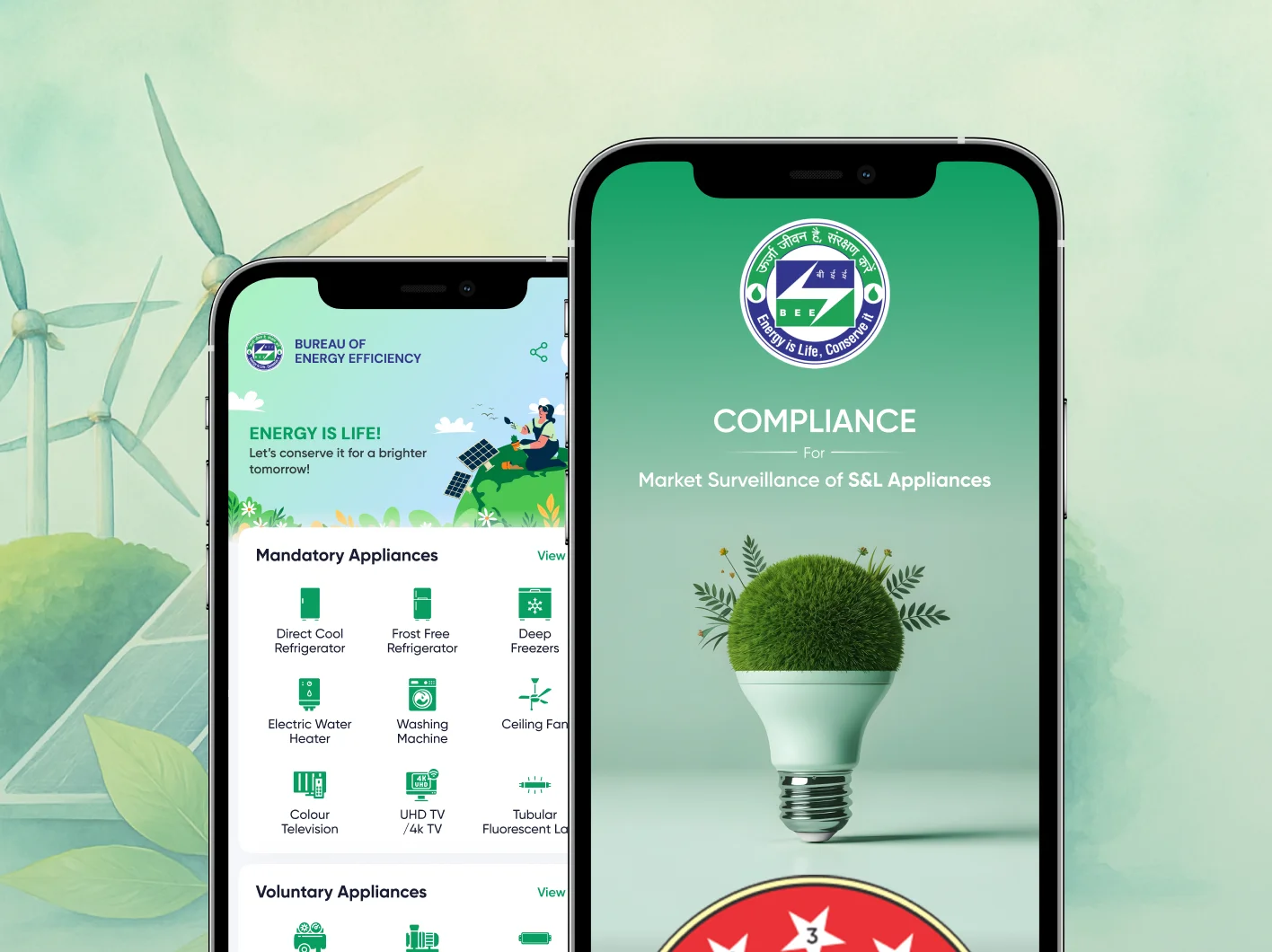
Energy Star Label Compliance App - BEE
Challenge
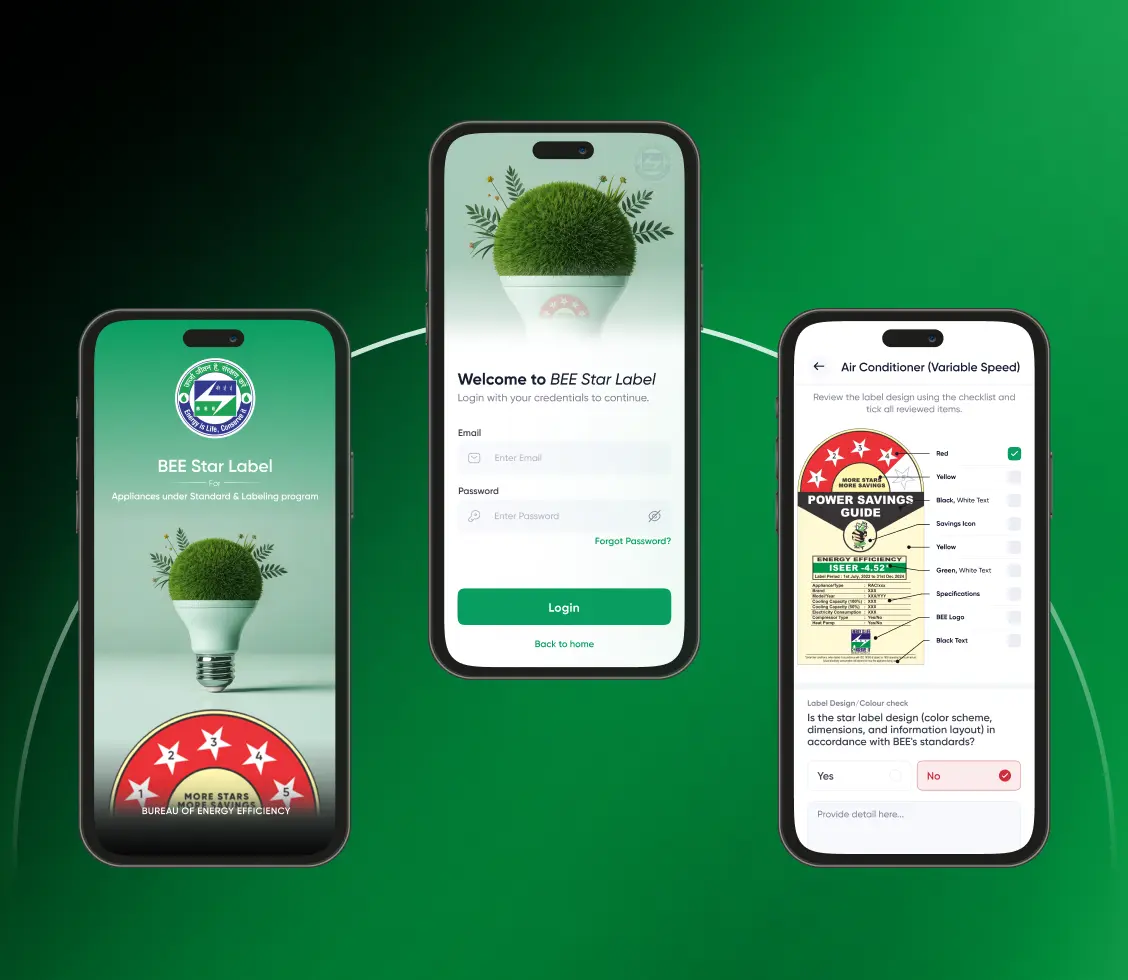
Manual inspection of Energy Star labels across India's vast appliance market was slow, error-prone, and lacked centralised visibility, making it difficult for BEE to enforce compliance or for consumers to verify appliance ratings.
Solution
We built a mobile and web platform that enables surveyors to validate star ratings, capture geo-tagged data with photo evidence, work offline, and generate instant reports, while giving consumers a simple interface to browse certified appliances, verify authenticity through star-label lookup, and raise complaints directly to BEE.
Impact
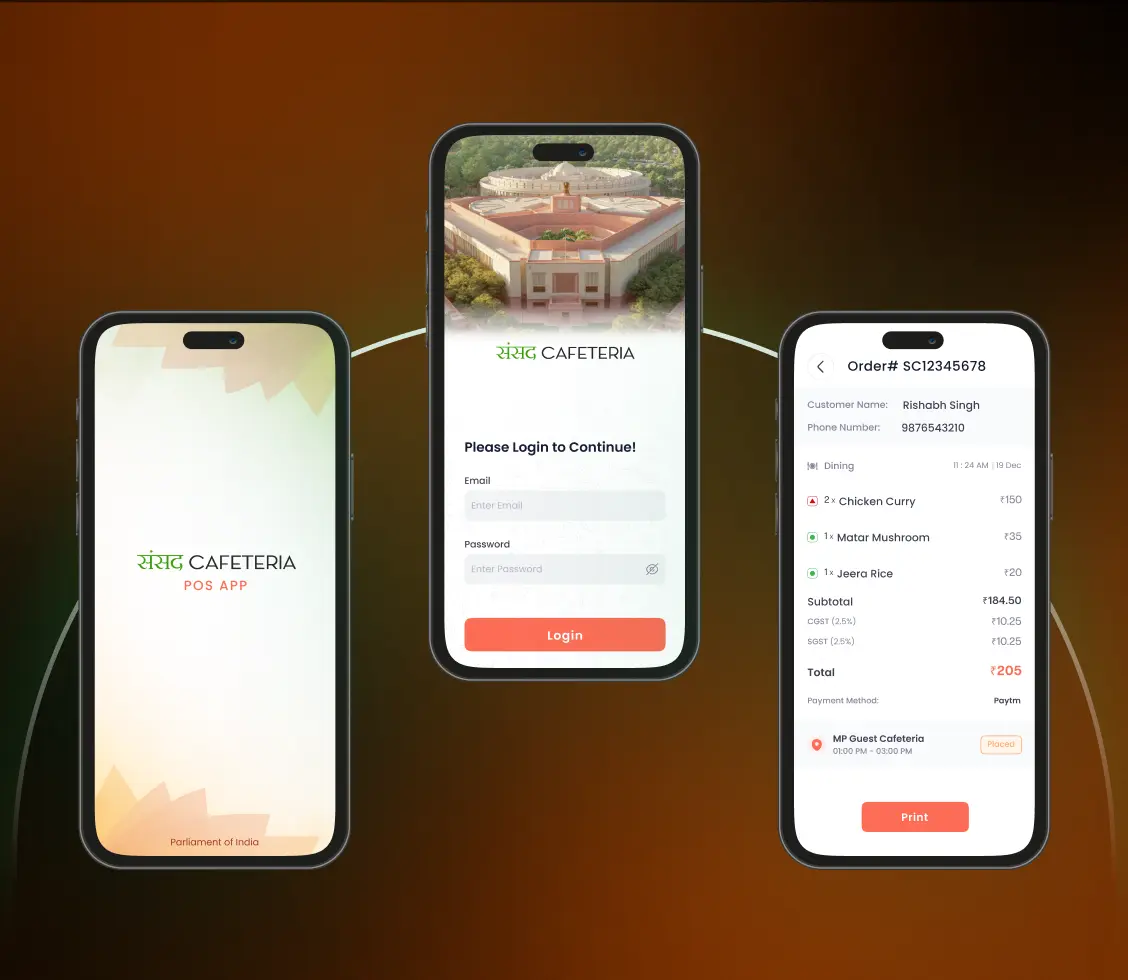
Cafeteria & Food Ordering App - Parliament of India
Challenge
Food ordering within the Indian Parliament relied on traditional, manual processes, leading to long wait times, operational inefficiency, and logistical challenges in managing catering across a high-security environment.
Solution
We developed a mobile app for MPs and staff with real-time menu access, QR-based pickup, in-room delivery, integrated digital payments, and full order history, along with an admin portal for ITDC to manage live orders, menus, pricing, user roles, inventory, and reporting across Parliament canteen operations.
Impact
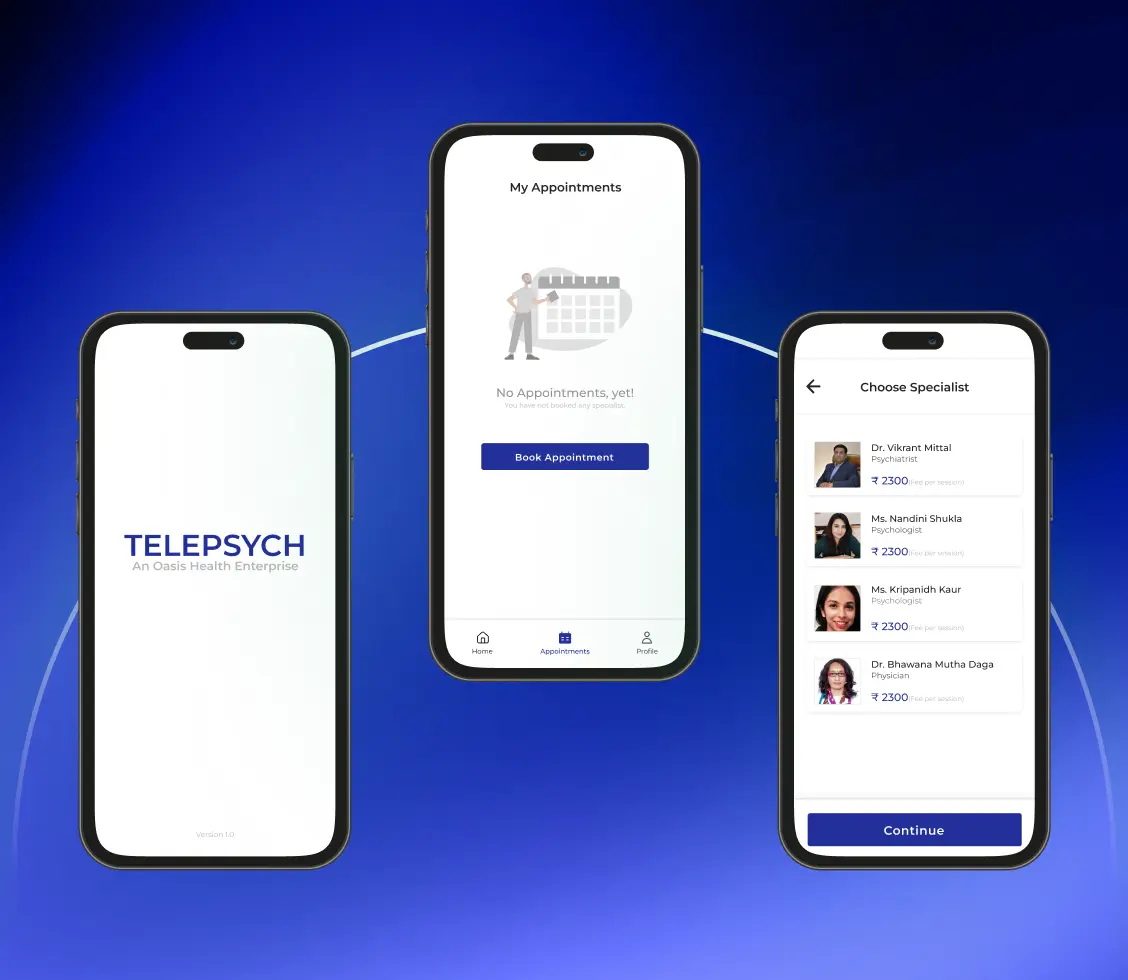
Mental Health Consultation & Booking App - Telepsych
Challenge
Fragmented booking systems and limited online options made accessing mental health consultations difficult for patients, while doctors and admins struggled with manual scheduling.
Solution
We built Telepsych, a web and mobile platform for booking online (Zoom) and in-person consultations, with secure payments, automated reminders, and session history, plus dedicated portals for doctors to manage availability and patient records, and for admins to oversee bookings, refunds, earnings reports, and daily clinic operations.
Impact
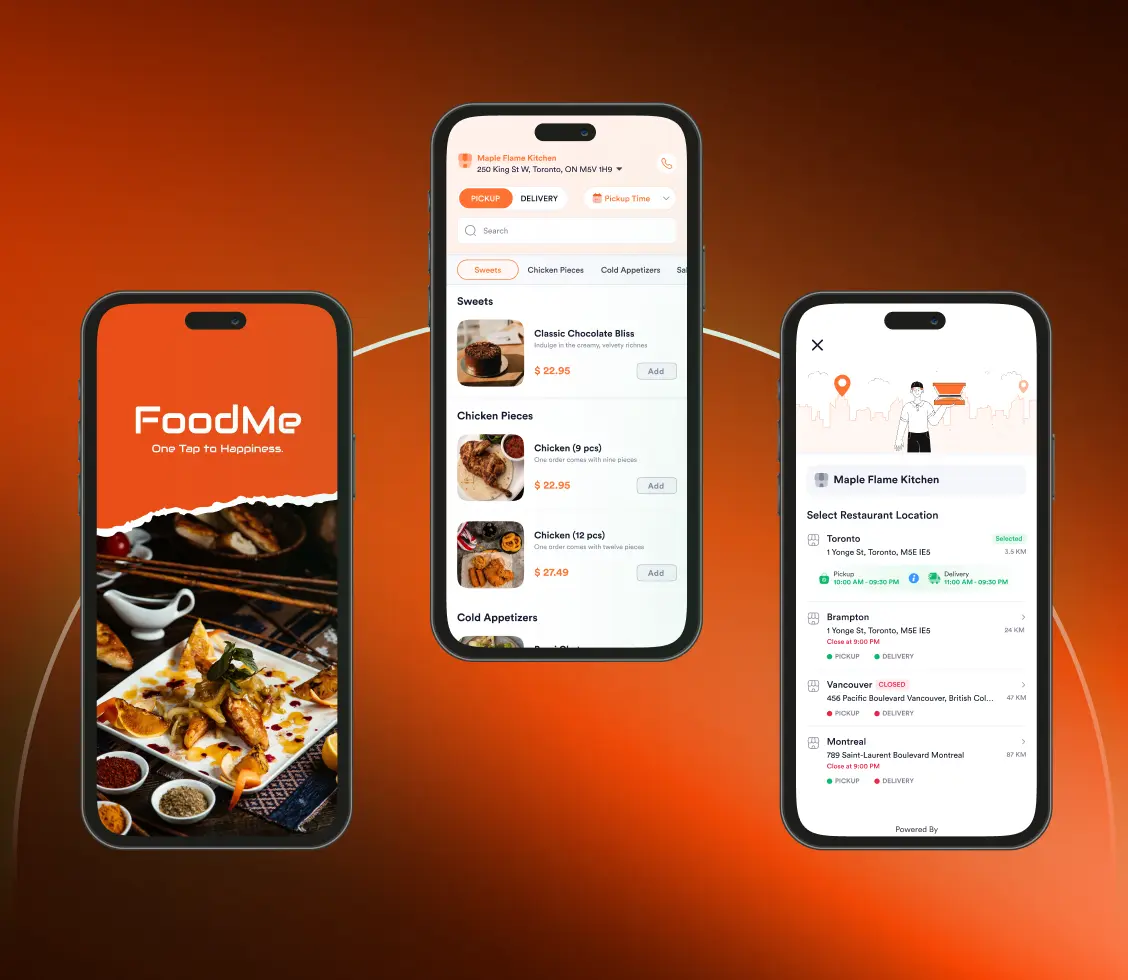
Online Ordering & Loyalty App - Foodme
Challenge
Restaurants lacked tailored digital tools for online ordering, payment processing, and customer engagement, limiting operational efficiency and scalable growth in an increasingly digital market.
Solution
We built custom mobile apps and websites with a central admin portal for menu and order management, Stripe-based secure payments, real-time order tracking, and built-in loyalty features including reward points, tiered memberships, personalised promotions, and push-notification campaigns to drive repeat customer engagement and retention.
Impact
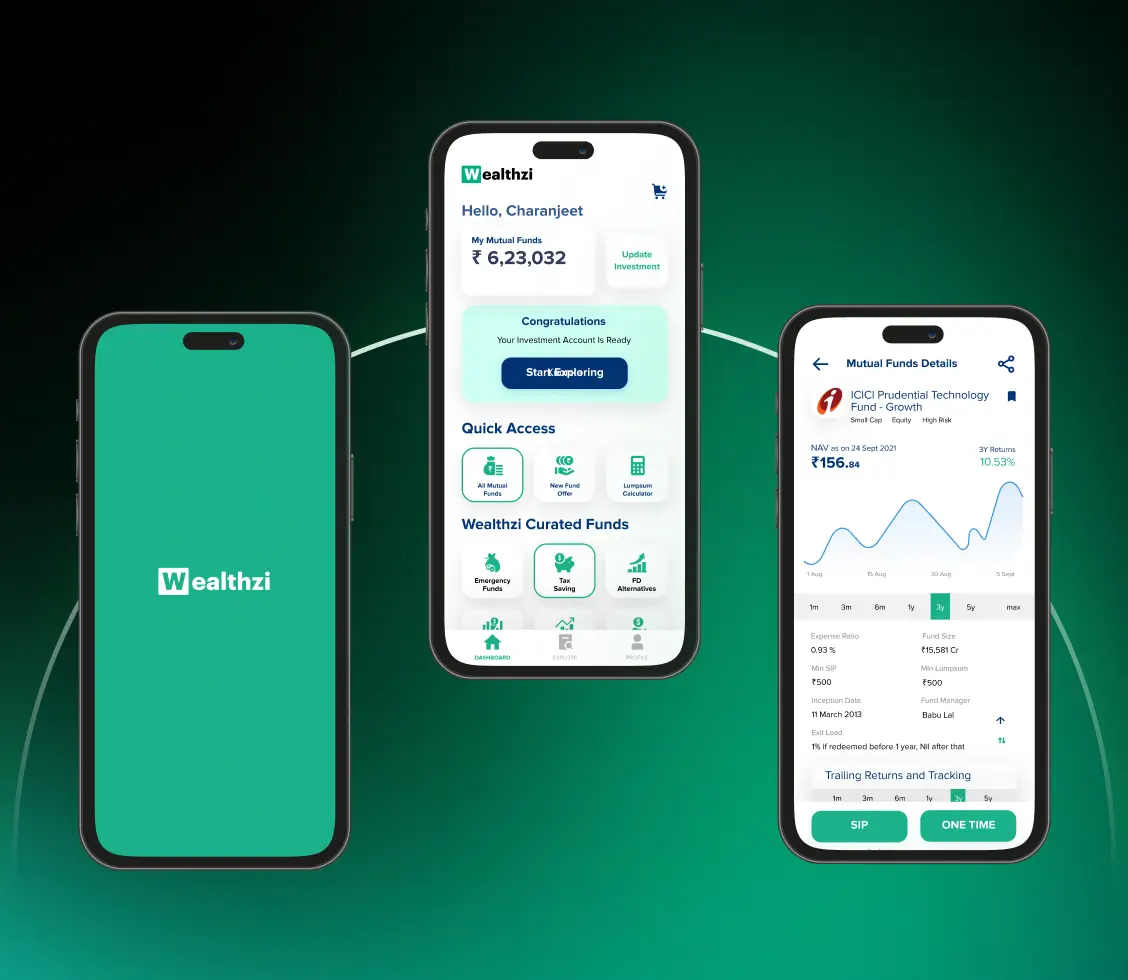
Wealth Management & Direct Investing APP — Wealthzi
Challenge
Indian investors lacked a unified, intelligent platform to manage diverse investments, relying on fragmented tools, manual advisory, and limited personalisation across mutual funds, PMS, and AIFs.
Solution
We built Wealthzi, a SEBI-compliant mobile and web platform offering zero-commission direct mutual fund investing, automated portfolio management, goal-based financial planning, AI-driven nudges for smarter decisions, seamless paperless KYC onboarding, and advisor tools for distributors to manage clients and grow their practice at scale.
Impact
Vehicle Export Logistics APP — JAAFlogi
Challenge
Exporting used vehicles from Japan needs coordination across trucking, inspection, customs, and shipping, with manual processes causing delays and zero visibility for global buyers.
Solution
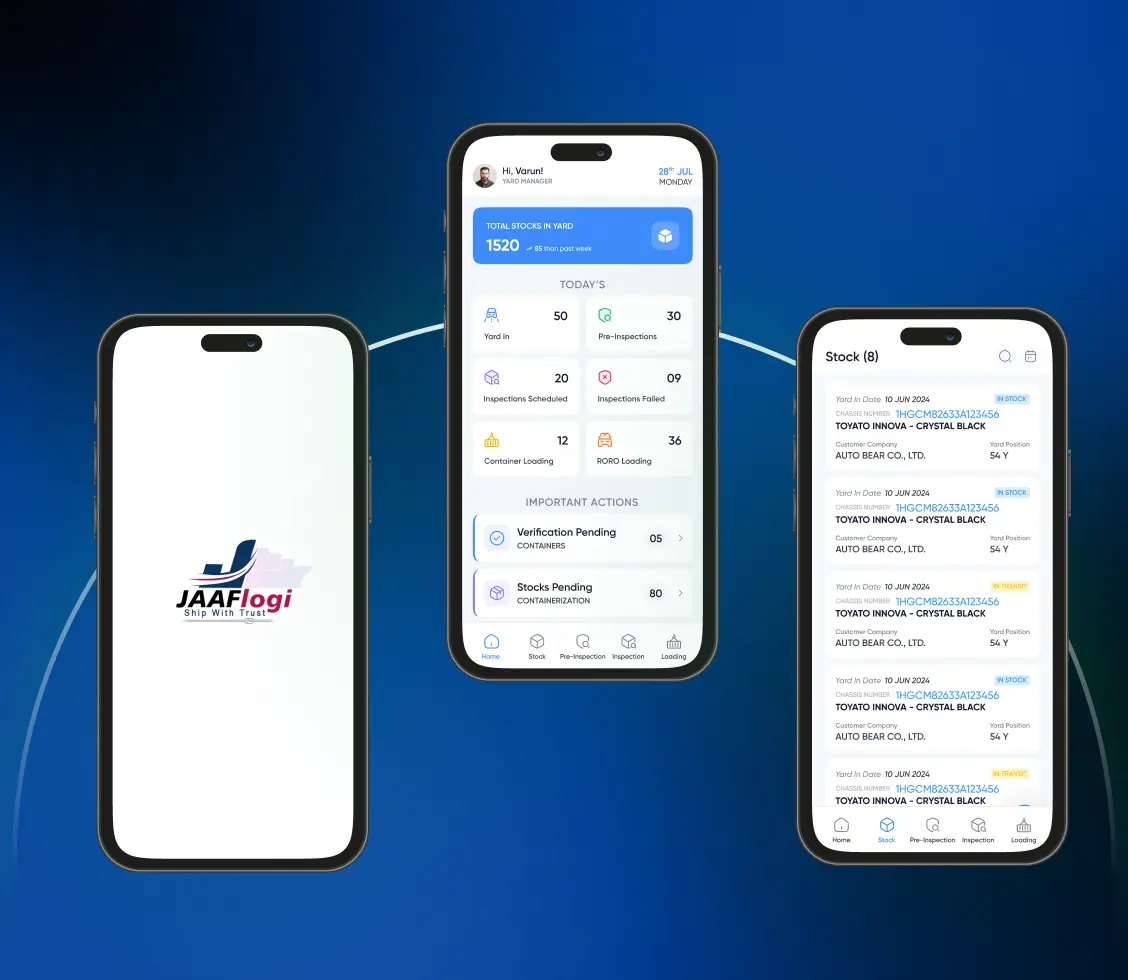
We built JAAFlogi, a web and mobile platform managing the vehicle export lifecycle end to end: stock, trucking, inspections, RORO shipping, customs, billing, real-time tracking, dedicated yard and driver apps, and a bilingual English/Japanese customer portal.
Impact

How We Build Your Event CRM
A sequence built around your season. We start with the costing model, because that is where the money is and where every general CRM breaks, and we go live between events rather than during one.
Discovery & Workflow Mapping
We walk one real event end to end: the enquiry, the quote, the sheets it actually lives in, the vendors, the run of show, the invoice. This is also where we tell you if HoneyBook or Planning Pod would serve you better.
Costing Model & Data Design
We model the thing everything else hangs off: per-head and per-slab rates, guaranteed minimums, vendor rate cards, and how margin is computed. Get this wrong and the rest is a nicer spreadsheet.
Pipeline & Back-Office Build
Pipeline, quotes, vendors, run of show, roster and reporting are built in reviewable increments against your real rate cards and a real past event, not demo data that always balances.

Tax, Accounting & Integration
GST place-of-supply, reverse charge, TDS and e-invoicing are configured with your CA in the room, and invoices and vendor bills are wired into Tally or Zoho Books so nobody re-keys anything.

Migration, UAT & Go-Live
Clients, rate cards, live enquiries and open events are migrated and reconciled, your team quotes a real job in it before launch, and we go live in the gap between events rather than in the middle of one.
Support Through Your Season
Rate cards renew, tax rules move, and peak season stresses everything at once. We stay on for that, and add the modules you deferred once the first season has told you which ones you actually need.

Buy a CRM, or Build Your Own?
On this one the honest answer is usually buy, and we would rather say so than sell you a project you did not need. Here is the test we apply, and it disqualifies most of the enquiries we get.
When Buying Is the Right Answer
A solo planner or a small team, one legal entity, a familiar kind of event, vendors you price fresh each time, and a headcount that does not swing. HoneyBook, Dubsado and Planning Pod do this well for the price of a few hours of our time. If that is you, subscribe. We will say so in discovery rather than quote you a build.
When It Stops Working
Five conditions, and one is usually enough: several legal entities needing consolidated margin; vendor rate contracts a product cannot price from; per-head costing against guaranteed minimums; GST place-of-supply across states; or a seasonal crew that per-seat pricing penalises. The tell is simple, as ever: your spreadsheets are doing the work the software cannot.
What Building Actually Costs
Far more than a subscription, and it does not stop at launch: tax rules move, rate cards renew, each season wants something new. It earns its cost when the spreadsheets beside the CRM are themselves costing you margin, or when consolidation and compliance are conditions rather than conveniences. That is a commercial judgement, and it is yours to make with real numbers.
How We De-Risk the Decision
Discovery first, as a paid, self-contained piece of work that ends in a recommendation you own, including a recommendation to subscribe to something instead. If a build follows, it starts with the costing model, because that is the part that is actually losing you money, and proves itself on one season before it grows.
Event Businesses We Build For
Every one of these sells a promise months before it delivers anything, and carries the cost in between. That shared shape is why they belong on one architecture, and why each still needs different rules on top of it.
Event & Experiential Agencies
Pitching against other agencies on a deadline, then delivering across cities with a different vendor set in each. Rate contracts, margin per event, and a pipeline where the same client briefs you four times a year.
Wedding & Social Planners
Multi-day functions, a guest count that moves until the week of, per-plate costing against a guaranteed minimum, and a season that decides the year. Note the honest caveat: if you are a solo planner, buy a product instead.
Corporate Event Teams
In-house teams running a calendar of internal and customer events against a departmental budget, needing cost-centre reporting, procurement rules and approval chains their finance function already recognises.
Venues & Banquet Operators
Selling space and dates rather than a service: availability holds that must never double-sell, banquet event orders the floor works from, minimums, and per-function costing across several halls at once.
Exhibition & Conference Organisers
Selling stands and sponsorships as inventory with its own pipeline, against a build cost and a crew, over a long lead time. Where the delegates also need an app, that is our event app development build alongside this one.
Multi-Entity Event Groups
One group, several legal entities: a production arm, a rentals arm, maybe a catering arm. Inter-entity billing, consolidated margin, and one client relationship spanning all of them. This is where per-tenant products stop entirely.
Money, Compliance & Control
The half of an event business that nobody demos: what you quoted, what you signed, what you owe, what you collected, and who gets to keep the client list at the end of it. Where a deeper review is warranted, our cybersecurity consulting team works alongside the build.

Enquiry & Proposal Pipeline
Enquiry, qualification, site visit, proposal and follow-up against an account rather than a one-off deal, because repeat and referral is where the living is.

Versioned Quotes
Priced offers with inclusions, exclusions and validity, versioned as the brief changes, with the cost sheet behind every line and the margin visible before you send it.

Contracts, E-Sign & Advances
Proposal to contract to signature as one object with an audit trail, and an advance schedule where each instalment releases the vendor payments it funds.

GST & TDS on Event Invoicing
Place of supply where the venue sits in another state, reverse charge on unregistered vendors, TDS on vendor payments and e-invoicing, configurable because the treatment is your CA's call.

Tally & Zoho Books Integration
Client invoices and vendor bills push into the ledger you already keep, in a form your accountant and auditor accept, rather than exporting a CSV for someone to re-key.

You Own the Client Data
Your client list, vendor rate cards and margin history are the business. The database runs on your infrastructure and the code is handed over, so none of it sits with a vendor.
Why Event Businesses Choose Webority
What an owner weighs before replacing the spreadsheets that, for all their faults, have never once been down on the morning of a wedding.
Built Under CMMI Level 5 & ISO 27001
Your system is engineered under CMMI Level 5 process quality and ISO 27001 security controls. Against a field of small studios, that is an audited standard of delivery and data handling rather than a promise.
We Model the Event, Not a Generic Project
Per-head rates against a moving count, guaranteed minimums, contracted vendor cards, cue-level run of show. We start at the costing model because that is the part every general CRM gets wrong.
We Tell You When a Subscription Is Enough
On this problem the honest answer is usually buy, and we say so and lose the project. A partner who only ever recommends the expensive option is not advising you, they are quoting.
Your Client List Stays Yours
Clients, rate cards and margin history are your competitive asset. The database sits on your infrastructure, the code is handed over, and nobody else decides what you may export.
Delhi NCR Delivery, Global Clients
Our engineering centre is in Delhi NCR and we build for event businesses across India, the US, the UK and the Gulf, with overlap hours and a cost base that makes a custom build viable.
We Stay Through Your Season
Rate cards renew, tax rules move, peak season stresses everything at once. We stay on for that, and add the modules the first season proves you actually need.
Certificates and Compliances
At Webority Technologies, we take pride in our professional recognition and reputation as a trusted name for all your business solution needs. Rely on us for expert guidance and exceptional results.









Related Services & Capabilities
Where an event business needs more than the back office, these are separate builds designed to connect to it rather than overlap.






What Our Clients Say
Real words from the founders, product owners, and CTOs who chose Webority




Frequently Asked Questions
Event CRM development is building the back office an event business actually runs on, rather than adapting a general-purpose CRM to it. It covers the client and enquiry pipeline, site visits, quotes and proposals, vendor coordination and rate contracts, venue availability, run of show, budgets and cost sheets, crew rostering, contracts and advances, and invoicing. The distinction from off-the-shelf software is that an event is priced per head against a headcount that moves until the last week, costed against contracted vendor rates, and delivered to a minute-level schedule, none of which a generic CRM models.
For most planners, buy. If you are a solo planner or a small team running a familiar kind of event, HoneyBook, Dubsado or Planning Pod will serve you better and cheaper than anything we would build, and we will tell you that in discovery. Building earns its cost at a specific threshold: multiple legal entities needing consolidated margin, vendor rate contracts a product cannot price from, per-head costing against food and beverage minimums, GST place-of-supply across states, or a seasonal crew that per-seat pricing penalises. If none of those describe you, a subscription is the right answer.
They are good products and for many businesses they are enough. The friction shows up in three places. A general CRM prices a project; an event is priced per head, per day, against a guaranteed minimum, with a headcount that changes close to delivery. A general CRM gives you a task list or Gantt chart; a run of show is minute-level, multi-track, multi-crew and changes on site. And a general CRM reports revenue per client; an event business needs contribution margin per event after vendor, crew and write-offs. Where those three are the job, the product's simplification is the thing that breaks.
Yes, and that is usually the reason a build is being considered at all. Quotes build up from a rate per guest, per day or per slab against a headcount that stays provisional, with a guaranteed minimum and reconciliation of the contracted order against what was actually consumed. Vendor rate contracts hold negotiated prices per vendor, per season and per city, so a quote prices from agreed rates instead of someone re-typing last year's numbers, and the cost sheet behind every quoted price is held against actuals as the event is delivered.
Yes. The system is built to compute, capture and report GST on event invoicing, including place-of-supply where an event is held in a different state from the client's registration, reverse charge on unregistered vendors, and TDS on qualifying vendor payments, with e-invoicing where thresholds apply. Rates, thresholds and treatment change and are your chartered accountant's call, so the rules are configurable rather than hard-coded. Invoices and vendor bills push into Tally or Zoho Books rather than exporting a CSV for someone to re-key.
They are separate builds for separate people. This page is the organiser's own back office: your client commissions the event, and this is where their enquiry, quote, contract, vendors, budget and invoice live. Our event app development build serves the attendee who shows up, covering the agenda, RSVP, on-site check-in, badges and networking. Our ticket booking portal sells admission, covering seats, pricing, payments and validating a ticket at the gate. One client commissions an event that a thousand attendees attend, which is why the client and the attendee are two different systems.