


























Pharmacy Delivery Platform Development for Chains, Chemists & Hospital Pharmacies
Webority builds the fulfilment half of a medicine business: checkout that cannot release a restricted item until a pharmacist has approved it, sourcing across stores when the nearest one is short, cold-chain handling with breaches recorded rather than hidden, rider dispatch, and a batch-level trail of exactly what left which store. The storefront and prescription workflow are a separate build and we link to it. Engineered under CMMI Level 5 and ISO 27001, from our Delhi NCR centre.
Get a Free Consultation
Fill in your details, and we will respond within 24 hoursTrusted by Leading Brands & Growing Startups









What Pharmacy Delivery Development Actually Means
This is the half of the journey that starts after an order is accepted and ends when it reaches a doorstep intact and accounted for. Medicine makes that half unusually hard: some of it cannot be released until a pharmacist says so, some of it must stay cold, most of it cannot come back, and every unit of it has to be traceable to a batch afterwards. Almost none of that exists in ordinary ecommerce fulfilment.
We deliberately keep this page narrow. The storefront, the medicine catalogue, prescription upload and the pharmacist review workflow are a different build, covered by our online pharmacy software team. Most pharmacy businesses need both, and they are built to connect rather than to overlap.
Why Medicine Delivery Is Not Normal Delivery
Six constraints that do not exist when you are shipping shoes. Each one changes the order state machine, and a platform built as ordinary ecommerce with a pharmacy skin discovers all six in production.





The Order Cannot Ship Until a Pharmacist Says So
A restricted item can be paid for and still must not be picked, packed or dispatched until a qualified person has reviewed the prescription and recorded a decision against that order. That is a hard gate in the middle of fulfilment, and it has to be impossible to route around under pressure. Ordinary ecommerce has no equivalent, which is why bolting pharmacy onto a standard order flow tends to end with someone approving things in a spreadsheet.
Some of It Has to Stay Cold
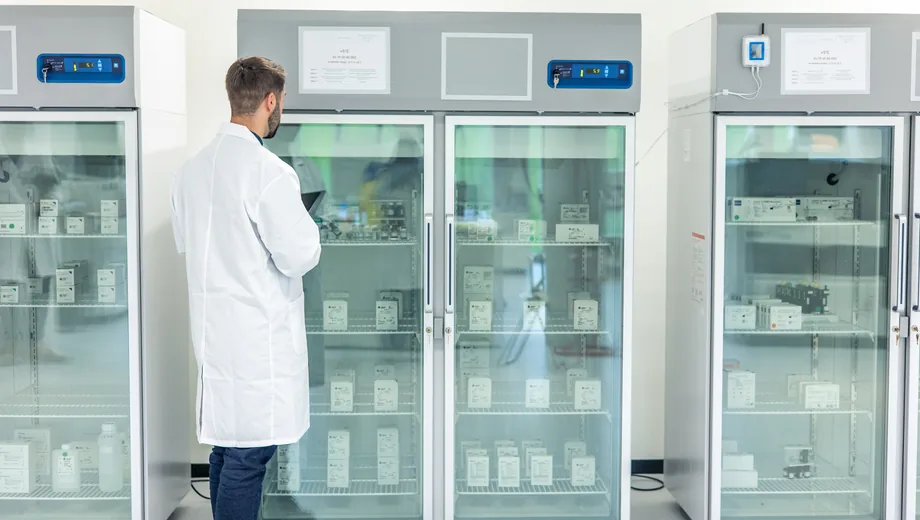
Temperature-sensitive items restrict which stores can fulfil them, which packaging is valid, how long a route may take and which rider can carry them. Software cannot keep anything cold, and any vendor implying otherwise is selling a dashboard. What it can do is make the constraint enforceable before dispatch and the breach undeniable afterwards, so a consignment that went out of range is a decision someone makes rather than a fact nobody learns.
The Nearest Store Often Does Not Have It
Medicine stock is scattered across stores, moves quickly, and is rarely accurate in more than one system at a time. Sourcing is therefore a decision rather than a lookup: availability, distance, storage requirement and how close the batch is to expiry, with orders split across stores when nothing else completes them. And it has to fail honestly, telling the customer at checkout rather than an hour later by cancellation.
The Delivery Itself Carries Conditions
Dispatch has to respect what is in the bag: which riders may carry a temperature-controlled item, whether the handover needs an identity check, whether the order can be batched with others or must travel alone, and how long it may spend in transit. A dispatch engine that treats every parcel as interchangeable will happily make a decision that spoils the goods.
Returns Mostly Are Not Allowed
Most dispensed medicine cannot re-enter saleable stock once it has left, which inverts the usual returns logic. A failed delivery, a refused handover or a cancellation at the door is a write-off decision rather than a restock, and the platform has to record which, why and who authorised it. Systems designed around generous returns quietly put unsellable stock back on the shelf.
The Audit Trail Is the Point
Afterwards, the questions are specific: which batch went to whom, who approved this dispense, when did that consignment leave and at what temperature. If those answers have to be reconstructed from paperwork, you do not really have them. Traceability is not a reporting feature bolted on at the end; it is a property the order flow either has or does not.
Core Modules of a Pharmacy Delivery Platform
Six modules covering the journey from an accepted order to a doorstep, and to the record that proves it.
- 01 Prescription-Gated Release
- 02 Multi-Store Sourcing
- 03 Cold Chain & Exceptions
- 04 Rider Dispatch & Handover
- 05 Batch, Expiry & Recall
- 06 Store Console & Audit





The Fulfilment Engineering
Six mechanisms that carry the constraints above. None of them is visible in a demo order, and every one of them is what separates a medicine platform from a shop with a pharmacy category.

Hard Release Gate
An order state that cannot progress to picking without a recorded pharmacist decision, designed so it stays impossible to route around when the queue is long and everybody is busy.

Sourcing Decision Engine
Store selection on availability, distance, storage requirement and batch expiry, with order splitting and reservations that expire rather than stranding stock nobody can sell.

Cold Chain Exceptions
Storage constraints enforced before dispatch and monitoring readings captured during it, with out-of-range events raised for a human decision instead of completing silently.

Constraint-Aware Dispatch
Rider eligibility, batching rules, transit-time limits and handover checks decided by what is actually in the bag rather than treating every parcel as interchangeable.

Batch-Level Traceability
Every dispatched unit tied to its batch and originating store, so a recall is a query rather than an archaeology project, and expiry is enforced at picking.

Attributable Audit Trail
Who approved, who picked, who dispatched and who received, held immutably against the order, because afterwards that record is the only thing that answers the question.
Our Journey Of Making Great Things
Numbers that reflect over a decade of consistent delivery, trusted partnerships, and engineering excellence.
Years of experience
Projects delivered
Clients served
Countries reached
Our Success Stories
Every case study below is a product in production, built across healthcare, fintech, government, and e-commerce, and measured by the outcomes it delivers.
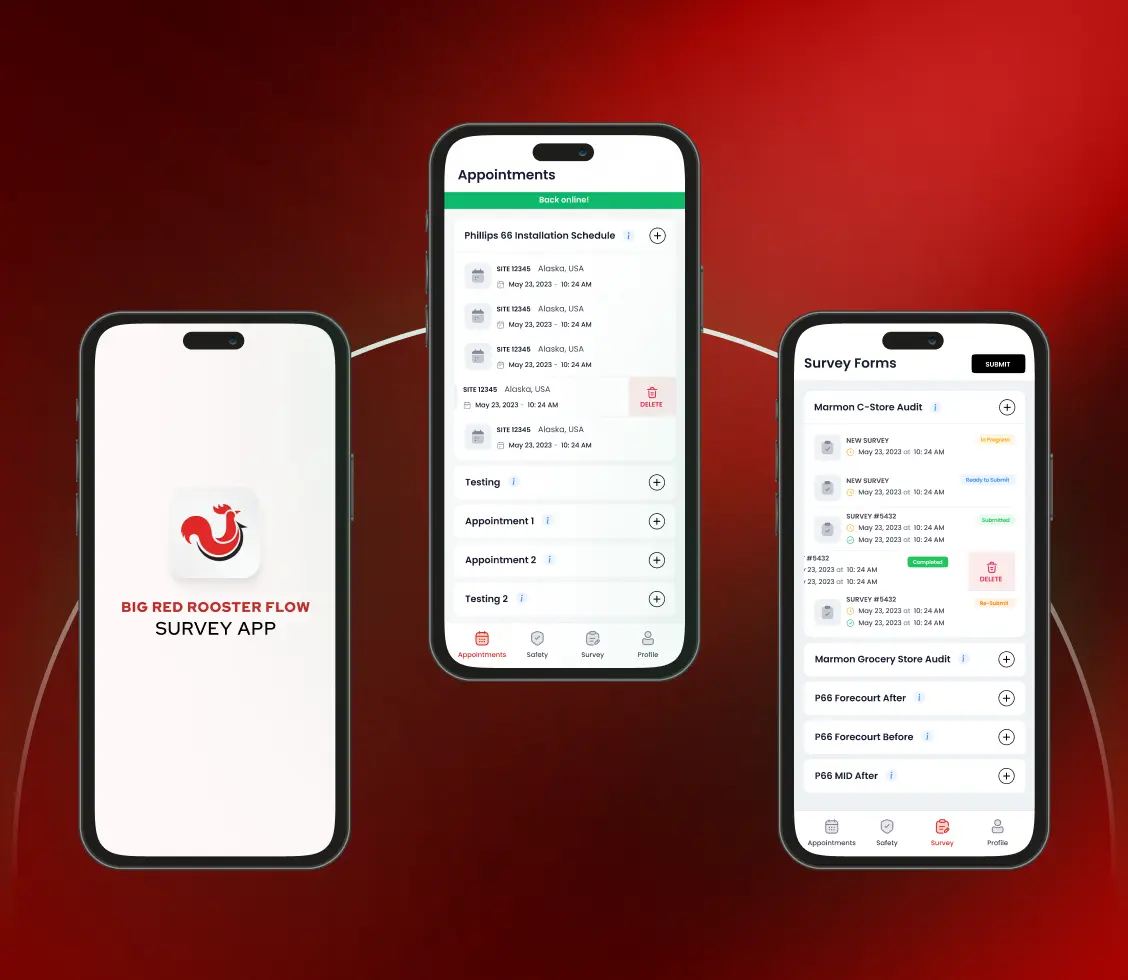
Field Inspection App - BRRF
Challenge
Big Red Rooster Flow's paper-based inspections across 500+ gas stations for Exxon, Marathon, 7-Eleven, Gulf, and BP suffered from 42% data error rates, 60-minute inspection times, and zero location verification, causing $4.2M in annual losses and threatening $18M in contracts.
Solution
We built a mobile-first survey platform with a no-code visual form builder, intelligent brand-specific survey logic, 99.3% accurate geofencing, full offline capability for 30+ days, a real-time operations dashboard with automated reporting, and role-based access for admins and field teams, deployed across 850+ field inspectors nationwide.
Impact
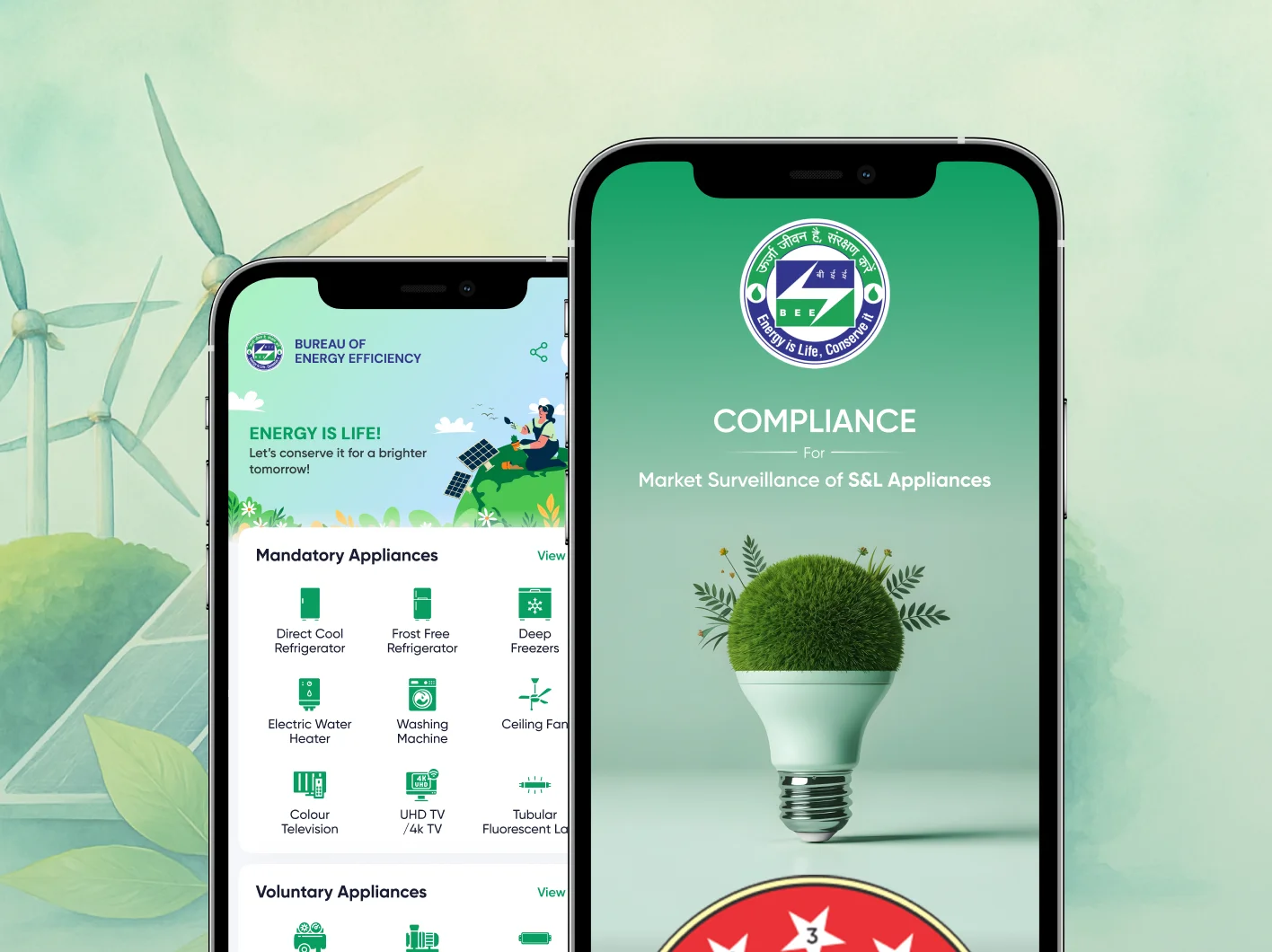
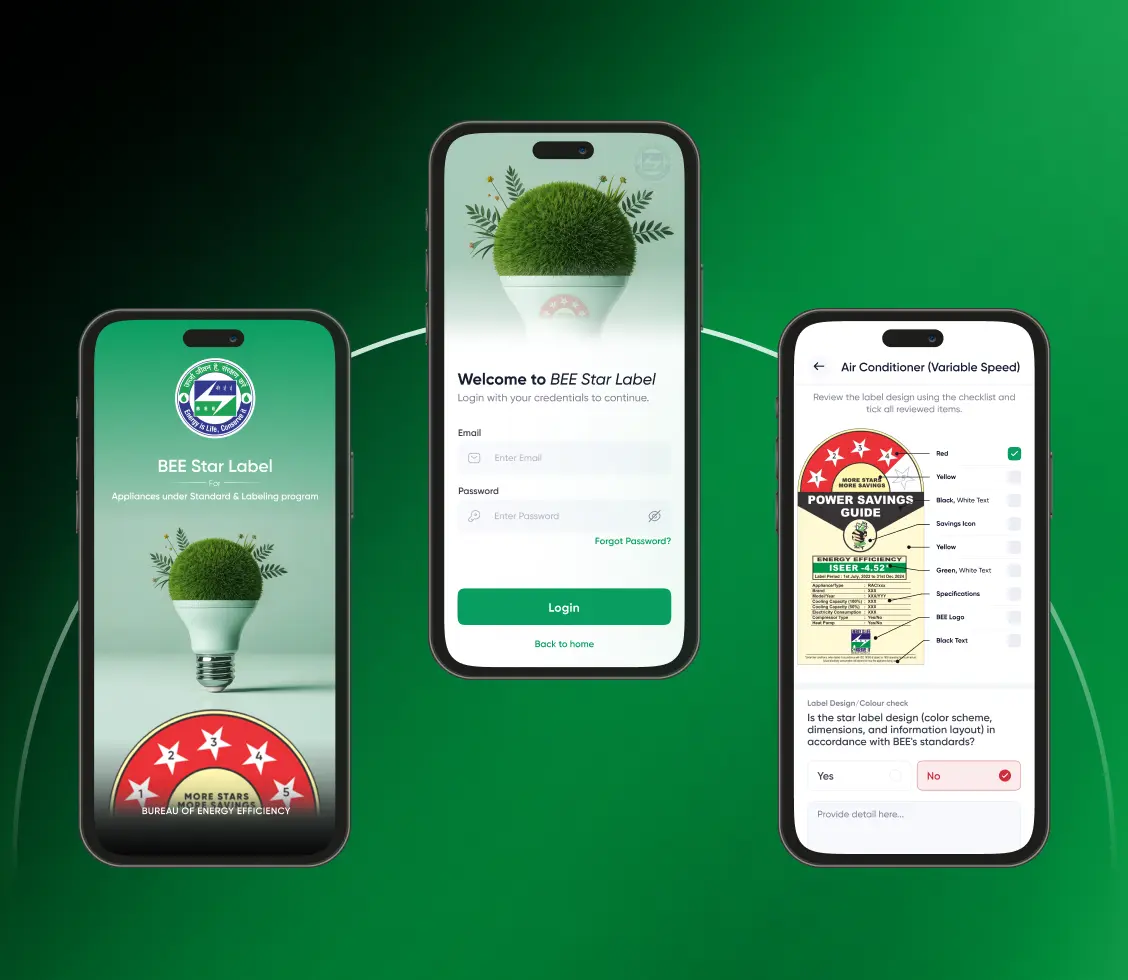
Energy Star Label Compliance App - BEE
Challenge
Manual inspection of Energy Star labels across India's vast appliance market was slow, error-prone, and lacked centralised visibility, making it difficult for BEE to enforce compliance or for consumers to verify appliance ratings.
Solution
We built a mobile and web platform that enables surveyors to validate star ratings, capture geo-tagged data with photo evidence, work offline, and generate instant reports, while giving consumers a simple interface to browse certified appliances, verify authenticity through star-label lookup, and raise complaints directly to BEE.
Impact
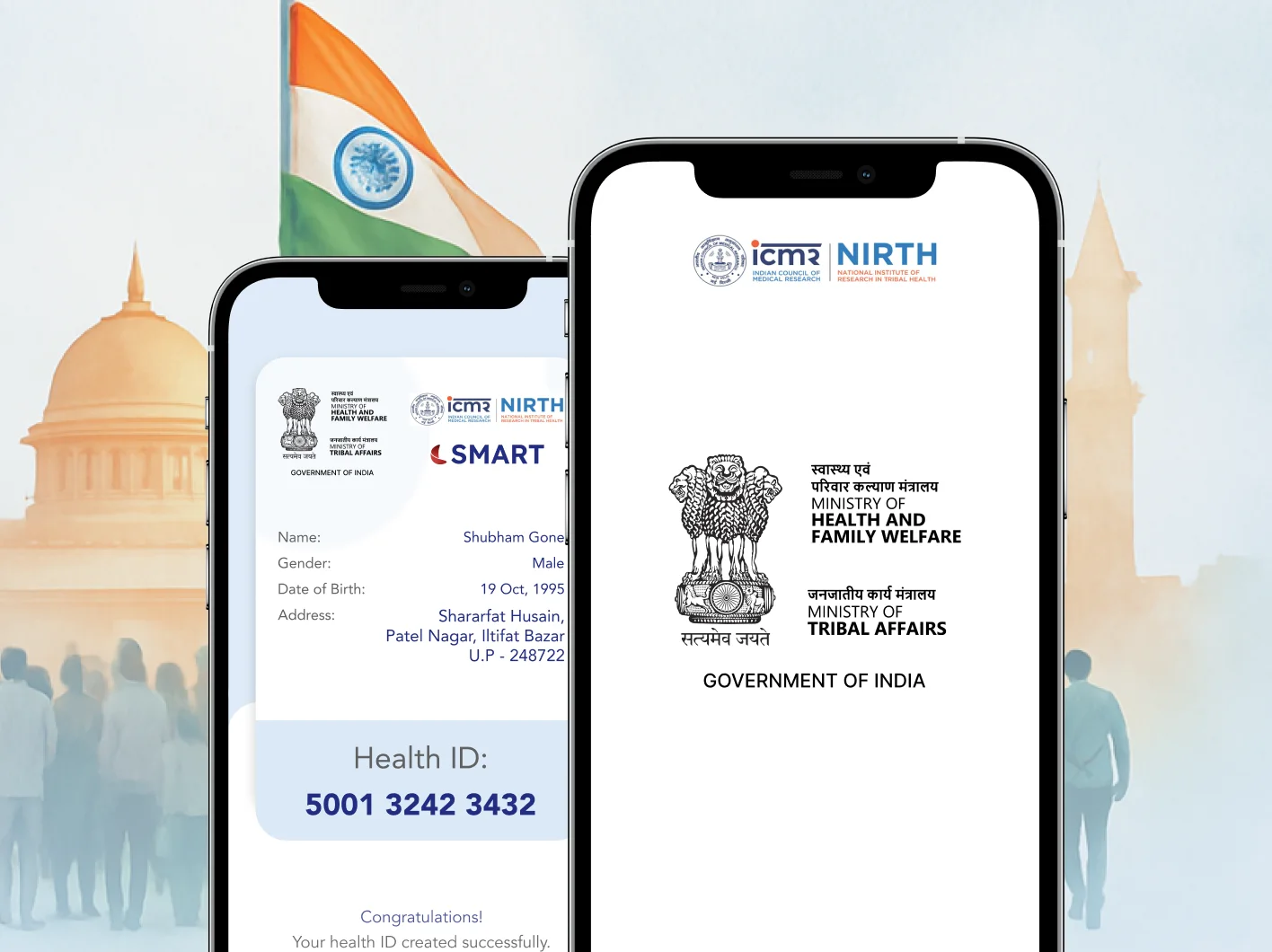
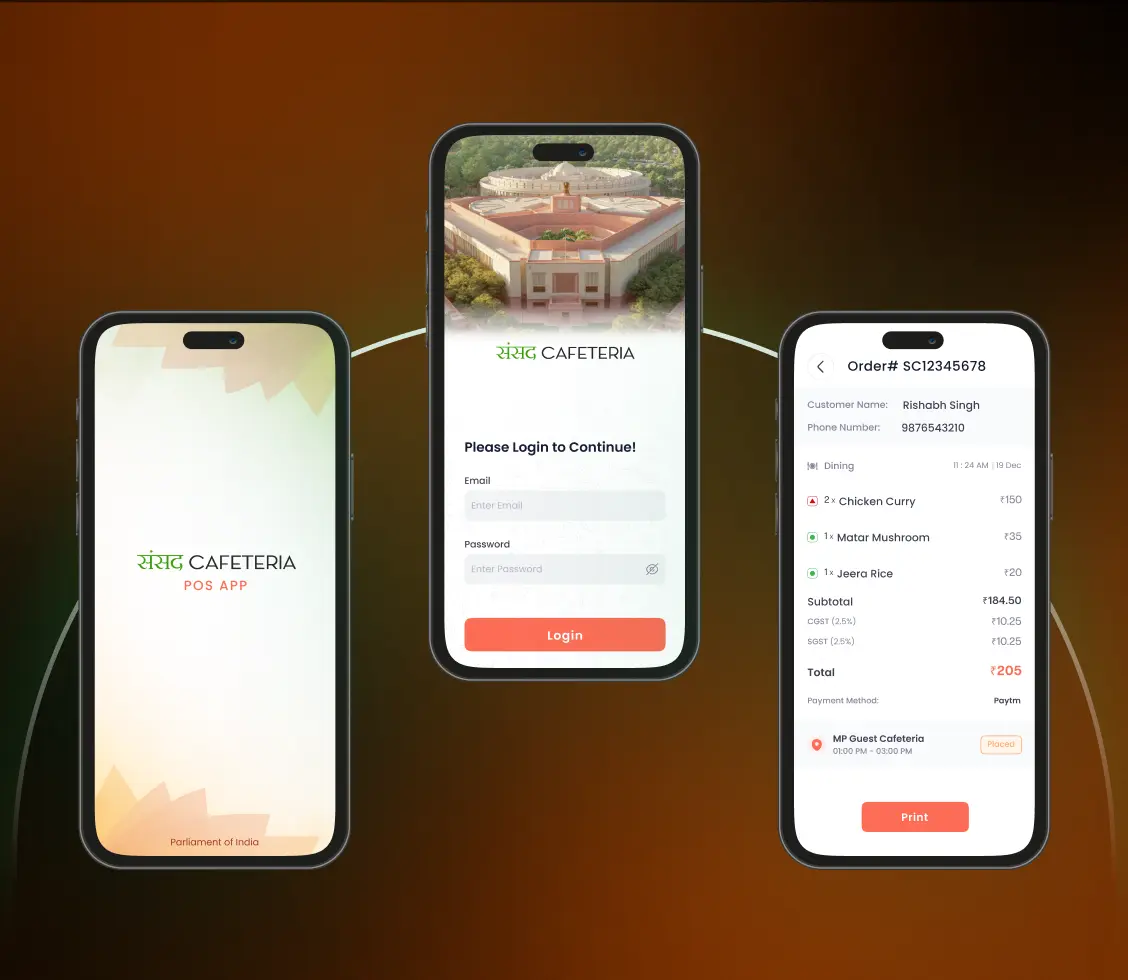
Cafeteria & Food Ordering App - Parliament of India
Challenge
Food ordering within the Indian Parliament relied on traditional, manual processes, leading to long wait times, operational inefficiency, and logistical challenges in managing catering across a high-security environment.
Solution
We developed a mobile app for MPs and staff with real-time menu access, QR-based pickup, in-room delivery, integrated digital payments, and full order history, along with an admin portal for ITDC to manage live orders, menus, pricing, user roles, inventory, and reporting across Parliament canteen operations.
Impact
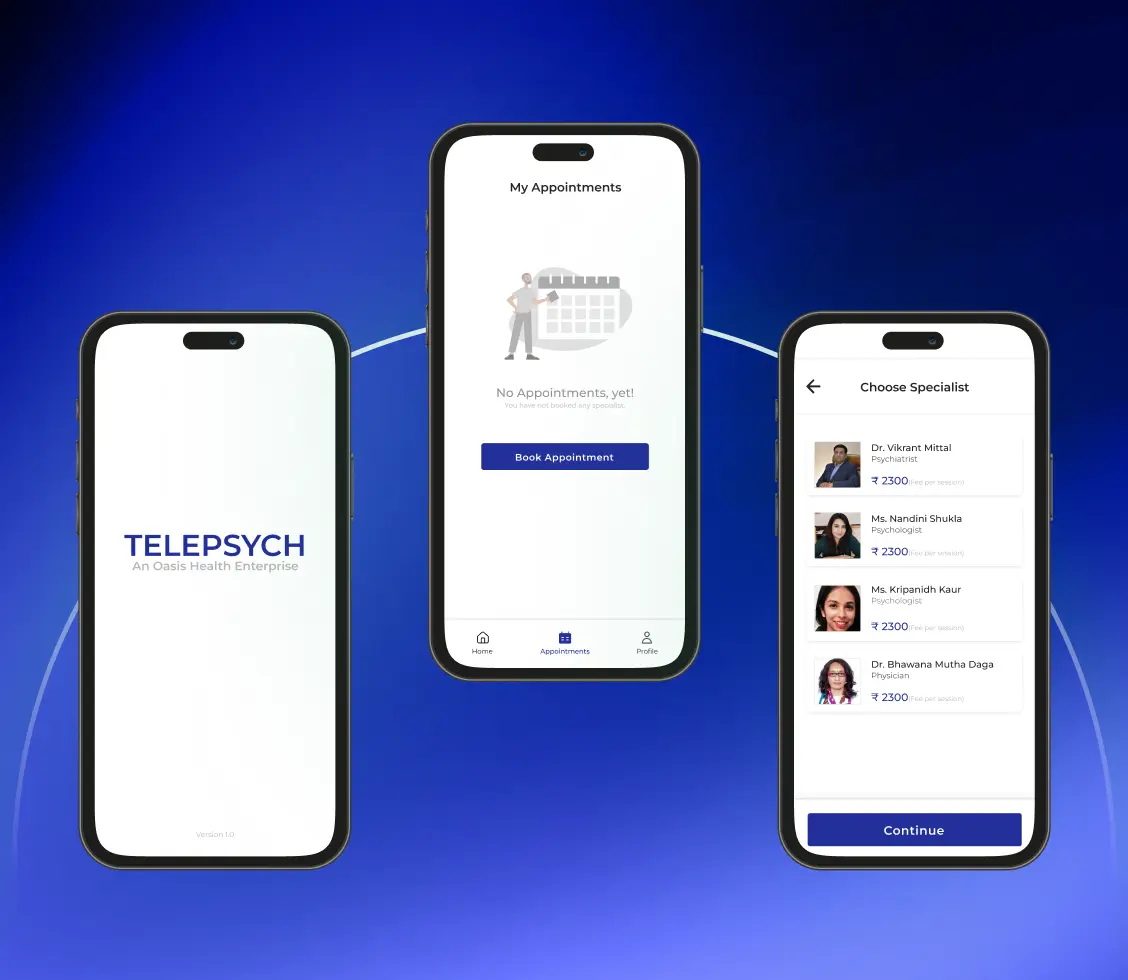
Mental Health Consultation & Booking App - Telepsych
Challenge
Fragmented booking systems and limited online options made accessing mental health consultations difficult for patients, while doctors and admins struggled with manual scheduling.
Solution
We built Telepsych, a web and mobile platform for booking online (Zoom) and in-person consultations, with secure payments, automated reminders, and session history, plus dedicated portals for doctors to manage availability and patient records, and for admins to oversee bookings, refunds, earnings reports, and daily clinic operations.
Impact
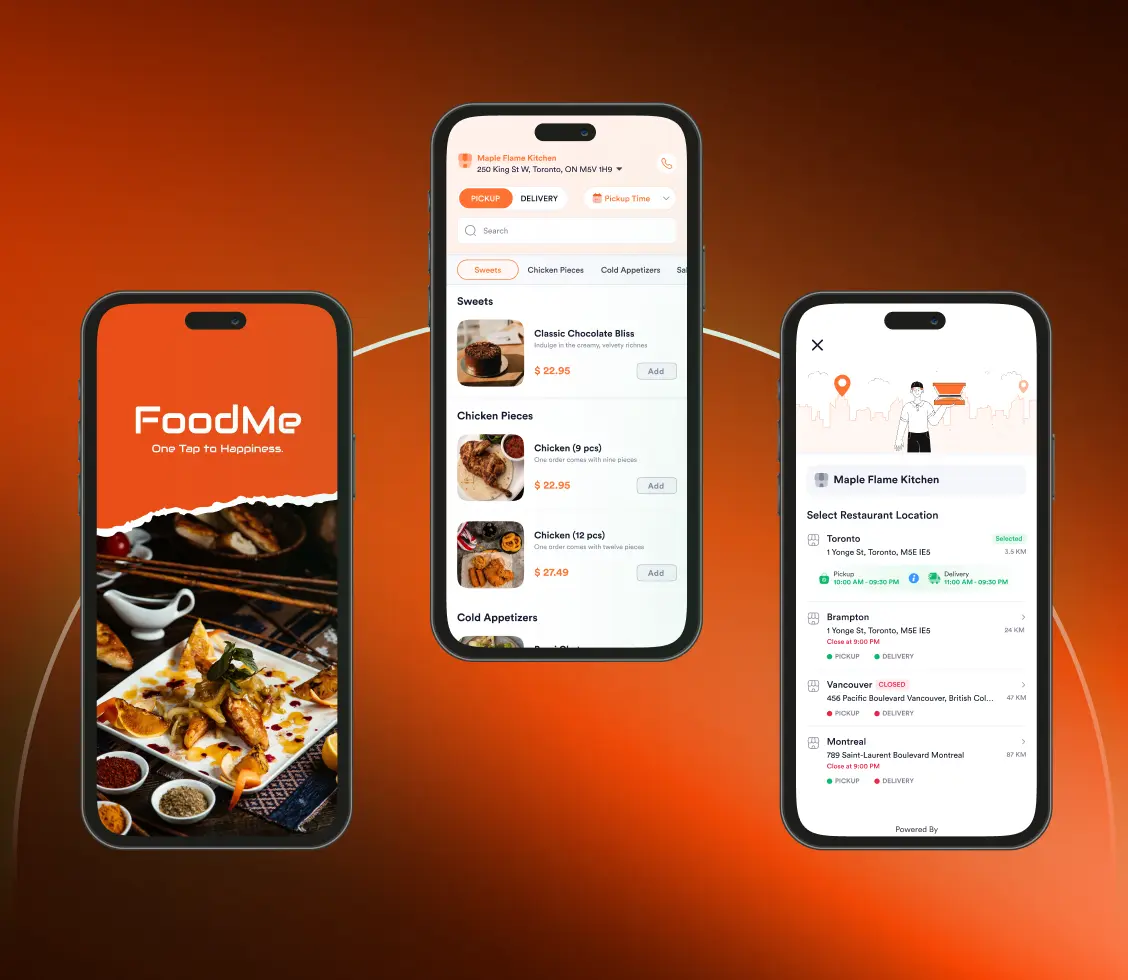
Online Ordering & Loyalty App - Foodme
Challenge
Restaurants lacked tailored digital tools for online ordering, payment processing, and customer engagement, limiting operational efficiency and scalable growth in an increasingly digital market.
Solution
We built custom mobile apps and websites with a central admin portal for menu and order management, Stripe-based secure payments, real-time order tracking, and built-in loyalty features including reward points, tiered memberships, personalised promotions, and push-notification campaigns to drive repeat customer engagement and retention.
Impact
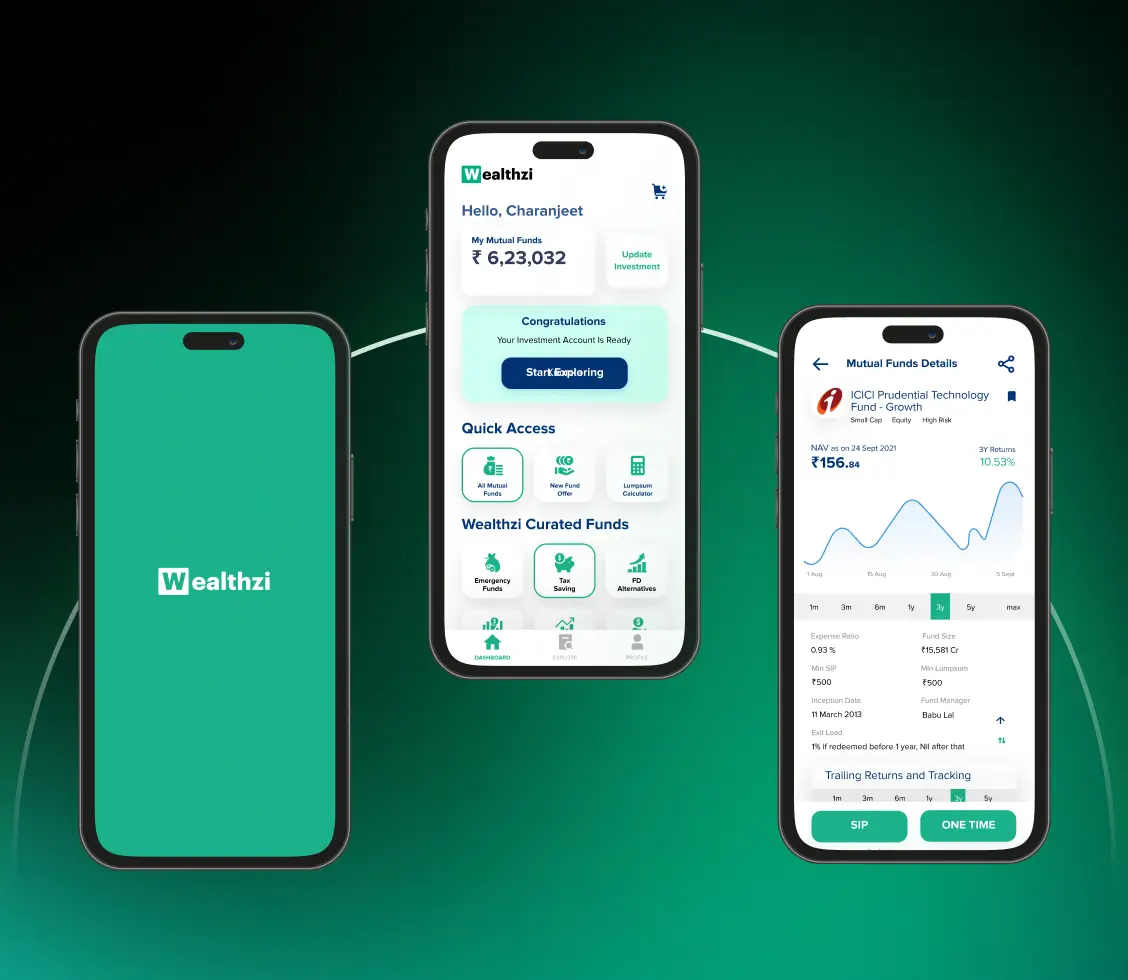
Wealth Management & Direct Investing APP — Wealthzi
Challenge
Indian investors lacked a unified, intelligent platform to manage diverse investments, relying on fragmented tools, manual advisory, and limited personalisation across mutual funds, PMS, and AIFs.
Solution
We built Wealthzi, a SEBI-compliant mobile and web platform offering zero-commission direct mutual fund investing, automated portfolio management, goal-based financial planning, AI-driven nudges for smarter decisions, seamless paperless KYC onboarding, and advisor tools for distributors to manage clients and grow their practice at scale.
Impact
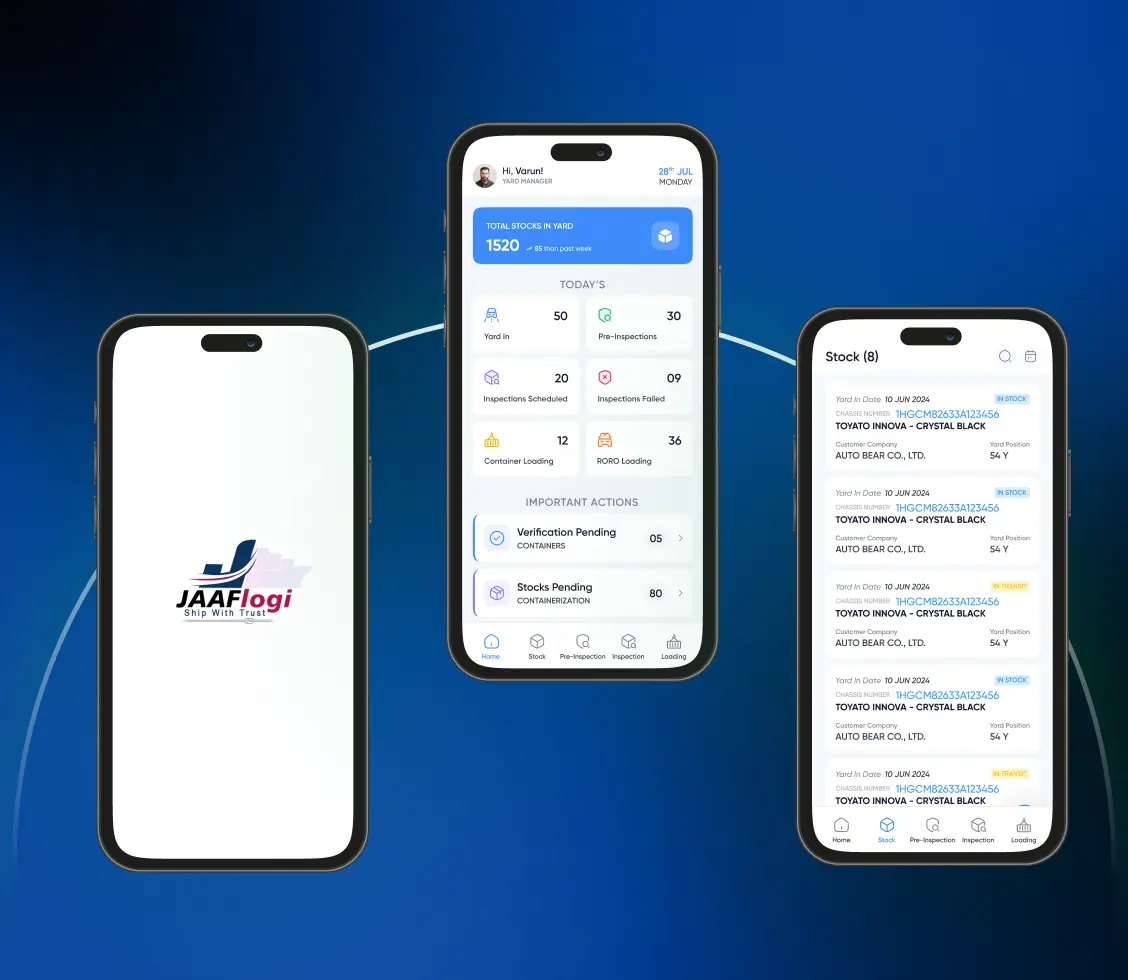
Vehicle Export Logistics APP — JAAFlogi
Challenge
Exporting used vehicles from Japan needs coordination across trucking, inspection, customs, and shipping, with manual processes causing delays and zero visibility for global buyers.
Solution
We built JAAFlogi, a web and mobile platform managing the vehicle export lifecycle end to end: stock, trucking, inspections, RORO shipping, customs, billing, real-time tracking, dedicated yard and driver apps, and a bilingual English/Japanese customer portal.
Impact

How We Build Your Delivery Platform
A sequence built around a pharmacy that is still dispensing. We settle the release gate before anything else, pilot on one store, and never cut over mid-week.
Discovery & Order-Journey Mapping
We walk one real order end to end, including the awkward ones: a split across stores, a cold item, a refused handover. This is also where we establish whether the storefront build should come first instead.
Release Gate & Sourcing Design
The two decisions everything else depends on: exactly where the pharmacist gate sits in the order state machine, and how a fulfilling store is chosen. Both are settled with your superintendent pharmacist present.

Platform & Store Console Build
Fulfilment engine, store console and rider app built in reviewable increments against your real catalogue and real store list, not demo data where every item is in stock and nothing needs refrigerating.

Payments, Tax & System Integration
Gateways settling to your own account, GST across medicine categories configured with your accountant present, and the pharmacy management and accounting systems you already run wired in and reconciled.

Single-Store Pilot & Go-Live
One store runs real orders through the full gate, including a deliberate cold-chain exception and a deliberate failed handover, before the rest follow. The exceptions are the test, not the happy path.

Rollout, Training & Support
Store by store, with pharmacists and riders trained on their own screens. Afterwards we watch exception rates and failed handovers, because those are where the process, not the software, usually needs the fix.

List on an Aggregator, or Run Your Own?
The Indian market is consolidated into a handful of well-funded operators, so this deserves an honest answer rather than an encouraging one. Here is the test we apply.
When the Aggregators Are Right
One or two stores, no meaningful repeat base yet, and discovery still the constraint. The national platforms are very good at bringing you an order you would not otherwise have had, and a delivery platform of your own does not create demand. If that describes you, list with them and put the money elsewhere.
When It Stops Working
Four conditions, and one is usually enough: repeat and chronic-refill customers now make up most of your volume and you are paying commission on all of it; you run enough stores that sourcing between them is the actual problem; the patient relationship and its history are an asset you cannot afford to rent; or your traceability obligations need a record the platform will not give you.
What Running It Actually Costs
Beyond the build: riders to employ or contract, packaging and cold boxes, someone answering the phone when a delivery fails, and the pharmacist time the release gate consumes. It earns its cost on repeat volume you already have. Built to chase new demand, it is an expensive channel with nobody in it.
Most Chains Should Run Both
Usually the right answer rather than a compromise. Let the aggregators bring the one-off buyer, and move the chronic-refill patient who already knows your counter onto your own channel, where the margin and the relationship are yours. The goal is shifting the repeat share, not switching anything off on a date.
Who We Build Delivery For
Every one of these already dispenses at volume. That is the qualifier, because a delivery platform moves existing demand more efficiently rather than creating new demand.

Pharmacy Chains Going Direct
Enough stores that sourcing between them is the real problem, and enough chronic-refill customers that aggregator commission on repeat orders has become a line finance asks about. The clearest case on this list.
Independent Chemists & Buying Groups
Individually too small to justify a platform, collectively not. A shared delivery layer across a group gives each member the reach without each of them funding it, provided the governance about whose stock serves whose order is settled first.
Hospital & Clinic Pharmacies
Discharge and outpatient dispensing sent home rather than collected, where the order originates inside a clinical system and the traceability expectations are stricter than retail from the outset.
Quick-Commerce Adding Medicine
An existing fast-delivery operation adding a pharmacy category and discovering the release gate, storage constraints and traceability do not fit an order flow built for groceries. Usually a retrofit rather than a new build.
Distributors Serving Retail Pharmacies
Delivering to pharmacies rather than patients, so the buyer is a business with credit terms and scheduled replenishment. Batch traceability matters here for the same reasons and the ordering side looks like our B2B commerce work.
Chronic Refill & Subscription Models
Where the same patient orders on a cycle, so the work is scheduling, reminders and re-approval as prescriptions lapse rather than acquisition. The recurring billing behind it is our subscription commerce build.
Money, Data & Records
What was collected, what was dispensed, who may see it and what you can prove afterwards. Where a deeper review is warranted, our cybersecurity consulting team works alongside the build.

Payments & Partial Fulfilment
UPI, cards, netbanking and cash on delivery settling to your own account, with split and partially-approved orders treated as normal rather than as an error state to patch around.

GST on Medicine Sales
Computed and captured across the different treatments that apply by product category, configurable because rates change and the interpretation is your chartered accountant's call, pushed into your ledger.

Licence & Registration Records
Store licences and staff registrations held with validity dates and expiry visible before it lapses. We hold the records your obligations depend on; the licence and its interpretation stay yours.

DPDP & Patient Data
Consent, purpose limitation, retention and erasure for order and prescription history, aligned to India's Digital Personal Data Protection Act, with access scoped so staff see only what their role needs.

Returns, Recalls & Write-Offs
A defined path for the failed handover, the refused delivery and the recalled batch, recording what happened to the stock and who authorised it rather than quietly returning it to the shelf.

You Own the Data & the Code
Patient records, order history and dispense trails sit on your infrastructure and the source is handed over, so the record you may one day have to produce is never in somebody else's custody.
Why Pharmacy Businesses Choose Webority
What an owner weighs before letting anyone touch a dispensing operation that is legally accountable for every unit that leaves the counter.
Built Under CMMI Level 5 & ISO 27001
A pharmacy platform holds prescription data and a dispensing record you may one day have to produce. An audited process and audited security controls are the minimum to ask of whoever builds it.
We Build the Gate, Not Around It
The pharmacist release gate is designed first and designed to be unbypassable, because a system where the gate can be skipped under pressure will have it skipped under pressure.
We Are Honest About What Software Can Do
We do not certify your compliance, supply your pharmacist or keep your consignment cold. We make your obligations enforceable and provable, and we say which is which rather than blurring it in a feature list.
Exceptions Designed, Not Discovered
Split orders, cold-chain breaches, refused handovers and recalls are designed as first-class paths from the start, because in this category they are routine rather than rare.
Piloted on One Store First
Real orders through the full gate at a single store, including a deliberate cold-chain exception and a deliberate failed handover, before any second store follows. The exceptions are the test.
Delhi NCR Delivery, Regulated-Sector Experience
Our engineering centre is in Delhi NCR, with delivery experience across healthcare and other regulated sectors where auditability is a requirement rather than a preference.
Certificates and Compliances
At Webority Technologies, we take pride in our professional recognition and reputation as a trusted name for all your business solution needs. Rely on us for expert guidance and exceptional results.








Related Services & Capabilities
Delivery is one layer of a pharmacy business. These are the adjacent builds, designed to connect to it rather than overlap it.


What Our Clients Say
Real words from the founders, product owners, and CTOs who chose Webority




Frequently Asked Questions
Pharmacy delivery platform development is building the fulfilment half of a medicine business: the part that begins once an order is accepted and ends when it reaches a doorstep intact and accounted for. That covers checkout that cannot release a restricted item until a pharmacist has approved it, sourcing across several stores when the nearest one is short, cold-chain handling for items that must stay within a temperature range, rider dispatch, and a batch-level record of exactly what left which store and when. It is deliberately narrower than pharmacy software as a whole, because the ordering, catalogue and prescription review side is a separate build.
By which half of the journey it covers. Our online pharmacy software work is the storefront and the clinical workflow: the medicine catalogue, prescription upload, pharmacist review and approval, patient accounts, refills, and integration with the pharmacy management system a store already runs. This page is the fulfilment layer underneath it: sourcing across stores, cold chain, dispatch, delivery tracking, and the traceability record. Most pharmacy businesses need both, and they are built to connect. If you are starting from the storefront and the prescription workflow, start there rather than here.
As a gate the fulfilment process cannot bypass, which is the biggest structural difference between medicine delivery and ordinary ecommerce. An order containing a restricted item is held in a state where it can be paid for but not picked, packed or dispatched until a qualified pharmacist has reviewed the prescription and recorded a decision against that specific order. The approval, the person who gave it and the time it was given are stored with the order rather than alongside it. The software does not make the clinical decision and cannot; its job is to make that decision mandatory, attributable and permanently recorded.
Yes, to the extent software can, and it is worth being precise about the limit. The platform can flag which items require a controlled temperature range, restrict them to the stores, packaging and routes equipped to carry them, capture readings from monitoring devices where you use them, and raise an exception when a reading or a delivery duration falls outside your defined limits so a human decides what happens to that consignment. What software cannot do is keep a product cold, and any vendor implying otherwise is selling you a dashboard. It makes the chain observable and the breaches undeniable; the cold box is still a cold box.
Medicine stock is scattered, moves quickly and is rarely accurate in more than one system at a time, so sourcing has to be a decision rather than a lookup. The platform holds a live view across stores and decides which one serves an order based on availability, distance, the item's storage requirements and how close the batch is to expiry, splitting an order across stores where nothing else completes it. It also has to fail gracefully: when the nearest store is short, the customer needs to learn that at checkout rather than an hour later from a cancelled order.
Yes, and this is usually the part that turns out to matter most after launch. Every dispatched item is recorded against the batch it came from and the store it left, so the question a recall actually asks, which is who received stock from a given batch, is answerable in seconds rather than reconstructed from paperwork. Expiry is enforced at the point of picking rather than discovered by a customer, near-expiry stock surfaces before it becomes a write-off, and returns and recalls run as a defined workflow with an audit trail rather than an ad-hoc phone call.
Yes. Payments run on UPI, cards, netbanking and wallets settling to your own account, with cash on delivery and the reconciliation that goes with it, and partial fulfilment handled properly, because a split or partially-approved order is normal in this category rather than an edge case. On tax, the platform is built to compute, capture and report GST on medicine sales including the different treatments that apply across product categories, with rules configurable because rates and treatment change and the interpretation is your chartered accountant's call. Invoices push into the ledger you already keep.
We build to the requirements you and your advisers define, and we do not certify compliance, because no software vendor can. Pharmacy operates under licensing rules that vary by state and by product category, and the licence, the qualified pharmacist and the legal interpretation are yours. What we provide is the machinery that makes your obligations enforceable and provable: prescription gating that cannot be bypassed, licence and registration records held against stores and staff with expiry visible before it lapses, role-scoped access so only qualified staff can approve a dispense, immutable audit trails, and patient data handled to the expectations of India's Digital Personal Data Protection Act. Your auditor and your counsel confirm compliance; we make it demonstrable.