































Ecommerce Website Development Company for D2C, B2B & Marketplaces
Webority is an ecommerce development company that builds online stores for sellers whose catalogue, pricing or compliance a hosted platform cannot bend to. Configurable products and variant-heavy catalogues, per-customer and contract pricing, UPI and cash on delivery with the returns that follow, GST that tracks the shipment, and the ERP, warehouse and courier integrations where the real work sits. You own the code and the customer data. Engineered under CMMI Level 5 and ISO 27001, from our Delhi NCR centre for brands across India, the US, the UK and the Gulf.
Get a Free Consultation
Fill in your details, and we will respond within 24 hoursTrusted by Leading Brands & Growing Startups









What Ecommerce Website Development Actually Means
A storefront is the part everybody looks at, and the smallest part of the job. Behind it sit a catalogue that models how your products vary, pricing that can differ per customer, stock kept honest across every channel, a checkout built for how India pays, tax that follows the shipment, and integrations into the ERP, warehouse and courier systems you already run. Custom ecommerce development builds that whole stack around your business, instead of reshaping the business to fit a template.
Most sellers should not build any of it. Shopify, WooCommerce and BigCommerce are good products — for a straightforward catalogue at ordinary volume, better and cheaper than anything we would make. This page is about the narrower case where the catalogue, pricing, compliance or integrations are precisely what a packaged platform will not bend to.
Where Hosted Platforms Stop Fitting
Six constraints that show up once a store outgrows a template. None of them is a missing feature you could install your way out of. Each is a structural mismatch between how you sell and what a multi-tenant platform is able to model.






Your Catalogue Is Not a Product Grid
Platforms model a product with a few variants. Real catalogues have configurable products priced by dimension, bundles whose stock depends on their components, made-to-order items with lead times, and the same physical item sold in different units to different buyers. When the data model cannot express the product, the workaround is a spreadsheet beside the store and a person keeping the two in agreement.
Your Price Is Not One Number
Consumer platforms assume a price attached to a product. Sell to businesses and the price belongs to the relationship: a contracted rate per customer, slabs by quantity, a distributor tier, credit terms, and a quote that was negotiated rather than published. Bolting per-customer pricing onto a product-priced platform is the single most common reason a B2B seller ends up taking orders over email again.
Indian Checkout Is Its Own Problem
UPI is the default, cash on delivery is still expected in much of the country, and cash on delivery brings return-to-origin, address quality and fraud handling with it. Add partial or advance payment where the order is made to measure, and wallets and netbanking alongside cards. A platform built around card checkout in another market treats all of this as an add-on, and the add-ons do not talk to each other.
GST Follows the Shipment
Place of supply depends on where the goods go, which is frequently a different state from where the buyer is registered, and the treatment changes again for exports and for marketplace collection. Add HSN classification, e-invoicing thresholds and credit notes on returns, and a platform built for another tax regime models none of it. For a multi-state seller this is the hardest lock-out of the six.
The Platform Fee Scales With Your Success
A transaction percentage plus a stack of app subscriptions is cheap at low volume and becomes one of the larger lines in the accounts at high volume. The cost scales with your revenue rather than with the cost of serving you, and it recurs for as long as you keep selling. There is a crossover point for every seller, and past it a build stops being an expense and starts being the cheaper arrangement.
The Integrations Are the Actual Project
The storefront is rarely the hard part. Making stock honest across your own site, your retail counters and the marketplaces you also sell on, pushing orders into an ERP that was configured a decade ago, calculating courier rates and reconciling what was actually collected, is where the effort goes. Platforms expose the integrations they chose to expose, and the one you need is often not among them.
Our Ecommerce Website Development Services
Seven builds, separated by who sells and who buys, because those two answers change nearly everything underneath.
- 01 Ecommerce Platforms
- 02 Multi-Vendor Marketplaces
- 03 B2B & Wholesale Commerce
- 04 Fashion & Apparel
- 05 Subscription Commerce
- 06 Food & Grocery Delivery
- 07 Pharmacy & Medicine







What We Build Into Every Store
Whichever build you commission, these are the parts that decide whether it survives contact with real orders. Where a deeper review is warranted, our cybersecurity consulting team works alongside the build.

Catalogue & Inventory
A product model that expresses configurable items, bundles and units of measure, with stock that stays honest across your site, your counters and every marketplace you also sell on.

Payments & Checkout
UPI, cards, netbanking and wallets settling to your own account, plus cash on delivery with the return-to-origin, address-quality and partial-payment handling that comes with it.

GST & Invoicing
Place of supply following the shipment, HSN classification, e-invoicing where thresholds apply and credit notes on returns, configurable because the treatment is your CA's call.

ERP, WMS & Courier
Orders into SAP, Tally or Zoho, stock against your warehouse system, courier rating, labels and tracking, and marketplace connectors where you also sell on Amazon or Flipkart.

Headless & Performance
A decoupled storefront where it earns its complexity, built to Core Web Vitals on the mid-range Android and patchy connection most of your traffic actually arrives on.

You Own the Code & Data
The database runs on your infrastructure and the source is handed over, so nobody takes a percentage of every order or prices you out of your own storefront at renewal.
Our Journey Of Making Great Things
Numbers that reflect over a decade of consistent delivery, trusted partnerships, and engineering excellence.
Years of experience
Projects delivered
Clients served
Countries reached
Trusted by India's Leading Government Institutions
Nine central government ministries have trusted Webority to build their digital platforms from parliamentary operations and defence logistics to national health infrastructure and citizen data collection at scale. Every engagement runs on NIC cloud, meets GIGW accessibility standards, and operates under data handling requirements that commercial projects rarely demand.

Sansad Cafeteria
Ministry of Parliamentary Affairs

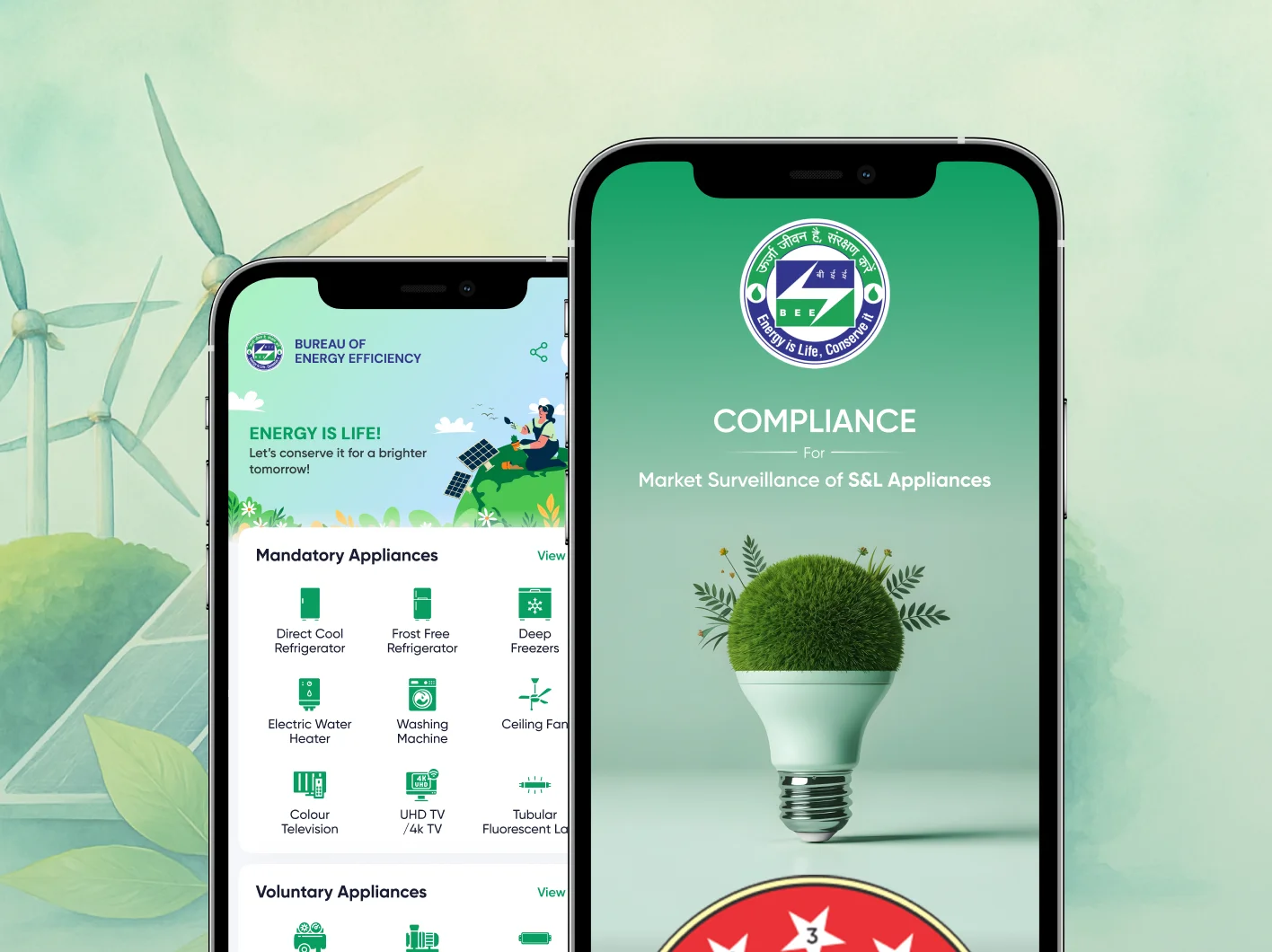
Bureau of Energy
Ministry of Power

Safdarjung Hospital
Ministry of Health & Family Welfare

Quality Council of India
Ministry of Commerce & Industry

Munitions India Limited
Ministry of Defence

Sashastra Seema Bal
Ministry of Home Affairs

Vasudha Foundation
Government of Karnataka

National Book Trust
Ministry of Education

Textiles Committee
Ministry of Textiles
Sellers We Build For
Every one of these has hit the same wall from a different direction: the store still works, and the business has moved past what the store can represent. What differs is which part broke first.

D2C Brands Past the Template
Growing well on a hosted plan until the app subscriptions stacked up, the theme stopped matching the brand, and the transaction percentage started reading like a tax on success. Usually a replatform with the catalogue and checkout rebuilt around how the brand actually sells.
B2B Distributors & Wholesalers
Every buyer on a different rate, orders arriving by phone and email because the portal cannot express the pricing, and credit terms tracked in a ledger nobody else can see. The pricing engine is the project; the storefront is the easy half.
Marketplace Operators
Running someone else's supply, which makes onboarding, commission, settlement and disputes the actual product. Money moving correctly to many parties on a schedule is what decides whether sellers stay, and it is where marketplace builds succeed or quietly fail.
Retail Chains Going Omnichannel
Stores, an online catalogue and a warehouse that each believe something different about stock. Click and collect, ship from store, and returns to any branch only work once one system is allowed to be right about inventory.
Subscription & Repeat Purchase
Where the second order matters more than the first. Mandates fail, cards expire, customers want to pause rather than cancel, and every one of those is a retention event that a checkout-shaped platform treats as an error state.
Regulated & Licensed Commerce
Medicine, alcohol, high-value goods and anything needing verification before dispatch. Who may buy, what proof is required and what must be auditable afterwards are conditions rather than features, and they rule out most hosted platforms before the feature conversation begins.
Shopify, or a Custom Build?
For most sellers the honest answer is Shopify, and we would rather say so than sell you a project you did not need. Here is the test we apply, and it disqualifies a good share of the enquiries we get.
When a Hosted Platform Is Right
A straightforward catalogue, one price per product, ordinary order volume, standard payment and shipping, and no integration deeper than an accounting export. Shopify, WooCommerce and BigCommerce do this well for a fraction of what a build costs. If that is you, subscribe. We will say so in discovery rather than quote you a project.
When It Stops Working
Five conditions, and one is usually enough: a catalogue the product model cannot express; pricing that differs per customer or contract; transaction fees and app costs past their crossover point; ERP, warehouse or courier integration the platform will not expose; or compliance it does not handle. The tell is simple, as ever: your spreadsheets are doing the work the platform cannot.
What Building Actually Costs
More than a subscription up front, and it does not stop at launch: payment rails change, tax rules move, and every peak season wants something new. It earns its cost when the transaction fees have outgrown it, or when ownership and compliance are conditions rather than conveniences. That is a commercial judgement, and it is yours to make with real numbers rather than ours to assert.
How We De-Risk the Decision
Discovery first, as a paid, self-contained piece of work that ends in a recommendation you own, including a recommendation to stay on your current platform. If a build follows, it starts with whichever part is actually costing you money, and proves itself on one channel before it takes the whole business.
Platforms and Stacks We Build On
We extend a platform where that is the right answer, and build from the ground up where it is not
 Shopify & Shopify Plus
 WooCommerce
 Magento & Adobe Commerce
 Headless Commerce
 React & Next.js Storefronts
 .NET & Node.js Backends

How We Build Your Store
A sequence built around a live business. We start where the money is leaking, migrate without losing the rankings you already earned, and cut over outside your peak season rather than during it.
Discovery & Commerce Model Mapping
We walk your catalogue, your pricing rules and one real order end to end, including the spreadsheets beside the store. This is also where we tell you if staying on your current platform is the better answer.
Catalogue, Pricing & Experience Design
The decisions that are expensive to reverse: how a product and its variants are modelled, how price is resolved for a given customer, and how the storefront performs on a mid-range phone.

Storefront & Commerce Engine Build
Built in reviewable increments against your real catalogue and real price lists, not demo data where every product has one variant and every order is paid by card.

Payments, Tax & Integrations
Gateways settling to your own account, GST configured with your chartered accountant in the room, and the ERP, warehouse, courier and marketplace connections wired and reconciled.

Migration, SEO Mapping & Go-Live
Products, customers and order history migrated and reconciled, every old URL mapped to its new home so rankings carry over, both stores run in parallel, and we cut over outside your peak.

Peak Support & Continuous Growth
We watch crawl errors and rankings after the switch, stand by through sale events, and build what the first season proved you needed rather than what the brief guessed.

Why Ecommerce Businesses Choose Webority
What an owner weighs before replacing a store that, for all its fees, is taking orders this morning.
Built Under CMMI Level 5 & ISO 27001
Your platform is engineered under CMMI Level 5 process quality and ISO 27001 security controls. Against a field of small studios, that is an audited standard of delivery and data handling rather than a promise.
We Build for How India Pays
UPI, cash on delivery and the return-to-origin that follows it, partial payments, and GST that tracks the shipment rather than the buyer. Not an add-on bolted onto a checkout designed for another market.
Integration Is Where We Earn It
ERP, warehouse, courier and marketplace connections are where most commerce projects actually fail. We scope them first and tell you during discovery when an API will not cooperate, not midway through the build.
Your Store Stays Yours
Catalogue, customers, orders and pricing rules are the business. The database sits on your infrastructure, the code is handed over, and nobody takes a percentage of every order you ship.
Tested Against Your Sale Day
Commerce traffic is not a curve, it is a sale event. We load-test against your real peak profile so the platform is proven before the campaign that depends on it goes out.
Replatforming Without Losing Rankings
Migrations are where hard-won organic traffic quietly disappears. URL mapping, redirects and post-launch monitoring are a planned workstream on every replatform, not a checklist item at the end.
Certificates and Compliances
At Webority Technologies, we take pride in our professional recognition and reputation as a trusted name for all your business solution needs. Rely on us for expert guidance and exceptional results.










Explore Our Ecommerce Solutions
Purpose-built commerce software for every way of selling
 Multi-Vendor Marketplace
 B2B Ecommerce Platform
 Fashion & Apparel Storefront
 Subscription Commerce
 Food & Grocery Delivery
 Pharmacy Delivery Platform
Related Services & Capabilities
Where a commerce business needs more than the storefront, these are separate builds designed to connect to it rather than overlap.





What Our Clients Say
Real words from the founders, product owners, and CTOs who chose Webority




Frequently Asked Questions
Ecommerce website development is building an online store around how a business actually sells, rather than fitting the business to a template. It covers the storefront and checkout a customer sees, the catalogue, pricing and inventory behind it, the payment and tax handling underneath, and the integrations into the ERP, warehouse, courier and marketplace systems the business already runs. For most sellers a hosted platform does this well. Custom development earns its cost when the catalogue, the pricing model, the compliance requirements or the integrations are the things a packaged platform cannot bend to.
For most sellers, use Shopify. It is a genuinely good product, and if you sell a straightforward catalogue at ordinary volume it will serve you better and far cheaper than anything we would build. Custom development earns its cost at a specific threshold: a catalogue with configurable products, bundles or made-to-order variants the platform cannot model; B2B pricing that differs per customer or contract; transaction fees and app subscriptions that have passed their crossover point; deep ERP, warehouse or courier integration a platform will not expose; or compliance requirements it does not handle. If none of those describe you, subscribe, and we will say so in discovery rather than quote you a build.
It depends on scope, so we quote after discovery rather than from a price list. The drivers that actually move the number are the complexity of the catalogue and pricing model, how many systems have to be integrated and whether their APIs are cooperative, whether payments and settlement are in scope, how much existing product, customer and order data has to be migrated, and the peak traffic the platform must survive. A focused storefront is a fraction of a marketplace or a B2B platform. The comparison worth running is not our fee against a subscription, but our fee against that subscription plus its transaction fees and app costs over the years you intend to keep selling.
Yes, and protecting rankings is a planned workstream rather than an afterthought. We migrate product, customer and order data, then map every existing URL to its new destination with 301 redirects so accumulated link equity carries over, preserve titles, descriptions and structured data, keep canonical and pagination behaviour intact, and run the old and new stores in parallel before cutting over. After go-live we watch crawl errors, index coverage and rankings so anything that slipped is caught in days rather than discovered a quarter later.
Yes. Indian checkout is its own problem and we build for it: UPI, cards, netbanking and wallets settling to your own account, cash on delivery with the return-to-origin handling that goes with it, and partial or advance payment where your model needs it. On tax, the platform is built to compute, capture and report GST on sales, including place of supply following the shipment, HSN classification, and e-invoicing where thresholds apply. Rates, thresholds and treatment change and are your chartered accountant's call, so the rules are configurable rather than hard-coded, and invoices push into Tally or Zoho Books.
Yes. The database runs on your infrastructure, in your cloud account or on-premise, and the source code is handed over at the end. Your product catalogue, customer records, order history and pricing rules are the durable asset of a commerce business, and nothing in the arrangement lets a vendor decide what you may export, charge you a percentage of every order, or price you out of your own storefront at renewal.
Yes, and on most projects this is where the real work sits rather than in the storefront. We integrate ERP and accounting systems including SAP, Tally and Zoho, warehouse and inventory systems so stock is accurate across channels, courier and logistics providers for rate calculation, label generation and tracking, and marketplace connectors where you also sell on Amazon, Flipkart or your own retail stores. Where an API is uncooperative or absent, we say so during discovery rather than discovering it mid-build.
It depends on who sells and who buys. If you sell your own products to consumers, you need an ecommerce platform. If other sellers list alongside you and you take a commission, you need a multi-vendor marketplace. If your buyers are businesses with negotiated pricing, credit terms and bulk ordering, you need a B2B commerce platform. If customers pay on a recurring basis, you need subscription commerce. If the product is food, groceries or medicine, the delivery, licensing and fulfilment rules differ enough to need a purpose-built build. Most sellers need one of these, and discovery is where we work out which.