





background graphic background graphic

Legacy System Migration Services for Safe, Low-Risk Modernization

Legacy system migration is the structured process of moving aging applications, databases, and platforms onto modern, supportable technology with strong data-integrity controls and minimal downtime. Webority delivers this end to end, covering legacy assessment and migration planning through to data migration, replatforming, integration, testing, and post-migration support that reduces technical debt and protects business continuity.

We deliver risk-controlled migrations with full data-integrity validation, minimal-downtime cutovers, and a rollback-ready plan at every step.
Get a Free Consultation
Fill in your details, and we will respond within 24 hours
User Icon
Email Icon Privacy Icon
Phone Icon
Message Icon
0/1000
Check Icon

Join 500+ companies who trust Webority Technologies

Check Icon

Your data is secure and protected under our Privacy Policy

Trusted by Leading Brands & Growing Startups

Legacy system migration

Why Legacy System Migration Can No Longer Wait

Every year a critical system runs on unsupported technology, the cost of change grows. Maintenance consumes a larger share of the IT budget, security patches stop arriving, and the pool of engineers who understand the old stack keeps shrinking.

Aging platforms also block progress. They are difficult to integrate with modern tools, slow to release, and expensive to scale, holding back the very initiatives that depend on reliable data and stable infrastructure.

A well-planned migration reverses that trajectory. By moving workloads onto supportable, cloud-ready platforms through a controlled, phased approach, Webority helps you cut technical debt, harden security, and unlock the performance and integration headroom your business needs, without putting day-to-day operations at risk.

The Legacy System Challenges That Block Modernization

Identifying and resolving these obstacles is the foundation of a successful, risk-controlled legacy system migration.

Technical debt Unsupported platforms Slow release cycles Migration risk Integration barriers Scaling limits
01

Accumulated Technical Debt

Years of patches, workarounds, and undocumented changes make legacy systems fragile and costly to maintain. Without a deliberate technical debt reduction plan, every new requirement increases risk and slows delivery across the organization.

02

Unsupported, Insecure Platforms

When a vendor ends support, security patches stop and compliance gaps widen. Legacy stacks such as classic ASP, VB6, or unsupported database versions expose the business to vulnerabilities that cannot be remediated in place.

03

Slow, High-Risk Release Cycles

Monolithic, tightly coupled legacy applications make even small changes slow and risky to ship. Manual deployments and missing test coverage turn routine updates into events that require freezes and after-hours windows.

04

Migration and Data-Loss Risk

The fear of corrupting data or breaking critical workflows stalls many modernization programs. Without parallel running, automated validation, and rollback plans, migration feels like an all-or-nothing gamble rather than a controlled transition.

05

Integration Barriers

Legacy systems rarely expose clean APIs, making it hard to connect them to modern analytics, cloud services, and partner platforms. Point-to-point hacks pile up, creating brittle integrations that are expensive to operate and maintain.

06

Limited Scalability and High Cost

On-premises legacy infrastructure cannot scale elastically with demand, leading to over-provisioning and rising operating costs. Cloud migration for legacy applications unlocks elasticity, resilience, and a pay-for-use cost model the old environment cannot match.

Our Journey Of Making Great Things

Numbers that reflect over a decade of consistent delivery, trusted partnerships, and engineering excellence.

10 +

Years of experience

500 +

Projects delivered

200 +

Client served

18 +

Countries reached

Trusted by India's Leading Government Institutions

Nine central government ministries have trusted Webority to build their digital platforms from parliamentary operations and defence logistics to national health infrastructure and citizen data collection at scale. Every engagement runs on NIC cloud, meets GIGW accessibility standards, and operates under data handling requirements that commercial projects rarely demand.

Sansad Cafeteria

Sansad Cafeteria

Ministry of Parliamentary Affairs

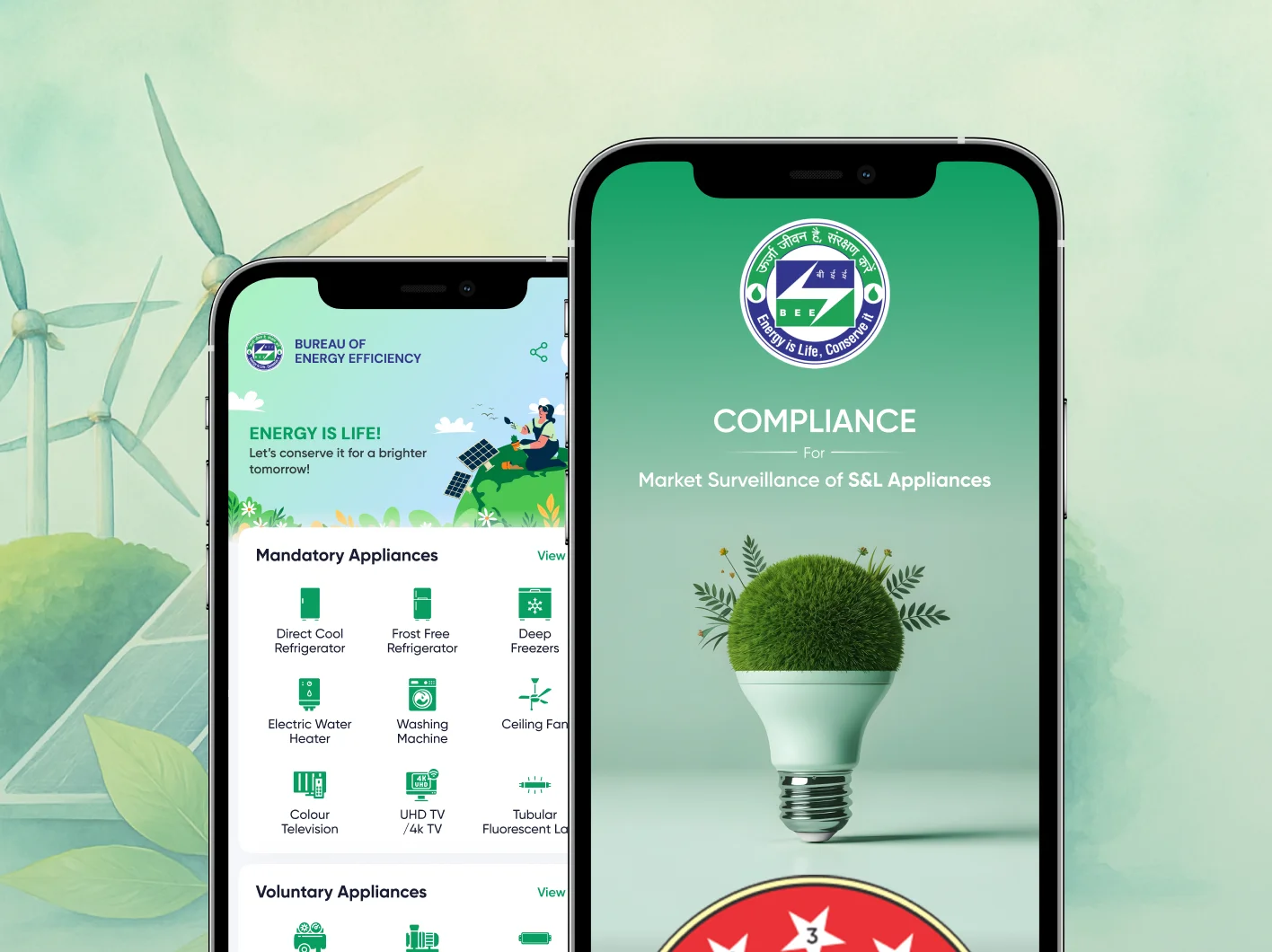
Bureau of Energy Efficiency

Bureau of Energy

Ministry of Power

Safdarjung Hospital

Safdarjung Hospital

Ministry of Health & Family Welfare

QCI

Quality Council of India

Ministry of Commerce & Industry

Munitions India Limited

Munitions India Limited

Ministry of Defence

Sashastra Seema Bal

Sashastra Seema Bal

Ministry of Home Affairs

Vasudha Foundation

Vasudha Foundation

Government of Karnataka

National Book Trust

National Book Trust

Ministry of Education

Textiles Committee

Textiles Committee

Ministry of Textiles

Our Legacy System Migration Services

End-to-end legacy system migration services covering assessment, migration planning, data migration, replatforming, integration, and post-migration support, delivered by a team experienced in moving mission-critical systems safely.

  • 01 Migration Assessment & Discovery
  • 02 Migration Planning & Strategy
  • 03 Legacy Data Migration
  • 04 Replatforming & Reengineering
  • 05 Integration & API Modernization
  • 06 Cutover & Post-Migration Support

Migration Assessment & Discovery

We profile your legacy estate, mapping applications, data volumes, dependencies, and integration points. This assessment surfaces risks early and produces a complexity-rated inventory that drives a realistic, evidence-based migration plan.

Migration assessment and discovery

Migration Planning & Strategy

We select the right path for each application, from rehosting and replatforming to refactoring or full replacement, and sequence the work to minimize disruption. The output is a phased roadmap with clear milestones, rollback points, and success criteria.

Migration planning and strategy

Legacy Data Migration

Secure extraction, cleansing, transformation, and loading of legacy data with automated row-count and checksum validation. We use change data capture for large databases so the new system stays in sync during the parallel-run period, protecting data integrity end to end.

Legacy data migration

Replatforming & Reengineering

We move applications onto modern, supportable runtimes and, where it adds value, reengineer components into maintainable, cloud-ready services. The result is reduced technical debt and a codebase your team can actually evolve.

Replatforming and reengineering

Integration & API Modernization

We replace brittle point-to-point connections with clean APIs and middleware so the migrated system integrates cleanly with cloud services, analytics, and partner platforms, keeping the wider ecosystem stable throughout the transition.

Integration and API modernization

Cutover & Post-Migration Support

Detailed cutover planning, parallel runs, and rehearsed rollback procedures deliver go-live with minimal downtime. After launch we provide monitoring, performance tuning, and issue resolution so the new platform stabilizes quickly and keeps improving.

Cutover and post-migration support

Not sure which migration path fits your systems?

Book a free 30-minute consultation and we'll scope it for you.

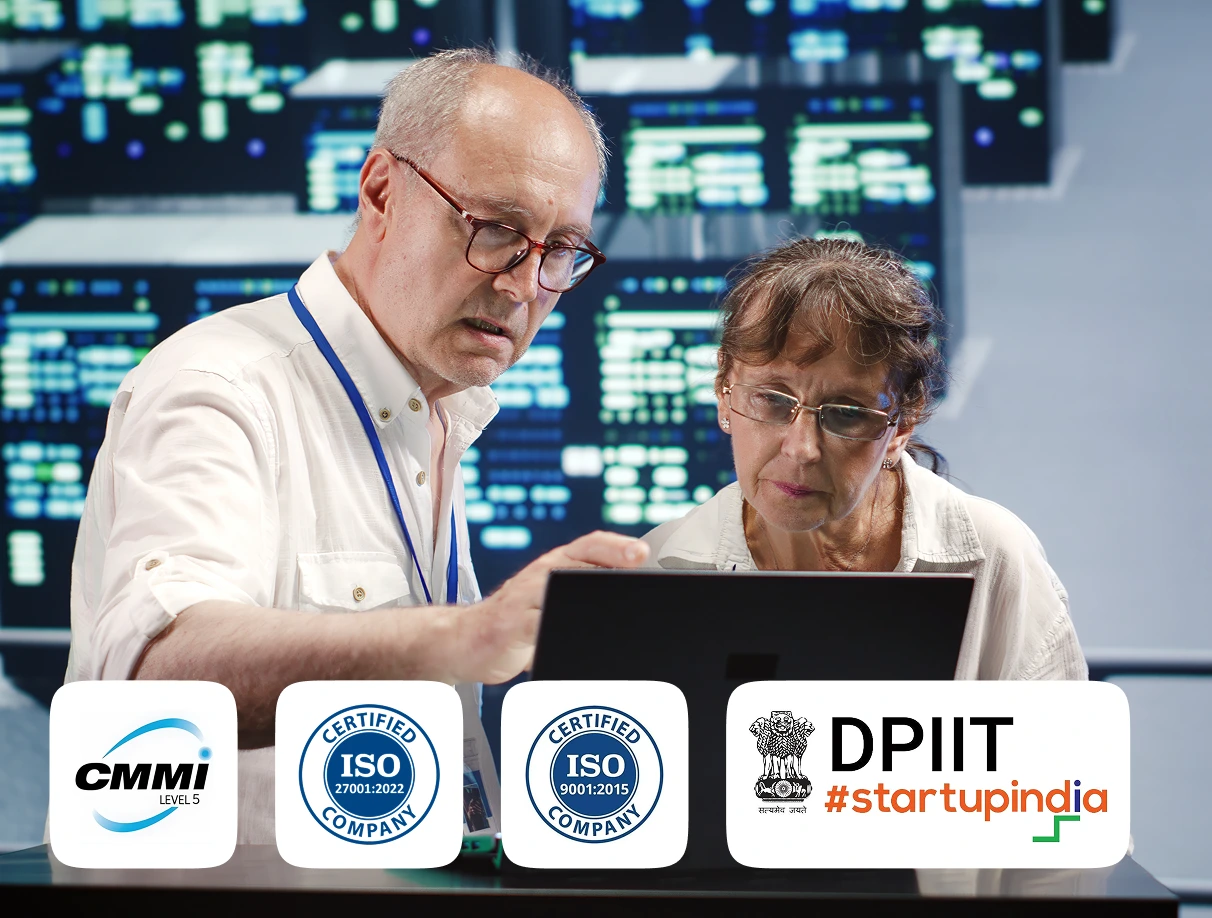
Certificates and Compliances

At Webority Technologies, we take pride in our professional recognition and reputation as a trusted name for all your business solution needs. Rely on us for expert guidance and exceptional results.

CMMI Level 5 Certification
ISO 9001:2015 Certified Company
ISO 14001:2015 Certified Company
ISO 45001:2018 Certified Company
DPIIT Startup India
GDPR Compliance
HIPAA Compliance
SOC 2 Certified Company
PCI Compliance
DPIIT Startup India

Legacy Modernization Paths: The Six Rs of Migration

Not every application should be migrated the same way. We assess each system and recommend the approach that balances cost, risk, and long-term value.

Rehost
Rehost

A lift-and-shift move of the application to modern infrastructure or the cloud with minimal change. The fastest, lowest-risk way to exit failing hardware and unsupported data centers. Best when: hardware is failing and speed matters more than optimization.

Replatform
Replatform

Targeted optimizations during the move, such as a managed database or container runtime, that capture cloud benefits like elasticity and lower operating cost without rewriting the application. Best when: you want cloud benefits quickly without a full rewrite.

Refactor
Refactor

Restructuring code and data to remove technical debt, improve maintainability, and prepare the system for continuous delivery, while preserving existing business behavior. Best when: the core logic is sound but the codebase is hard to maintain.

Rearchitect
Rearchitect

Reshaping a monolith into modular or microservices architecture so teams can scale, deploy, and evolve components independently, typically using the strangler-fig pattern to reduce risk. Best when: scaling and release speed are constrained by a monolith.

Rebuild
Rebuild

Rewriting the application on a modern stack when the legacy codebase can no longer meet business needs, retaining the proven business rules while removing decades of constraints. Best when: the old codebase can no longer support the business.

Replace
Replace

Retiring the legacy system in favor of a modern commercial or SaaS product where it is the most cost-effective option, with careful data migration and integration to preserve continuity. Best when: a proven product already covers the same needs.

A Risk-Controlled Approach to Legacy System Migration

Every migration rests on three pillars: protecting continuity, preserving data, and landing on the right cloud foundation. We engineer all three together so modernization never puts the business at risk.

Risk-controlled legacy migration

Risk-Controlled Migration

Migration risk is managed, not hoped away. We run old and new systems in parallel and keep go-live inside a controlled, rehearsed window that protects business continuity.

  • • Phased user rollout
  • • Parallel run & validation
  • • Rollback readiness
  • • Regression testing
  • • Business-continuity planning
Legacy data migration and integration

Data Migration & Integration

Data is the highest-stakes part of any migration. A five-step pipeline lands legacy data accurately while we modernize brittle links into clean APIs and integration layers.

  • • Data profiling
  • • Cleansing & transformation
  • • ETL data migration
  • • Automated validation
  • • API & integration modernization
Cloud readiness for legacy workloads

Cloud Readiness

Most legacy migrations are also a move to the cloud. We assess each workload for security and compliance, then plan cloud migration for legacy applications on AWS, Azure, or GCP.

  • • Workload assessment
  • • AWS / Azure / GCP readiness
  • • Scalability
  • • Resilience
  • • Cost planning

The Business Outcomes of Legacy System Migration

A well-executed migration is measured in lower risk and greater agility, the freedom to build on a platform that supports the business instead of holding it back.

01
Reduced Technical Debt and Cost

Retiring unsupported platforms cuts maintenance spend and frees budget and engineering time for initiatives that move the business forward.

02
Stronger Security and Compliance

Modern, supported platforms receive security patches and meet current compliance requirements, closing the gaps that unsupported legacy systems leave open.

03
Faster, Safer Releases

Modern architecture and automated pipelines let your teams ship changes quickly and confidently, instead of working around freezes and after-hours windows.

04
Scalability and Resilience

Cloud-ready platforms scale elastically with demand and recover gracefully from failure, replacing the brittle, over-provisioned legacy environment.

05
Integration-Ready Foundation

Clean APIs and modern middleware make the migrated system easy to connect to analytics, cloud services, and partner platforms as needs evolve.

06
Continuity Protected Throughout

Parallel running, automated validation, and rehearsed rollback keep operations stable from the first assessment to the final cutover.

Why Teams Choose Webority for Legacy Modernization

Replacing a system the business runs on is a risk decision before it is a technical one. Teams choose Webority because we modernize without disrupting operations, protecting continuity, data, and integrations at every step.

Migration Risk Controlled from Day One

We start with discovery, dependency mapping, and a rehearsed rollback plan, so you modernize on a controlled, reversible path instead of a high-stakes big-bang switch.
Business Continuity Protected

We phase delivery and run old and new in parallel, validating at each step, so operations keep running and customers never feel the change underneath them.

Your Data and Integrations Stay Intact

Data profiling, cleansing, automated validation, and documented APIs move your data and the systems that depend on it across cleanly, with nothing lost or broken.

Modernize Only Where It Pays Off

We match each component to the right approach, rehost, replatform, refactor, or replace, so you avoid unnecessary rewrites and spend effort where it returns value.

Engineers Who Build, Not Just Advise

Senior engineers own the migration end to end and hand you a working modern platform rather than a slide deck, so the plan actually ships.

Maintainable for the Long Term

You inherit clean architecture, documentation, and automated pipelines your team can run and extend, keeping the new system from sliding back into legacy.

What Our Clients Say

Real words from the founders, product owners, and CTOs who chose Webority

Strategic Partnerships

Technology partnerships that give our clients enterprise-grade tools, support SLAs, and preferential access.

Amazon Technology Partner
Microsoft Technology Partner
Google Technology Partner
Process step background

Our Proven Legacy Migration Process

01

Discovery and Assessment

We map applications, data, dependencies, and integrations across the legacy estate, rating each system by complexity and risk. This discovery work is the foundation of a realistic migration plan.

Discovery and assessment
02

Migration Strategy and Roadmap

We choose the right path for each application, rehost, replatform, refactor, rearchitect, rebuild, or replace, and sequence the work into a phased roadmap with clear milestones and rollback points.

Migration strategy and roadmap
03

Data Migration and Build

We build the target environment, develop ETL pipelines, and run iterative test migrations with automated validation, while modernizing integrations so the new system fits cleanly into the wider estate.

Data migration and build
04

Parallel Run and Validation

Old and new systems run side by side while we validate data with row-count and checksum checks and confirm behavior with regression testing, proving the new platform before any switch.

Parallel run and validation
05

Cutover and Go-Live

With rollback procedures rehearsed and a phased user rollout planned, we execute the cutover in a controlled window to deliver go-live with minimal downtime and no surprises.

Cutover and go-live
06

Post-Migration Support and Optimization

After launch we monitor performance, tune the new platform, and resolve issues quickly, helping the system stabilize and continue improving well beyond go-live.

Post-migration support and optimization

Explore Related Services

Legacy system migration works best alongside our wider modernization and cloud services.

Frequently Asked Questions

Legacy system migration services move aging applications, databases, and platforms onto modern, supportable technology with minimal disruption. The work spans assessment and planning, data migration, replatforming or reengineering, integration modernization, testing, cutover, and post-migration support, all designed to reduce technical debt and protect business continuity.

Migrate when annual maintenance consumes 60-70% of your IT budget, when the original vendor has ended support, when you cannot hire developers for the legacy stack (COBOL, VB6, classic ASP), when security vulnerabilities cannot be patched, or when the system blocks integration with modern tools. If three or more of these apply, migration should be a priority within 12 months.

The six Rs are rehost (lift and shift to modern infrastructure), replatform (move with targeted cloud optimizations), refactor (restructure code to reduce technical debt), rearchitect (reshape a monolith into modular or microservices design), rebuild (rewrite on a modern stack), and replace (retire the system in favor of a modern or SaaS product). We assess each application and recommend the path that best balances cost, risk, and long-term value.

Strangler fig migration incrementally replaces legacy components one module at a time while both systems run in parallel, reducing risk but extending the timeline to 6-18 months. Big bang migration replaces the entire system at once over a cutover weekend, which is faster but carries higher risk of downtime and data issues. We recommend strangler fig for mission-critical systems and big bang only for smaller, well-understood applications with comprehensive test coverage.

We use five key risk controls: parallel running (old and new systems side-by-side for 2-4 weeks), automated data validation with row-count and checksum verification, feature-flag-based rollback capability, comprehensive regression testing (typically 200-500 test cases), and phased user rollout starting with a pilot group of 10-20% of users before full cutover.

Our approach is designed for minimal downtime. By running the new system in parallel, syncing data with change data capture, and rehearsing the cutover before go-live, the actual switch is reduced to a short, controlled window, often outside business hours. For complex environments we use a phased rollout so most users continue working uninterrupted while groups are moved over in stages.

Yes. We assess each workload for cloud readiness across security, compliance, performance, and cost, then recommend the right target on AWS, Azure, or GCP. Depending on the application that may mean rehosting to virtual machines, replatforming onto managed services, or rearchitecting into containers, so you gain elasticity, resilience, and a predictable pay-for-use cost model.

We map every integration during discovery, then replace brittle point-to-point connections with documented APIs and middleware. During the parallel-run period both old and new integrations are validated so dependent systems, reporting, and partner platforms keep working. This integration modernization is planned alongside the migration rather than left as an afterthought.

Cost depends on system complexity, data volume, and integration points. A small application migration (single database, fewer than 50 screens) typically costs $50,000-$150,000. Mid-size ERP or CRM migrations run $200,000-$800,000. Enterprise-scale migrations with multiple interconnected systems range from $500,000 to $2M+. We provide detailed estimates after a 2-3 week discovery phase that maps all dependencies, data volumes, and business rules.

We follow a five-step process: data profiling to understand schemas and quality issues, cleansing rules to fix inconsistencies, ETL pipeline development (using tools like Azure Data Factory or Apache NiFi), iterative test migrations with automated validation reports, and final cutover with rollback scripts ready. For large databases (100GB+), we use change data capture (CDC) to sync delta changes during the parallel running period.

Legacy migration focuses on moving a system, its applications, data, and integrations, onto modern, supportable infrastructure with minimal change to behavior, often as a rehost or replatform. Legacy modernization goes further, refactoring or rearchitecting the application to remove technical debt and adopt patterns like microservices and cloud-native design. Most programs combine both: we migrate to a stable foundation first, then modernize where it delivers the most value. For deeper rework, see our application modernization services.

The greatest need is in data-intensive, regulated sectors where legacy systems are deeply embedded: government and public sector, banking and financial services, insurance, healthcare, manufacturing and logistics, and retail. These industries face the highest cost from downtime, data loss, and compliance gaps, which makes a risk-controlled, phased migration approach especially important.

Book a Free Call